Nominee for operational test and evaluation says she will report limits and defend independence amid staffing cuts
Get AI-powered insights, summaries, and transcripts
SubscribeSummary
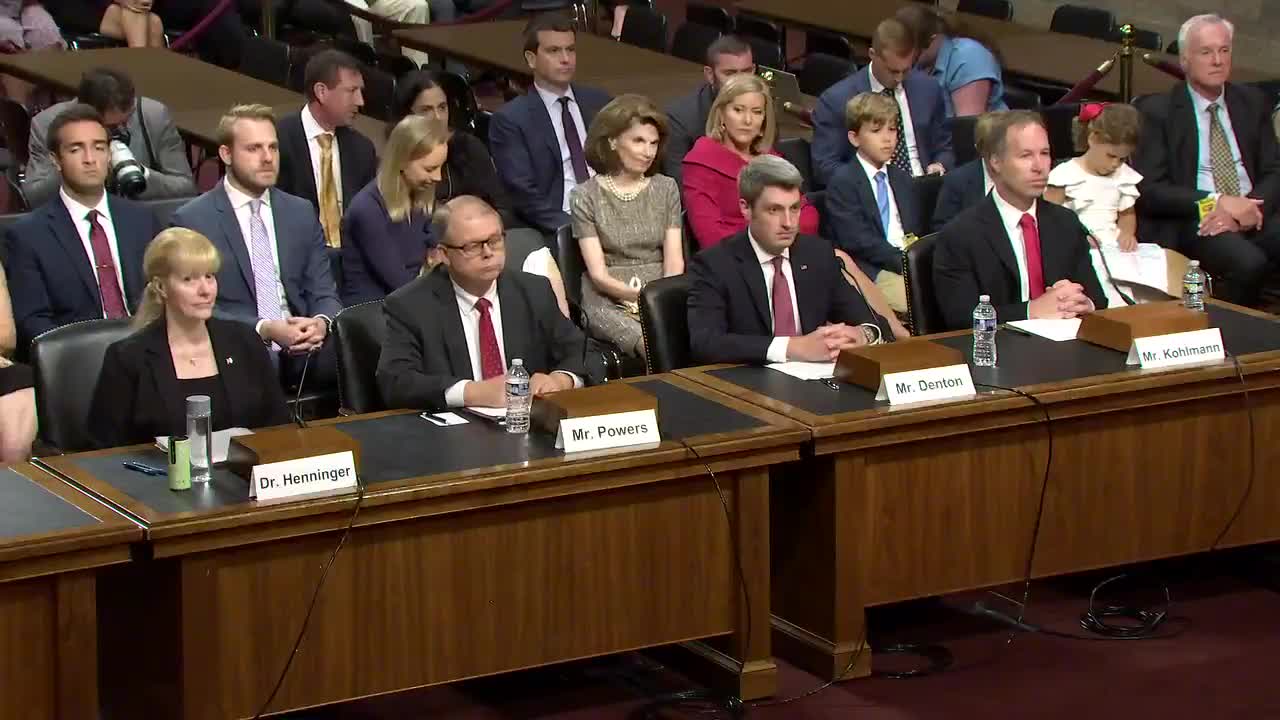
Dr. Henninger, nominated to lead the Pentagon’s Director of Operational Test and Evaluation office, told the Senate Armed Services Committee she will report limitations in test results and strive to preserve independence after Secretary Hegseth’s reorganization reduced DOT&E staff and budget.
Dr. Henninger, President Trump's nominee to be director of operational test and evaluation (DOT&E), told the Senate Armed Services Committee she will report the office’s findings and any resource limitations to Congress and press for the people and capabilities needed to evaluate complex, software‑intensive weapon systems.
“Our reports will always reflect any limitations or assumptions that we encountered,” Henninger told Senator Elizabeth Warren when asked whether she would inform the committee and the public if a system was unsafe or if DOT&E lacked the resources to reach a judgment. “And, of course, I will always come before you and tell the truth.”
Why this matters: DOT&E was created by statute in the fiscal 1983 National Defense Authorization Act to provide independent operational testing and evaluation of major defense acquisition programs. Committee members said a recent reorganization announced by Secretary Hegseth cut the office’s staff and budget sharply; several senators described the reductions as severe and warned they could weaken independent oversight of systems increasingly driven by software, artificial intelligence and cybersecurity concerns.
Henninger said she had not been briefed on all details of the secretary’s memorandum but noted a 60‑day reconsideration period for resource decisions. She told senators she would conduct an independent assessment upon entering the office, coordinate with service operational test agencies that perform many hands‑on cyber tests, and press for automated and digital methods to speed testing where appropriate.
Senators pressed on transparency and the oversight list — the statutory list of programs that receive DOT&E scrutiny. Senator Warren asked whether Henninger would add programs to the oversight list when Congress requests it; Henninger said she would “cast a wide net,” consider suggestions from Congress and do an analysis to determine oversight priorities.
Committee members also asked about operational testing for emerging technologies, including unmanned systems, hypersonics and contested spectrum. Henninger said live testing remains essential for areas “we don't know,” but that modeling and simulation and automation can expand testing capacity and should be used to scale oversight in software‑centric programs.
What was not decided: The committee did not vote on Henninger’s nomination at the hearing. The secretary’s reorganization and any subsequent resource changes remain executive decisions; Henninger repeatedly said she would assess needs if confirmed and report back to the committee.
Looking ahead: Henninger committed to informing the committee about critical safety findings and any limitations that affect DOT&E’s ability to reach firm conclusions. She also said she would work with the services, the test resource management center and research and engineering offices to explore testing ranges, digital methods and automation to preserve test rigor while accelerating evaluations.