Get Full Government Meeting Transcripts, Videos, & Alerts Forever!
Get email alerts on the Arts And Culture topic
No spam. Unsubscribe anytime.
Consultant outlines plan for DeKalb County arts council; commissioners request CEO input
Summary
A consulting team proposed a 6–7 month planning process to form a DeKalb County arts and cultural council, with a $35,000 fee and Discover DeKalb identified to manage the planning. Commissioners asked for further detail from the CEO's office and pledged follow-up review before final decisions.
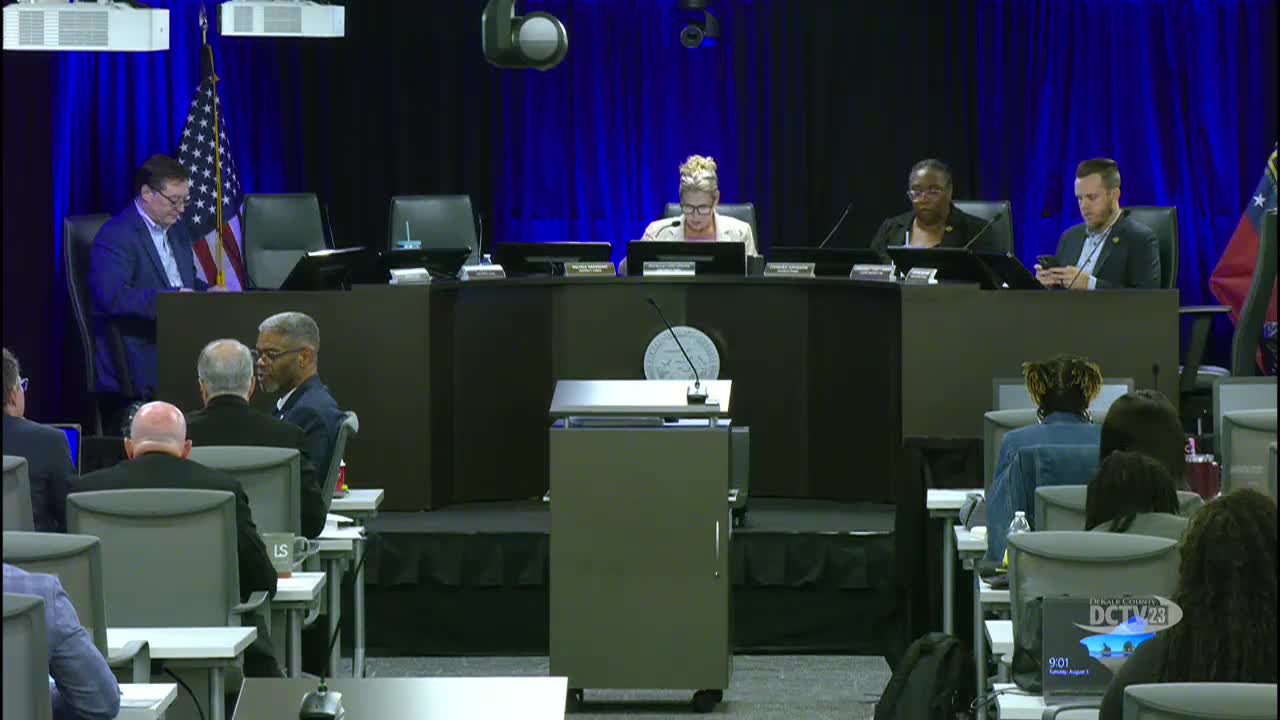
DeKalb County commissioners heard a proposal on Aug. 5 to develop a countywide arts and cultural council, with consultants from Purpose Possible outlining a 6–7 month planning process and a proposed flat fee of $35,000.
The presentation, made during the Committee of the Whole meeting, said the planning work would map cultural assets across unincorporated DeKalb County, recommend governance and funding models, and propose public-art and outreach initiatives that align with the county comprehensive plan and existing efforts by Discover DeKalb and Decide DeKalb.
The consultant said the scope includes: a cultural-asset inventory; stakeholder focus groups representing residents, businesses, local arts organizations and schools; recommendations on whether the council should be a private nonprofit or a public entity; and a fundraising plan identifying potential state, philanthropic and local revenue streams. The firm said its project team includes people who worked on the John Lewis Memorial fundraising and will provide final recommendations at the end of the planning period.
Commissioners asked detailed questions. Commissioner Michelle Long Spears noted the county budget includes $50,000 for the project in the 2025 budget; the consultant responded its fee is $35,000 and that the county’s budget leaves roughly $15,000 in contingency. The consultant said the fee covers deliverables and materials but not venue rental, and that payment could be structured around deliverables.
Several commissioners asked how the new council would relate to existing local bodies. The presentation said Discover DeKalb will manage the planning process; Discover DeKalb’s board approved that role by consent on July 22. The consultants said the arts council’s work would be coordinated with Decide DeKalb, Discover DeKalb and municipal arts efforts so as not to duplicate existing commissions, and that Decide DeKalb’s CEO (referred to in the meeting as Mr. DeBarr) has been part of the design team.
On fundraising and operations, the consultant said its initial scope includes producing a fundraising and sustainability plan but does not include executing long-term fundraising unless a subsequent contract is approved. Commissioners and the consultants discussed potential funding mechanisms, including drawing private philanthropy, state grants and developer contributions; the presenters cited a city example that recommended a 1% development contribution as one possible model to study.
Commissioners pressed implementation questions: whether the council would approve projects in unincorporated DeKalb only (the presenters and chair clarified that county approval authority would be limited to unincorporated areas), how procurement or vendor selection would work for public-art projects, and how legal or procurement offices would be involved in operational processes. The consultants said those procedural details would be documented in the planning deliverables and refined in consultation with county departments, including procurement and legal.
Multiple commissioners asked for formal input from the CEO’s office before moving forward. The meeting record shows Martha Ravello has participated on the design team as a representative of the CEO’s office; commissioners requested that the CEO (or her designee) present recommendations to the board at a future meeting so the commission can ensure coordination and avoid duplicative programs.
No final vote or ordinance was adopted at the Aug. 5 meeting. The commissioners directed continued engagement with Discover DeKalb, Decide DeKalb and the CEO’s office and requested follow-up reports and any recommended draft policies produced by Purpose Possible at the end of the planning process.
The proposal’s next steps are: continued stakeholder engagement, the completion of the planning deliverables in roughly six to seven months, and return to the board with concrete recommendations on governance, funding and implementation.