Get Full Government Meeting Transcripts, Videos, & Alerts Forever!
Get email alerts on the Irrigation District Funding Reserves topic
No spam. Unsubscribe anytime.
LSO memo: Idaho‑style sinking funds not generally authorized for Wyoming irrigation districts
Summary
Legislative Service Office review found statutory limits on special‑district authorities largely prevent irrigation districts from imposing assessments specifically to accumulate multi‑year major‑maintenance reserves; committee members discussed possible statutory changes to permit constrained reserve accounts and pooled investment options.
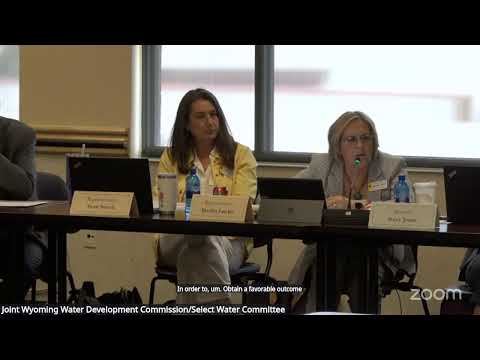
Josh Anderson of the Legislative Service Office presented a brief memo at the Agriculture, State & Public Lands & Water Resources Committee summarizing statutory authority for irrigation‑sector special districts to accumulate funds for major maintenance and large future capital needs.
The memo covered three district types — public irrigation districts, watershed improvement districts and water conservancy districts — and concluded that statutory provisions do not clearly authorize special assessments specifically earmarked for major‑maintenance reserve accounts. Anderson noted sinking‑fund language in parts of the statutes exists primarily to pay indebtedness rather than to set aside pre‑funded major‑maintenance accounts. A separate accumulated‑reserves provision in the special‑district chapter applies to some districts but does not create an unambiguous, universal authority for irrigation districts to levy an extra assessment and deposit it in a pooled, state‑managed reserve.
Committee members acknowledged the problem raised by some districts that face multi‑decade replacement of dams or diversion structures yet are constrained from building funded savings. Representative Lawley described an example where a district was told by counsel that statutes preclude accumulating cash for a future dam replacement and suggested the legislature consider narrowly targeted authorities that would allow reserves only when tied to an identified, documented project and subject to appropriate oversight.
Members discussed policy options: (1) create a limited statutory authority for irrigation and similarly situated districts to levy a restricted assessment for identified major‑maintenance projects and park those funds in a state‑managed investment vehicle; (2) expand existing accumulated‑reserve language to expressly cover public irrigation districts; or (3) leave authority unchanged and rely on local financing and grant options. Some members suggested a template approach in which reserve authority would be allowed only if a district submits a documented plan and timeline, and the funds are escrowed or pooled to prevent ad hoc accumulation without demonstrated need.
The committee did not adopt policy language at this meeting but asked staff and interested members to refine options for discussion at the next meeting.