Get Full Government Meeting Transcripts, Videos, & Alerts Forever!
Get email alerts on the Property Tax Reform topic
No spam. Unsubscribe anytime.
Butler County reviews local option to adopt homestead exemption and owner-occupied credit after House Bill 96
Summary
County administrators presented data on state House Bill 96 and local options to adopt the state's homestead exemption and an owner-occupied credit; officials discussed eligibility, possible costs and whether benefits can be targeted to specific neighborhoods.
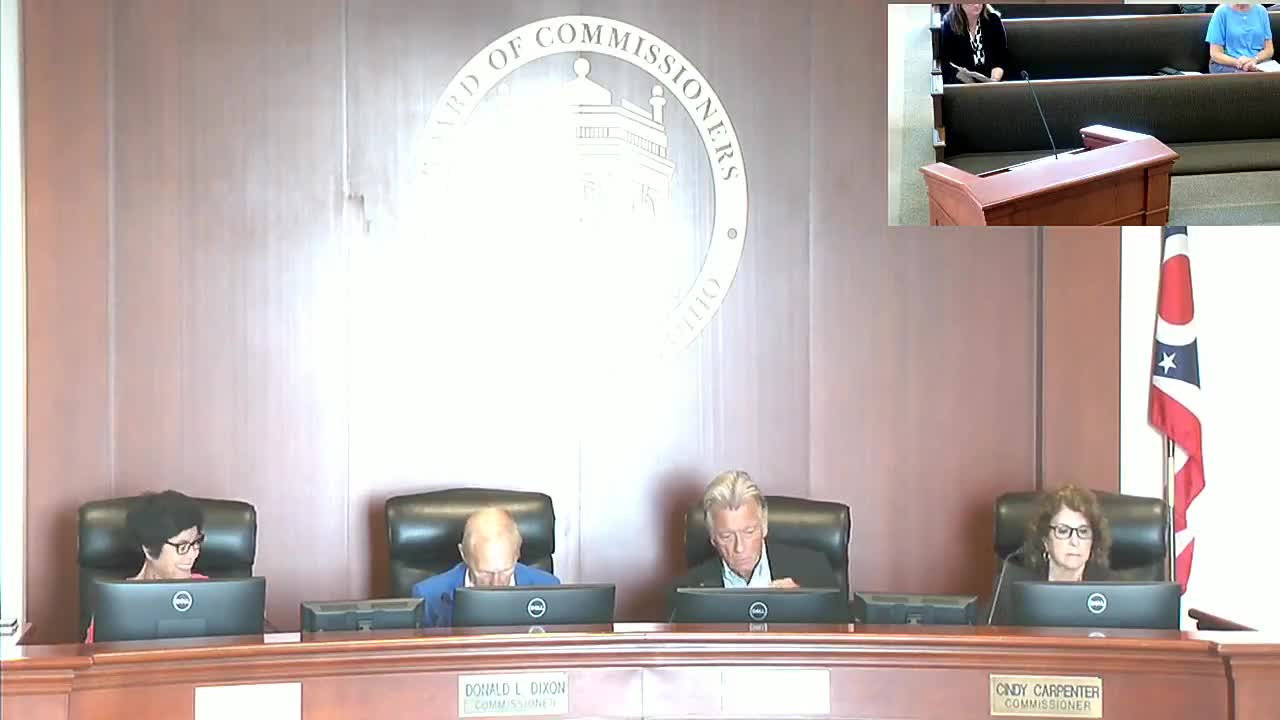
County Administrator Judy Boyko told the Butler County Board of Commissioners on July 29 that House Bill 96, the state's biennial budget bill for fiscal years 2026–27, included language allowing counties to piggyback the state's homestead exemption and to apply a local owner-occupied credit.
Boyko said the auditor's office has provided preliminary numbers to help the board consider whether to adopt either or both local options. "For those reductions if locally funded, about $7,200,000 would be a reduction in cost to taxpayers for the homestead exemption," Boyko said, adding that the auditor estimates the exemption would affect slightly over 18,000 Butler County residents who qualify as elderly, disabled, veterans or surviving spouses of veterans. She said the owner-occupied credit is currently applied in the county at about $8,900,000 to roughly 10,500 households.
The administrator emphasized the board has at least two implementation paths. "You have two paths should the board want to do something," Boyko said, explaining the county could either assume the cost directly or allocate the credit to taxing levies so that individual taxing entities would see reduced levies based on the total deductions.
Commissioner Dixon asked whether the owner-occupied credit could be limited to targeted areas to encourage homeownership in neighborhoods where cities such as Hamilton and Middletown are making investments. "When you're asking your questions about this, my question would be, can we use the owner occupied credit in targeted areas as part of their initiative to draw more homeowners into particular areas?" Dixon asked. Boyko said she was still researching statutory limits and could not confirm whether the credit could be geographically restricted.
Commissioner Carpenter pressed on the scale of the change. One comment from the public session framed possible effects at scale: "We gave back $26,000,000 in inside millage to every property owner in Butler County," a speaker said during public remarks, arguing the current proposal would benefit a limited number of households. That commenter abstained from supporting the concept in the meeting's discussion.
Why it matters: adopting either the homestead exemption or an owner-occupied credit would shift tax liabilities among county taxpayers and taxing entities and could reduce taxes for eligible homeowners. The board heard data but did not take a vote; Boyko said she will provide additional maps and breakdowns by political subdivision and further research on statutory eligibility so the commissioners can decide at a later meeting.
What remains unresolved: whether the owner-occupied credit may be geographically targeted, the precise levy-level accounting if the county elects to charge credits to taxing levies, and whether the board will fund the credits from county revenues or require taxing entities to absorb reductions. Boyko said she will return with more granular data and refreshed cost estimates.