Get Full Government Meeting Transcripts, Videos, & Alerts Forever!
Get email alerts on the Municipal Budget topic
No spam. Unsubscribe anytime.
Council prioritizes public safety, public works and retail development for operating-budget follow-up
Summary
At a study session council members ranked operating-budget priorities; public safety and public works were top priorities across members, and staff will bring proposed decision-package options for the budget workshop.
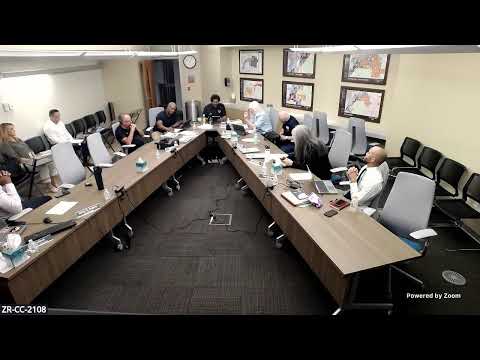
Commerce City council members ranked operating-budget priorities during a study session, signaling staff to return to the Sept. 8 budget workshop with decision-package proposals focused first on public safety, public works and retail development.
City staff presented a framework for ecision packages nd recommended focusing on core operations (the presentation referred to a 70/20/10 concept where about 70% of budget effort supports day-to-day services). Staff asked council to identify the top five operating priorities they would like the city to analyze further.
During a structured round of individual rankings, council consensus emerged around three top priorities most frequently named by members: public safety, public works (including street maintenance, storm-drain cleaning and a more proactive hot-shot crew for neighborhood cleanup), and retail development/economic development to recruit commercial services residents currently drive elsewhere to obtain.
Members also raised secondary priorities that staff should consider: redevelopment of Derby (downtown commercial area) and expanded parks and recreation programming and data collection. Several councilors suggested any analysis should include an impact-versus-effort assessment and clear costing (one-time pilot vs. ongoing operational commitments).
Staff said anything resulting from the priority list would require budget trade-offs: many items would be funded from the unassigned general fund balance or reallocated operating resources. The city manager noted some existing multi-year commitments (for example, a previously approved 7.5 million-dollar program) and warned that adding new recurring operations will require longer-term fiscal planning.
Council directed staff to place the compiled priority guidance on the council business calendar so that staff can return formal decision-package proposals at the September budget workshop; staff reiterated that the CIP decisions made previously are separate from these operating priorities.