Get Full Government Meeting Transcripts, Videos, & Alerts Forever!
Get email alerts on the Guaranteed Income topic
No spam. Unsubscribe anytime.
University of Michigan research: Ann Arbor guaranteed‑income pilot shows no year‑one reductions in food or housing insecurity, participants report greater hope
Summary
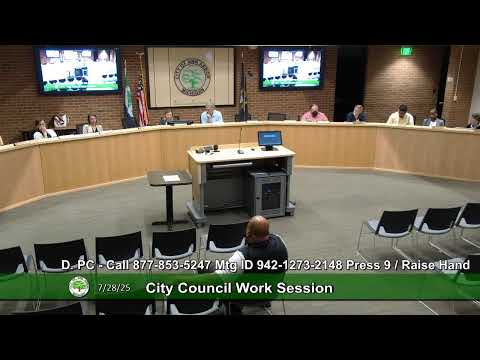
Kristen Seefeldt, a researcher with the University of Michigan, told the Ann Arbor City Council work session that preliminary results from the city’s ARPA‑funded guaranteed‑income pilot show no statistically significant difference on measures of food insecurity or housing instability after one year of payments, though participants report feeling better about their finances.
Kristen Seefeldt, a researcher with the University of Michigan, told the Ann Arbor City Council work session that preliminary results from the city’s ARPA‑funded guaranteed‑income pilot show no statistically significant difference on measures of food insecurity or housing instability after one year of payments, though participants report feeling better about their finances.
Seefeldt said the pilot, called Guaranteed Income to Grow Ann Arbor (GAI‑2), used a stratified random sample to select 100 recipients who receive $528 a month for 24 months and 100 comparison respondents who receive $25 a month for participating in the study. Eligibility was set for Ann Arbor residents with household income under 225% of the federal poverty level (about $56,000 for a family of three); the research team did not verify applicants’ self‑reported small‑business or entrepreneurial claims.
The interim analysis covered baseline surveys, year‑one surveys collected this winter and qualitative interviews. Seefeldt said the median age of participants is about 33, roughly 60% are women, and the sample includes a higher share of Black or African American residents than the city overall. She told council members that the research team did not find a statistically significant difference between recipients and comparison participants on measures of food insecurity, missed rent or mortgage payments, or utility shutoffs after one year.
"We don't find any statistically significant difference between those getting the payment and those not getting the payment on food insecurity," Seefeldt said. She added that the pilot group nevertheless reports higher subjective improvement: recipients were more likely to say their financial situation was better than a year earlier, and several interviewees described the payments as producing "a feeling of relief" and "dignity." (Quotes from Kristen Seefeldt.)
Nut graf: The city-funded pilot combines direct cash assistance with a research design intended to measure impacts over time. While early results do not show short‑term reductions in measured material hardship, researchers say qualitative responses about reduced stress and improved outlook are meaningful and that some impacts in similar pilots appeared only in a second year of payments.
Seefeldt cautioned that the results are preliminary: data checks and further analysis remain. She identified a notably high baseline rate of food insecurity in the study population — reported in the range of about 58–61% — substantially higher than national averages for low‑income groups, and said grocery price increases and SNAP eligibility gaps may blunt short‑term effects of $528 monthly payments. The research team also obtained waivers from the Michigan Department of Health and Human Services and the Ann Arbor Housing Authority so the pilot payments would not count against some benefits; they were unable to obtain a similar waiver from the Social Security Administration and advised SSI recipients against participation because payments could reduce SSI benefits dollar for dollar.
Seefeldt outlined next steps: the research team plans additional interviews this summer, a late‑fall survey before payments end, a public year‑one report, and academic journal articles required by the project contract. She said the last guaranteed‑income payment for recipients is scheduled for December and the project contract runs through 2026; staff intend to notify participants in advance and help connect them to other community resources before payments stop.
Council members asked whether the research team plans continued longitudinal follow‑up beyond the funded period; Seefeldt said the team is exploring additional funding and that the Ann Arbor Area Community Foundation has expressed interest. Council members also pressed for clearer public expectations about what guaranteed income can and cannot accomplish in a short timeframe. Seefeldt and team members emphasized the distinction between measurable short‑term changes in material hardship and reported improvements in psychological well‑being and dignity.
Ending: The University of Michigan team will return with a public‑facing year‑one report later this year and conduct one more survey before the payments end; the city and research team said they will coordinate participant communications about the close of the pilot.