Get Full Government Meeting Transcripts, Videos, & Alerts Forever!
Get email alerts on the Charter Review topic
No spam. Unsubscribe anytime.
Council to delay Charter Review Commission amendments, prioritizing more public education
Summary
Lakewood City Council decided July 21 to continue work on several Charter Review Commission recommendations and aim for a later ballot — likely 2026 — to allow more public education and technical preparation.
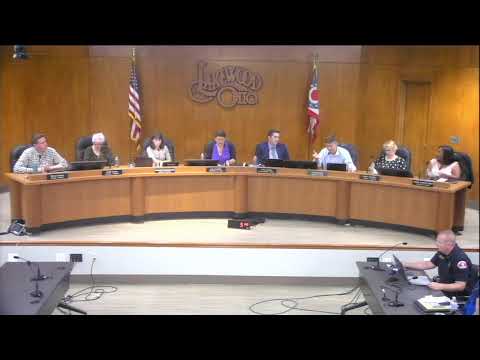
Lakewood City Council on July 21 agreed to continue deliberation and postpone any charter amendments derived from the Charter Review Commission’s recommendations until a later ballot cycle, with the goal of placing completed amendments on the 2026 ballot rather than attempting a rushed November 2025 submission.
At a Committee of the Whole earlier in July councilmembers had asked the law department to draft ordinances for multiple Charter Review Commission recommendations including: codifying the city’s enactment process for ordinances and resolutions; formalizing an open appointment process for filling council vacancies; adopting ranked‑choice voting for municipal elections; setting a formal post‑census ward redistricting process; and changing salary provisions for mayor and council. Assistant Law Director Swallow and Law Director Vargo provided drafts and legal context.
Council members broadly supported further deliberation and additional public education, especially on ranked‑choice voting. Staff noted that even if a change like ranked choice were approved by voters in November 2025, the earliest municipal elections that would be affected in practice would be 2027; one consultant example cited during the discussion showed jurisdictions taking three to four years from charter change to operational use because of voter education and technical (voting/software) upgrades.
Council consensus leaned toward accelerating internal drafting and committee work over the fall and then returning to the public conversation in early 2026 to allow a deeper public‑education program and careful timing with the next municipal election cycle. Councilmembers said they wanted to respect the Charter Review Commission’s work while making sure any changes had sufficient public outreach and technical readiness.
A member of the public, Chris Bindel, spoke in support of delaying the ballot measure to ensure changes are done correctly.
Why it matters: Charter amendments can alter the city’s governing document and the timing of elections. Councilmembers emphasized that procedural readiness and public familiarity with changes like ranked‑choice voting are key to a successful transition.
Next steps: The council will continue internal committee work on the drafted ordinances, identify committee leads or a process (committee of the whole or rules and ordinances committee) to shepherd the drafts, and plan public meetings and education activities throughout late 2025 and into 2026.