Get Full Government Meeting Transcripts, Videos, & Alerts Forever!
Get email alerts on the Conservation Tillage topic
No spam. Unsubscribe anytime.
South Alabama grower describes strip‑till residue management, urges consult with USDA NRCS
Summary
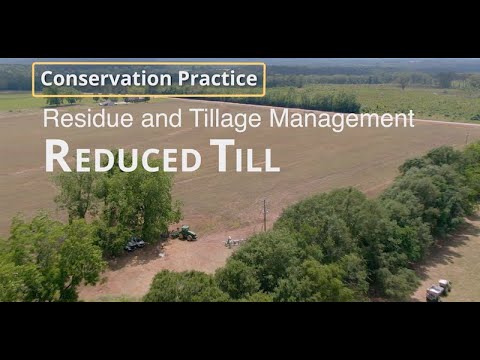
At a field recording near Sampson on Ryan McKenzie’s farm, a grower described using strip‑till and cover‑crop residue to reduce erosion, retain soil moisture and rebuild organic matter on about 500 acres, and recommended growers work with their local USDA Natural Resources Conservation Service office to develop a plan.
A grower speaking from a field near Sampson in south Alabama described using strip‑till residue management and cover crops to reduce erosion, retain moisture and rebuild organic matter on a roughly 500‑acre operation.
“Farming operation here consists of about 500 acres. We predominantly grow corn, cotton, soybeans, and peanuts,” the grower (Speaker 2) said, describing the scale and crop mix.
The grower explained the operation uses a strip‑till method that disturbs only about 12 inches of a 36‑inch row while leaving the cover‑crop residue between rows. “The residue from the cover crop is left in between the rows for erosion control, shading and the weed control,” Speaker 2 said, adding that the practice helps retain soil moisture and build organic matter in the warm, humid conditions of southern Alabama.
“I want to get a good mat out there. I want a good cover. I want a lot of residue. Predominantly, I use rye. It's something I can predict and manage appropriately,” Speaker 2 said, referring to the cover crop species used on the farm.
The grower described a typical planting sequence: terminating the cover crop, rolling it down, then planting into the residue with strip‑till equipment to conserve moisture and limit soil disturbance. They said they have been planting cover crops and planting into them for more than 20 years.
The speaker advised other producers to consult their local USDA Natural Resources Conservation Service (NRCS) office to develop a conservation plan that fits an individual operation. “I would recommend getting with your local NRCS and just developing a good plan that fits your operation. Have some goals and outcomes in mind that you would like to reach and sit down with them and see what might be available,” Speaker 2 said.
The remarks focused on on‑farm conservation practices and were offered as practical guidance; no formal actions, votes or policy changes were recorded in the transcript.
Details from the field recording indicate practices intended to address common resource concerns in the region, including low organic matter under hot, humid conditions. The speaker framed residue management as a tool for erosion control, shading, weed suppression, and gradual rebuilding of soil organic matter in a conventional row‑crop rotation.