
Hawkins County board asks state to direct sports-gambling revenue to K-12 capital projects
Get AI-powered insights, summaries, and transcripts
Subscribe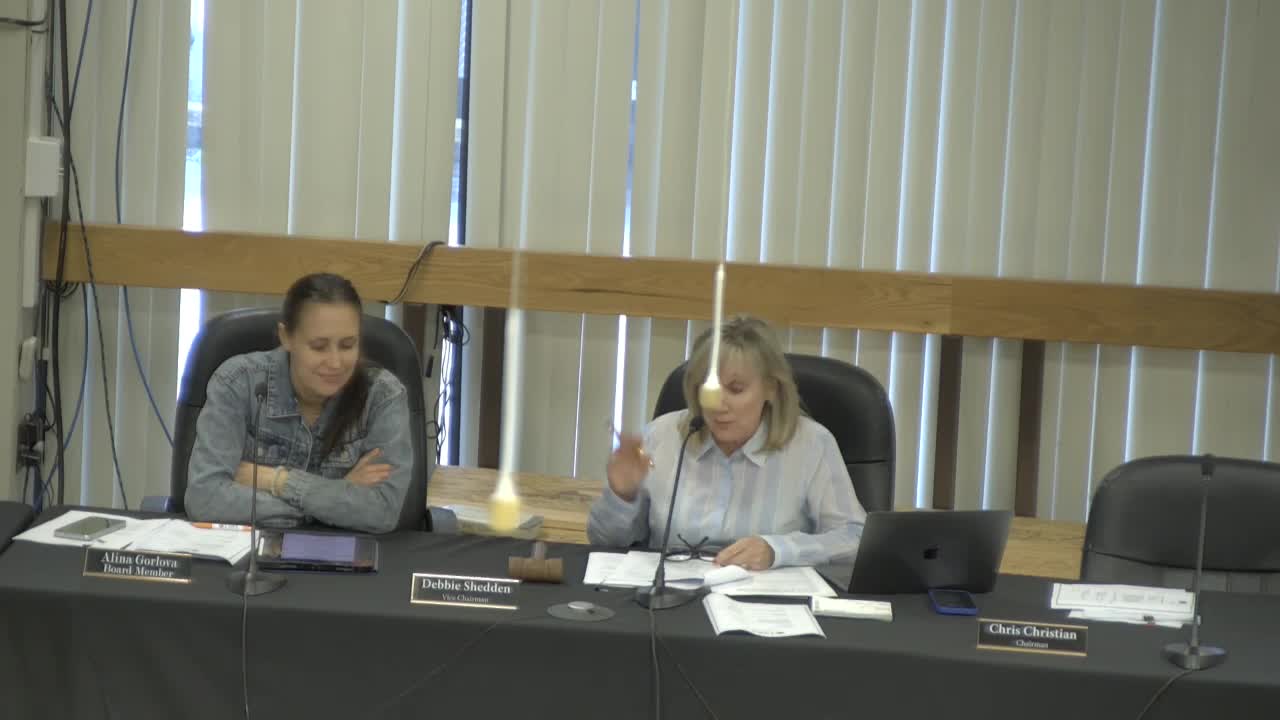
Summary
The Hawkins County Board of Education approved a resolution encouraging the Tennessee General Assembly and Gov. Bill Lee to use sports-gambling revenue for K–12 building and real-property improvements, citing aging school facilities and limited local funding options.
The Hawkins County Board of Education on a voice vote approved a resolution urging the Tennessee General Assembly and Governor Bill Lee to direct revenue from sports gambling to K–12 capital improvements.
Board Vice Chair Debbie Shedden read the resolution in full: “Resolution of the Hawkins County Board of Education encouraging the Tennessee General Assembly and Governor William Bill Lee to use revenue generated from sports gambling within this state to improve local school buildings and or real property.” Shedden said the measure is intended to add a new funding avenue for districts with aging facilities.
The board’s director of schools (staff member at the meeting) noted that many districts face similar capital needs and said the resolution, if passed by the Tennessee School Boards Association, would prompt TSBA to seek legislative action next year. The director also cautioned that lottery funds currently benefit higher education and do not fund K–12 capital needs.
Board members voted to approve the resolution and were asked to sign the document before leaving. The board said it will submit the approved resolution to the Tennessee School Boards Association for possible statewide consideration.
The resolution’s backers told the board they hope a coordinated effort through TSBA will allow lobbying at the state level next legislative session rather than asking local taxpayers to shoulder large bond measures.
The board did not set additional local funding or appropriation actions at the meeting; the resolution is a formal statement of preference to state lawmakers.