Get Full Government Meeting Transcripts, Videos, & Alerts Forever!
Get email alerts on the Irrigation topic
No spam. Unsubscribe anytime.
Local grower describes subsurface drip irrigation; USDA NRCS staff cite design and funding help
Summary
An NRCS staff member described subsurface drip irrigation being used on a field in northern Geneva County, Alabama, saying the system conserves water, suits irregularly shaped fields, and can be designed and funded with NRCS assistance. The speaker estimated roughly 20% water savings compared with center pivot systems.
An NRCS staff member described subsurface drip irrigation as a water-conserving alternative for fields in northern Geneva County, Alabama, and said the agency can help with system design and funding.
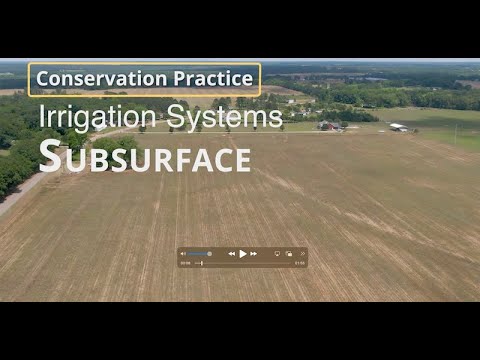
The staff member said the system uses drip tape installed under the soil surface and is suited to fields that ‘‘are not suitable for center pivot’’ systems or that have ‘‘dry corners on center pivot fields.’’ The field discussed is in the northern part of Geneva County near the Florida state line and sits on Dothan sandy loam soils, the speaker said. The operation on that field primarily rotates cotton and peanuts and also grows corn and vegetables including watermelons.
Why it matters: in this part of the Coastal Plain, water availability is limited and the smaller well capacity needed for subsurface drip can be an advantage over center pivot irrigation, the speaker said. ‘‘The sub surface drip is suited for a smaller well than you would need for a center pivot irrigation system,’’ the staff member said, adding that the Natural Resources Conservation Service can assist producers ‘‘with our engineers and help you with funding.’’
The speaker estimated water savings of about 20 percent compared with a center pivot system, saying that subsurface drip allows ‘‘we can effectively water crops with subsurface drip here.’’ The remarks emphasized water conservation and adapting irrigation technology to local soils and field shapes.
No formal decisions or votes were recorded in the transcript excerpt. The speaker framed the comments as practical description and an offer of technical and funding support from NRCS rather than a policy action or regulatory change.
The transcript excerpt included three contiguous remarks from the same speaker describing the practice, local soils and crops, the rationale for choosing subsurface drip over center pivot systems, an estimate of water savings, and the availability of NRCS technical and funding assistance.