Get Full Government Meeting Transcripts, Videos, & Alerts Forever!
Get email alerts on the Parks Trails topic
No spam. Unsubscribe anytime.
Hamilton County Regional Health Council presents Rails‑to‑Trails plan and health council role
Summary
The Hamilton County Regional Health Council described its history and a local Rails‑to‑Trails proposal in Soddy Daisy, including a six‑mile trail estimate of about $8 million and a $1 million grant for preliminary engineering.
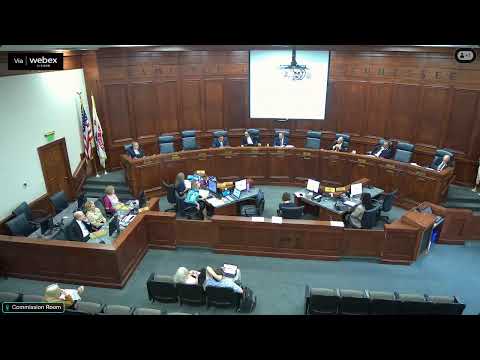
The Hamilton County Regional Health Council presented an overview of its role and a status update on a proposed Rails‑to‑Trails project in Soddy Daisy at the Aug. 20 Hamilton County Commission meeting.
The council, which serves as an advisory body to the Hamilton County Health Department, outlined its history of local public‑health collaboration and ongoing committees addressing addiction, aging and disability. The presentation included a detailed update on the Soddy Daisy Rails‑to‑Trails effort, a proposal to convert an existing Tennessee Valley Authority rail corridor into a six‑mile pedestrian and bicycle trail.
Why this matters: Trails and active‑transport projects can influence public health, recreation access and local economic activity. The council framed the project as part of its Step 1 initiative to promote healthy living and greater use of Hamilton County’s outdoor spaces.
Project status and funding Steve Meyer, chair of the Regional Health Council, said TVA currently holds the right‑of‑way for the six‑mile corridor; the council and county are engaged in discussions within TVA committees to secure transfer of ownership. County staff and council estimates place construction of a full six‑mile trail at about $8 million; Meyer said the county is considering phasing the work into three segments to match local priorities and funding availability.
The county previously applied for and received a $1 million grant to begin preliminary engineering and surveying for the project, Meyer said, adding that that award will cover initial design and data needed to advance later construction phases. “We were awarded $1,000,000 grant to begin preliminary engineering and survey, to be able to start quantifying the information that is needed for the design and the final project,” Meyer said.
Council background Crystal Howard, director of community health services at the health department, summarized the council’s origins in state guidance dating to the 1990s, its bylaws (adopted by the county commission in 1997) and its role in community health assessment and the community health improvement planning cycle. Skyler Phillips, vice chair of the council and a captain paramedic, reviewed membership rules and long‑standing programs the council supports, including tobacco‑control coalitions, infant‑mortality initiatives and post‑COVID mental‑health collaborations.
Next steps The council said it will continue meetings with TVA and county engineering staff to secure the corridor and progress design work after the preliminary engineering funded by the $1 million grant. Council members said they plan public outreach about phasing and alignment to identify the most used segments and minimize disruption to neighbors.
Ending note Council leaders invited commissioners and community members to future council meetings; the council meets monthly and posts agendas publicly.