Get Full Government Meeting Transcripts, Videos, & Alerts Forever!
Get email alerts on the Land Use topic
No spam. Unsubscribe anytime.
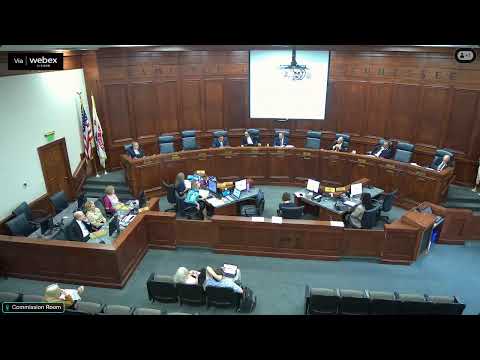
Hamilton County Commission adopts guidance on Plan Hamilton after heated public debate
Summary
After hours of public comment and tense floor debate, the Hamilton County Commission approved Resolution 825‑18 advising the regional planning commission on Plan Hamilton. Amendments and a 60‑day delay failed before the final adoption.
The Hamilton County Commission on Aug. 20 voted to send guidance to the regional planning commission on Plan Hamilton, a comprehensive land‑use framework for the county, after an hours‑long public comment period and vigorous debate among commissioners.
Supporters and opponents traded arguments for more than two hours. Residents warned the plan would increase density, strain roads, schools and emergency services and allow development in floodplains. Builders and Realtors urged the commission not to restrict growth, arguing housing demand will rise if mortgage rates ease and that limiting development will raise housing costs.
Commissioner Jim Mackey moved the resolution; Commissioner Chauncey seconded. An amendment by Commissioner Shipley to delay action for 60 days was proposed and later defeated. After further floor debate the commission approved Resolution 825‑18 as presented.
Why this matters: Plan Hamilton would guide where and how Hamilton County grows for years. Supporters say the plan offers clearer rules and new design standards; opponents say it centralizes control, fails to match local infrastructure capacity and was not shaped to reflect distinct district needs.
What the commission heard - Opponents said the proposal would reduce developable density across much of the unincorporated county and push growth into municipalities, increasing housing prices and traffic. “Stopping growth or seriously slowing growth not only isn’t the answer, it isn’t a realistic option,” said Julian Bell of the Home Builders Association of Greater Chattanooga, arguing the county needs options to meet demand. - Many residents asked for stronger limits on floodplain development, citing recent flooding and concerns about stormwater volume. “Filling in the floodplain and altering more stormwater to be released into waterways is a recipe for disaster,” said Kim Helton, a resident. - Commissioners representing largely unincorporated districts pressed that Plan Hamilton should account for district‑by‑district differences in roads, school capacity and emergency services. Commissioner Shipley said he wanted more time to get the plan “right” for high‑growth areas in his district. - Proponents from the housing industry said the plan already includes standards for buffers, landscaping, setbacks and limits on floodplain building recommended by development interests.
Floor procedure and outcome Commissioner Shipley introduced a motion to delay consideration of the resolution for 60 days so more local hearings and technical review could occur. That motion was seconded by Commissioner Highlander but failed on a roll call vote. The original resolution was then called up, debated and approved by the commission.
Votes at a glance (items considered publicly during the Plan Hamilton discussion) - Resolution 825‑18 — Guidance on Plan Hamilton: Motion by Dr. Mackey; seconded by Commissioner Chauncey; outcome: approved by the commission (recorded as passed during the Aug. 20 meeting). Vote tally not specified in the public record excerpt. - Amendment (motion to delay 60 days) — Moved by Commissioner Shipley; seconded by Commissioner Highlander; outcome: defeated on roll call (motion to delay did not carry).
What commissioners said “Very few people feel like we should have more density,” Commissioner Shipley said in the debate, framing much of the public opposition as concentrated and intense. Commissioner Smith, who said most callers in his district opposed added density, said he could not support Plan Hamilton as presented. Commissioner Sharp urged passage and noted the adopted plan can be amended later by the commission.
Next steps and context Plan Hamilton will proceed through the regional planning agency process and, if adopted by the regional planning commission, will be certified and return to the county commission for final adoption. Several commissioners emphasized that the plan, and subsequent subdivision regulations, can be amended in future cycles. Supporters and critics both signaled plans to continue negotiating specifics on lot sizes, floodplain rules, infrastructure sequencing and the frequency of rezoning considerations.
Ending note The debate underscored a broader county split between commissioners and constituents who favor tighter limits on development in rural and mountain districts and those who seek more housing production and less regulation. Commissioners emphasized the process remains iterative and promised further review of floodplain policy, infrastructure impacts and district‑specific standards.