Get Full Government Meeting Transcripts, Videos, & Alerts Forever!
Get email alerts on the Substance Abuse Treatment topic
No spam. Unsubscribe anytime.
New executive director for Southeast Intervention Group seeks community support and board members
Summary
Elson Tata, the new executive director of Southeast Intervention Group, briefed the commission on the downtown Dothan residential substance-abuse treatment program, its state block-grant funding, service model and need for outreach and board members during a transition following recent leadership losses.
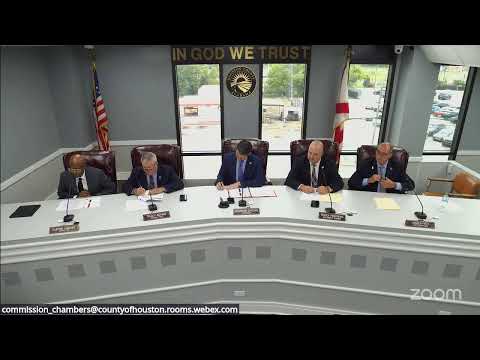
Elson Tata, identified in the meeting agenda as the new executive director of Southeast Intervention Group, gave a presentation to the Houston County Commission describing the organization and asking the community for support.
“We are a level 3.01 substance abuse treatment program, long term residential program that is operated right here in Downtown Dothan,” Tata said. He said the organization operates from six properties near Main and Herring streets and described it as a 501(c)(3) nonprofit funded primarily through state block grants from the Alabama Department of Mental Health.
Tata said the program draws clients from across Alabama and provides long-term residential treatment and case-management services aimed at helping participants regain licenses, secure insurance and find employment. He said many residents enter by court referral and that the program emphasizes accountability alongside services.
Tata told the commission the group is undergoing a leadership transition after the deaths of its founder, Dr. Larry Kirtland, and a later director, Joseph Johnson. He asked for help recruiting board members and community engagement to make the program more visible.
Tata said the organization has served the community for about 18 years and called for outreach so that family members and others know the program is available as a resource. “We are board driven, and and we're going through a period of transition,” he said.
The commission did not take any formal action on the presentation. A commissioner offered an anecdotal success story of a program graduate who settled locally and started a business, and Tata said the program has many similar long-term recovery cases.
Clarifying notes: Tata described the program as a “level 3.01” residential treatment program; he said the organization operates out of six properties in downtown Dothan near Main and Herring streets and identified funding as primarily state block grants from the Alabama Department of Mental Health. Tata stated the program “we have 30 beds, 20 men and 20 women,” a combination that is inconsistent in the meeting record; the transcript does not resolve whether the program has 30 or 40 beds. Tata also referenced program lengths and recovery pathways but did not provide a single, clear timeframe for completion.
No budget or county action was requested at the meeting.