Get Full Government Meeting Transcripts, Videos, & Alerts Forever!
Get email alerts on the Broadband Expansion topic
No spam. Unsubscribe anytime.
VNet Fiber says aging poles, rising make‑ready fees slow Erie expansion
Summary
Velocity Network (VNet Fiber) has expanded its Erie network but told city officials that expensive pole replacements, higher make‑ready and inspection fees, and complex underground conditions are the primary barriers to faster citywide fiber service.
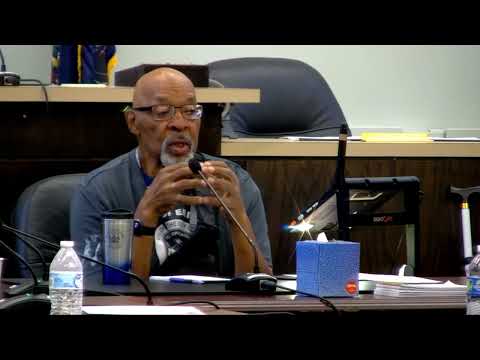
Brad Wertel, chief operating officer of Velocity Network (VNet Fiber), told city officials and residents that the company has extended fiber service to many Erie neighborhoods but is being slowed by the condition and cost of utility poles and by higher make‑ready fees from pole owners. “The challenge is the older utility poles and the access to those utility poles. I would say that is our number 1 challenge right now,” Wertel said during a presentation to city officials and community members.
Wertel showed maps of the company’s recent build areas — which he described as expanding from the Pittsburgh Avenue corridors and parts of Sixth Street up to West Grama Boulevard — and said the orange shading on the map marks blocks that can already receive VNet service. He said the company has about 6,400 subscribers in the Erie area and about 20,000 across its entire plant; roughly 9,000–10,000 of those additions came in the last 12 months.
Why it matters: Wertel said pole replacement costs and new inspection and post‑inspection fees have risen sharply, creating situations where the cost to make a single pole ready to attach fiber can reach tens of thousands of dollars. He illustrated that in dense, older neighborhoods — where poles and utility lines crisscross streets and where different companies own adjacent poles — make‑ready and replacement costs can multiply quickly and make block‑by‑block expansion economically challenging.
Details of the barriers and tradeoffs
- Pole access and ownership: Wertel described situations where FirstEnergy, Verizon or other pole owners control different poles on opposite sides of a street, and safety clearances require moving or raising lines before VNet can attach its fiber. He said some pole replacements can run into the “$15,000 for that 1 pole” range and in other parts of the city attaching to a single pole could cost as much as $20,000. He warned those costs can add up rapidly across a block.
- Make‑ready and inspection fees: Wertel said the company faces larger pre‑inspection, make‑ready and now post‑inspection fees than in earlier budgets; those charges, he said, have risen enough to change the economics of some builds.
- Underground versus aerial tradeoffs: In parts of Erie where utilities are underground, VNet sometimes must bury conduit, which is more expensive and can disturb trees, yards and pavement. Wertel said the company generally prefers to attach to aerial facilities where those exist and to use underground builds only where required or where existing conduit already makes burial practical.
- Service interruptions and repairs: Wertel said tree trimming and accidental pole damage still cause most fiber outages (tree trimming recently caused multiple, short cuts). He emphasized that local VNet crews repair outages rather than outsourcing.
Coverage, take rates and timelines
Wertel said residential take rates vary by neighborhood. He cited an area where take rate is about 13% and said VNet’s goal in a pocket is typically 25–30% subscription. He said some corridors and neighborhoods have performed “phenomenally” while others lag. On timing for imminent build areas (two small blue‑shaded sections on the company map), Wertel said, “If the weather isn't a problem, then it would be late this year. … I would say late this year, early next year.”
City coordination and financing
City officials questioned whether revolving loan funds or state grants could speed builds. Wertel noted the Broadband Association of Pennsylvania’s focus on unserved areas but said many Erie blocks already have cable providers that meet the FCC’s minimum broadband definition, which affects eligibility for certain funding. He also described active coordination with the city permitting office and encouraged continued “dig‑once” coordination on development projects to reduce future costs.
What was not decided
No formal votes or decisions were taken at the meeting. The presentation was informational, followed by questions from officials and residents and an offer by VNet to share more detailed zone data with city staff so the city can consider targeted funding or permitting coordination.
Ending
Wertel said Velocity Network plans to continue working closely with FirstEnergy, Verizon and city staff to “squeeze out as many of these areas as we can” from existing backbone lines and to pursue grant or loan options for difficult blocks. He invited residents to register interest on the company website and for officials to continue coordinating on permits and planned public works that could include conduit placement.