Get Full Government Meeting Transcripts, Videos, & Alerts Forever!
Get email alerts on the Telehealth topic
No spam. Unsubscribe anytime.
Garland council approves MD Pathways telehealth program amid public debate over opt-out billing
Summary
The Garland City Council approved a seven-year agreement with Pathways Physicians Texas PLLC (MD Pathways) to add a utility-bill–based telehealth service for residential customers after extended public comment and debate over an opt-out billing model. The measure passed 7–2; the mayor and one councilmember opposed.
The Garland City Council voted 7–2 on Aug. 19 to approve a seven‑year agreement with Pathways Physicians Texas PLLC (MD Pathways) to offer a community telehealth service billed through residential utility accounts.
Supporters say the program will expand access to quick, low-cost medical consultations for underinsured and uninsured residents. Opponents and many public speakers objected to the council’s plan to add the monthly fee by default and require residents to opt out if they do not want the service.
MD Pathways will offer telehealth access seven days a week from 7 a.m. to 10 p.m. under the contract approved by the council. The plan as presented calls for a per-account monthly charge that starts at $6 in year one, rises to $7 in year three, $8 in year four and $9 for years five through seven. The city estimates about 81,000 residential utility accounts would be eligible under the agreement as written; businesses would not be included without an amendment.
City staff and MD Pathways representatives described several safeguards added to the agreement in response to council questions: a six‑month pretrial reporting period, monthly reports to council during the initial phase, aggregated and de‑identified usage reports (staff said HIPAA‑protected health information would not be shared with the city), a $50,000 annual escrow to pay for additional customer‑service or implementation costs if needed, a $25,000 annual low‑income assistance fund, and an initial, MD Pathways‑funded pilot of up to 10,000 households beginning prior to billing rollout. MD Pathways representatives said they will fund an initial start‑up package (they estimated roughly $163,000 in startup costs), provide a community liaison for outreach (a nine‑month outreach program), and staff temporary call‑center positions to handle the initial surge in inquiries.
The council heard an extended public comment period: dozens of residents, some who had tested the service in pilot sessions, described quick diagnoses and prescriptions delivered within minutes. Other speakers — and several council members — said social media had fueled confusion about the program and urged broad community outreach before billing begins. Council members and staff repeatedly said the plan includes a robust public education campaign with multiple “touchpoints” to inform residents about how to opt out.
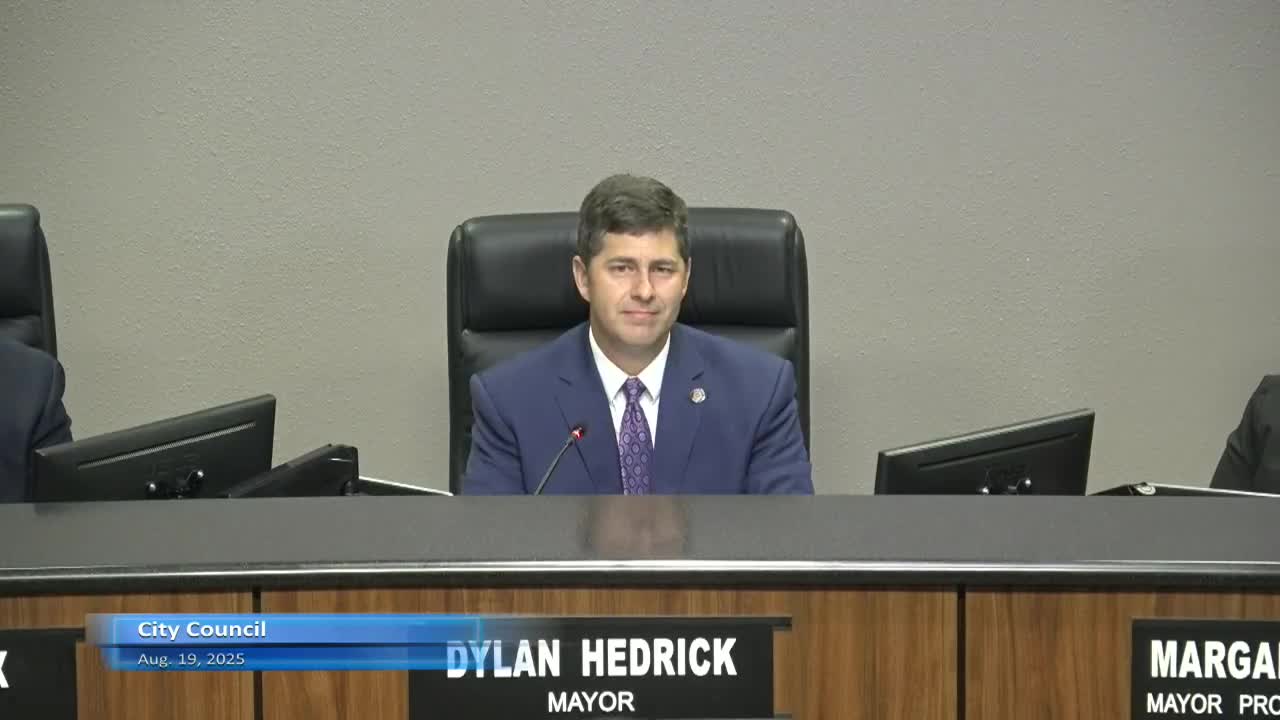
Councilmember Dutton moved to approve the agreement; Mayor Pro Tem Luck seconded the motion. The recorded vote was 7 in favor and 2 opposed; the mayor and Councilmember Moore voted no. Councilmembers recorded in the discussion as voting yes included Bass, Dutton, Williams, Luck, Ott, Beard and Thomas; no votes were recorded for the mayor and Moore.
The city manager’s office and MD Pathways staff said technical work is required to add the program to utility billing systems; that upgrade is expected to be completed before any billing occurs, with staff estimating a rollout to billing in spring to late summer of next year. The agreement gives the city options to cancel after six months and requires no termination fee for early cancellation during an initial review period.
Supporters argued the service will reduce nonemergency ER visits, shorten school absences tied to treatable illnesses, and provide rapid access to care for families who otherwise delay treatment. Opponents focused on process and consent: some council members and speakers urged a larger, opt‑in approach and more district‑level outreach before enrollment. Several council members pressed staff and MD Pathways to document metrics — participation, wait times, complaint volume and service interruptions — in the early months and report back to council.
The council directed staff to coordinate a public outreach schedule and to provide regular performance updates during the initial rollout period.