Get Full Government Meeting Transcripts, Videos, & Alerts Forever!
Get email alerts on the Ceqa topic
No spam. Unsubscribe anytime.
Planning commission hears briefing on June 2025 CEQA changes, VMT and infill exemptions
Summary
Outside counsel Devin Widrow briefed the San Clemente Planning Commission on key June 2025 amendments to the California Environmental Quality Act, covering the new infill housing statutory exemption, vehicle‑miles‑traveled (VMT) analysis, a state VMT mitigation fund and litigation-record limits.
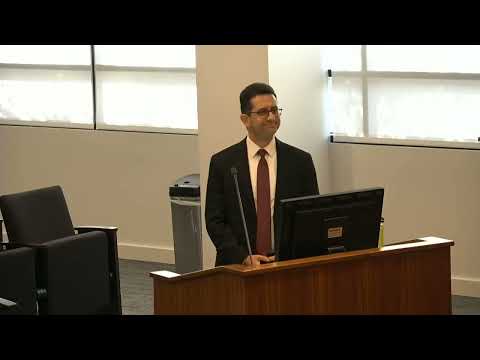
Devin Widrow, an attorney with Burke, Williams & Sorensen, gave a roughly two‑hour study‑session briefing to the Planning Commission on CEQA and recent statutory changes enacted in June 2025. Widrow told commissioners he would “throw a ton of information at you” and walked the group through CEQA basics, the three‑stage project/exemption/impact analysis, and recent state bills including AB 130 and SB 131.
The presentation outlined the new statutory infill housing exemption created by AB 130, and described the factors a city must evaluate to determine whether a residential or mixed‑use project qualifies. Widrow said the new infill exemption applies to many but not all projects: qualifying developments are generally under 20 acres (5 acres for certain builder's‑remedy projects), must meet local zoning and density requirements, cannot be sited on certain environmentally sensitive lands, and must include measures such as air filtration for units inside a freeway buffer and remediation when hazardous‑waste conditions persist.
Widrow also described the state's shift from level‑of‑service (LOS) traffic analysis to vehicle‑miles‑traveled (VMT) as the statutory metric for CEQA traffic impacts. He said VMT is now required for traffic‑impact determinations except in limited circumstances where an agency relies on a prior EIR that used LOS. He told the commission that agencies commonly still run both analyses in practice to avoid apples‑to‑oranges comparisons with prior documents.
The briefing covered the newly authorized state VMT mitigation fund. Widrow said the fund — expected to be operational by July 2027 — will allow project proponents to pay fees into a mitigation program, provided the payments are certified to produce actual reductions in VMT (similar to greenhouse gas offset programs). He explained that the state (for example CARB) will need to certify offset projects that demonstrably reduce VMT for the approach to be valid.
Widrow summarized other provisions in AB 130 and SB 131: a statutory infill exemption that includes tribal‑consultation timing and limited labor requirements for tall or fully affordable projects; new categorical exemptions for housing element implementing rezonings, nonprofit social services, broadband, wildfire risk reduction, parks funded by Prop 4 (2024) and other items; a “near‑miss” exemption process for projects that meet all but one exemption factor; and litigation‑record reforms limiting inclusion of internal staff communications in the administrative record unless those communications were presented to the final decision‑making body.
Commissioners asked several technical questions, including how VMT thresholds are set and when prior EIRs can be relied on for subsequent projects. Widrow emphasized that agencies should document substantial evidence in the administrative record and that older EIRs lacking VMT analysis or up‑to‑date GHG data will be more vulnerable to challenge.
The session was an informational study item; no formal commission action or vote was taken on CEQA matters at this meeting.