Get Full Government Meeting Transcripts, Videos, & Alerts Forever!
Get email alerts on the School Safety topic
No spam. Unsubscribe anytime.
Police, districts describe SRO coverage and threats; subcommittee asks Fresno PD to map campus incidents
Summary
Trustees and police officials reviewed school‑resource‑officer coverage, summer zone coverage, recent threat responses and the limits of patrol capacity; Fresno PD agreed to start compiling campus‑impact incident data to guide targeted responses.
School and city leaders used the subcommittee meeting to review how school‑resource officers (SROs) and municipal police handle on‑campus trespass, encampments and threats, and asked the department to aggregate incident data to help target responses.
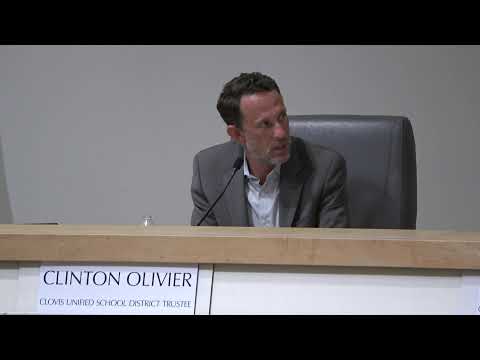
Fresno Police officials said SRO coverage is largely contractual: schools pay for officers for most middle and high schools, and when an SRO is temporarily absent the department uses 'zone coverage' and sergeants to fill shifts. The police explained they rarely have an uncovered school because the SRO contract obligates coverage and the department provides short‑term replacements. Clovis Unified trustees noted their district operates its own sworn police force of 16 officers and that Fresno PD provided assistance for a multi‑jurisdictional “swatting” case in recent years.
Trustees reported ongoing after‑hours incidents at some campuses — fencing cut, individuals camping on or near campus, tampering with sprinklers, and items that would be unsafe for students — and described recent examples at Adams Elementary, Roosevelt and the new Southeast high school. Trustee Hashimoto said maintenance crews continually patch fences and clear sites. Chief Casto (Fresno PD) said serious school threats prompt immediate, multi‑unit law‑enforcement responses, including detectives and federal partners when needed.
Council member Richardson requested a focused data product showing which campuses see the most incidents tied to homelessness and trespass so resource deployment can be strategic. Chief Casto said producing that report will require new queries and mapping work but that the department can begin capturing and mapping incidents tied to homeless impacts and campus incidents in the new school year; he described it as “retrievable” but requiring time to build queries. The chief recommended defining a search radius (for example, on‑campus versus a half‑mile) and said the department’s Homeless Assistance Response Team will be part of the response mix.
The subcommittee recorded follow‑up items: Fresno PD will begin building incident queries and mapping for school‑related homeless impacts and trespass calls with an aim to present initial data later in the calendar year; districts will identify problem campuses for prioritized outreach; and staff will coordinate to identify potential SRO coverage or other site‑specific interventions. Trustees and council members said they want the data to drive targeted shelters, cooling centers or other safety measures near high‑impact campuses.