Get Full Government Meeting Transcripts, Videos, & Alerts Forever!
Get email alerts on the Behavioral Health Providers topic
No spam. Unsubscribe anytime.
Rogers Behavioral Health outlines local PHP/IOP services, first‑responder virtual program and residential options
Summary
Rogers Behavioral Health presented its Miami clinic services, evidence‑based treatments (ERP, prolonged exposure, DBT), current capacity and outcomes, and described a virtual Fire Watch intensive outpatient program for first responders and a residential continuum in Wisconsin that treated Florida residents.
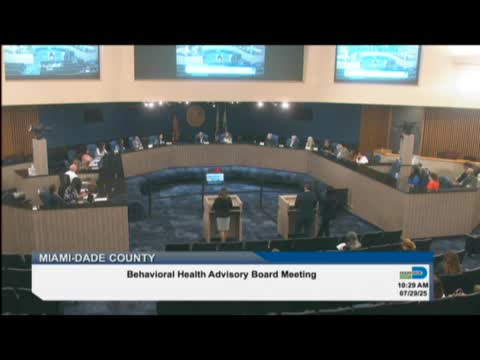
Rogers Behavioral Health representatives briefed the Miami‑Dade Behavioral Health Advisory Board on July 29 about the services available at their Miami clinic and the broader Rogers system of care.
Andrea Preisler, director of operations for Rogers Miami and Tampa, introduced the team; Dr. Heather Jones, vice president of clinical services, described clinical programs and outcomes. Rogers said the Miami clinic offers partial hospitalization (PHP) and intensive outpatient (IOP) services for children, adolescents and adults, is expanding outpatient services, and currently has capacity for 28 patients (including 8 child slots for PHP/IOP). "We see children starting at the age of 6 in our Miami clinic," Jones said. The clinic reported six clinicians on staff at the time of the presentation and said it is recruiting to increase capacity.
Rogers emphasized evidence‑based treatments. Dr. Jones described exposure and response prevention (ERP) for obsessive‑compulsive and anxiety disorders, prolonged exposure and written exposure therapy for post‑traumatic stress, behavioral activation for depression and dialectical behavior therapy skills for emotion‑regulation difficulties. She said Rogers measures outcomes with repeated self‑report instruments during care and reported a roughly 30% improvement in self‑reported quality of life during PHP/IOP episodes and effect sizes in the 0.8 range for their program metrics. The group reported a 7% readmission rate to Rogers services compared with a stated national average of about 22%.
Rogers also described specialty programs and a foundation that subsidizes care. The system operates residential programs in Wisconsin for OCD, eating disorders and trauma, and Rogers said 60 Florida residents accessed its residential programs in 2024. Dr. Jones said Rogers’ foundation provided roughly $1.8 million in patient care grants in 2023 to help make care accessible. Rogers said it is in network with major commercial payers; the Miami clinic was not accepting Medicaid at the time but the system is exploring Medicaid participation for Florida.
The board asked operational questions about capacity and access. Staff said they track discharge planning and warm handoffs, start discharge planning at intake, obtain releases of information to coordinate with outpatient providers and aim to confirm follow‑up care. Rogers’ local community liaison said she can arrange clinician‑to‑clinician meetings, tours and referrals.
Why it matters: the clinic provides local PHP/IOP options, family‑inclusive care and a virtual, evidence‑informed intensive outpatient program for first responders. Board members raised prevention‑versus‑treatment priorities for first responders and asked about therapies such as EMDR and ART; Rogers said EMDR is an evidence‑based option though the Miami clinic focuses on the therapies described in the presentation.
Rogers invited board members to visit the clinic and follow up on capacity and payer questions.