Get Full Government Meeting Transcripts, Videos, & Alerts Forever!
Get email alerts on the Building Electrification topic
No spam. Unsubscribe anytime.
Committee approves amendments to require electrification in major renovations with exemptions and waiver process
Summary
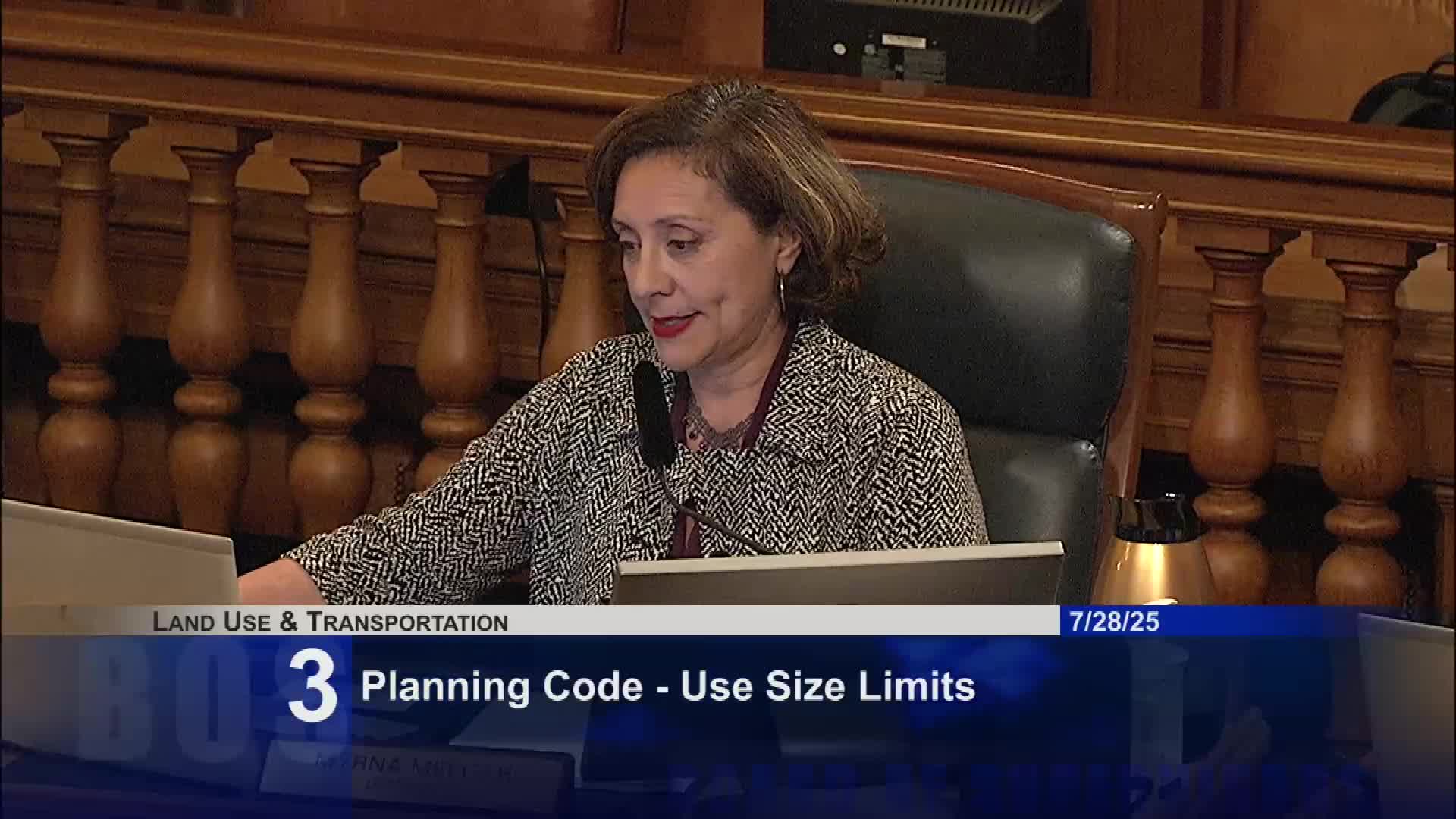
The Land Use and Transportation Committee on July 28 adopted amendments and forwarded an ordinance that would require all‑electric systems for buildings undergoing major renovations, while adding phased exemptions and an expedited waiver process for affordable housing and certain commercial uses.
The Board President’s ordinance to require all‑electric systems in buildings undergoing major renovations advanced from the Land Use and Transportation Committee on July 28 after the sponsor offered multiple amendments addressing timing, exemptions and administrative procedures.
Sponsor Board President Rafael Mandelmann said the proposal builds on San Francisco’s 2020 all‑electric new construction policy and aims to reduce indoor air pollution and greenhouse gas emissions by requiring electric systems when a project’s scope is equivalent to a major renovation or an addition. Mandelmann described a phased approach and proposed amendments to ease near‑term impacts on affordable housing and certain commercial operations.
Key amendments presented to the committee included pushing the ordinance effective date to July 1, 2026; phasing affordable‑housing requirements so 100% affordable projects have additional time and a staged compliance timeline; exempting certain commercial food‑service and factory‑industrial uses (including bakeries) where electric alternatives are infeasible; allowing reuse of recent mechanical systems under limited conditions; and establishing an expedited waiver process administered through a municipal green building task force with MOHCD participation. The sponsor also proposed language to allow steam generated off‑site to serve space conditioning, water heating, laundry equipment and cooking appliances where appropriate.
Cindy Comberford and Tyrone Zhu of the Department of Environment presented technical background showing buildings account for a large share of the city’s greenhouse gas inventory, and they cited public health research tying gas combustion indoors to asthma and other impacts. Planning and environment staff described cost comparisons that show electrification during a major renovation is typically less expensive than retrofitting later and noted available federal, state and local incentives for heat pumps and induction equipment.
Public comment included affordable‑housing developers and nonprofits that supported electrification goals but urged longer timelines, clear and predictable waiver criteria and funding support to avoid delaying critical rehabilitation projects. Mission Housing Development said without clear funding or a permanent feasibility exemption some rehabs could be delayed, reducing habitability. Environmental and public‑health groups urged prompt action. Cordia Energy supported the sponsor’s proposed language to allow use of district steam where applicable.
The committee voted to adopt the sponsor’s amendments, duplicate the file for further follow‑up, recommend the amended ordinance as a committee report to the full Board and continue the duplicated version to the call of the chair. The motions passed with three ayes recorded from Vice Chair Chen, Member Mahmood and Chair Melgar.