Get Full Government Meeting Transcripts, Videos, & Alerts Forever!
Get email alerts on the Public Safety Funding And Staffing topic
No spam. Unsubscribe anytime.
SANDAG report: Carlsbad's public-safety spending rose modestly; department reports recent staffing additions
Summary
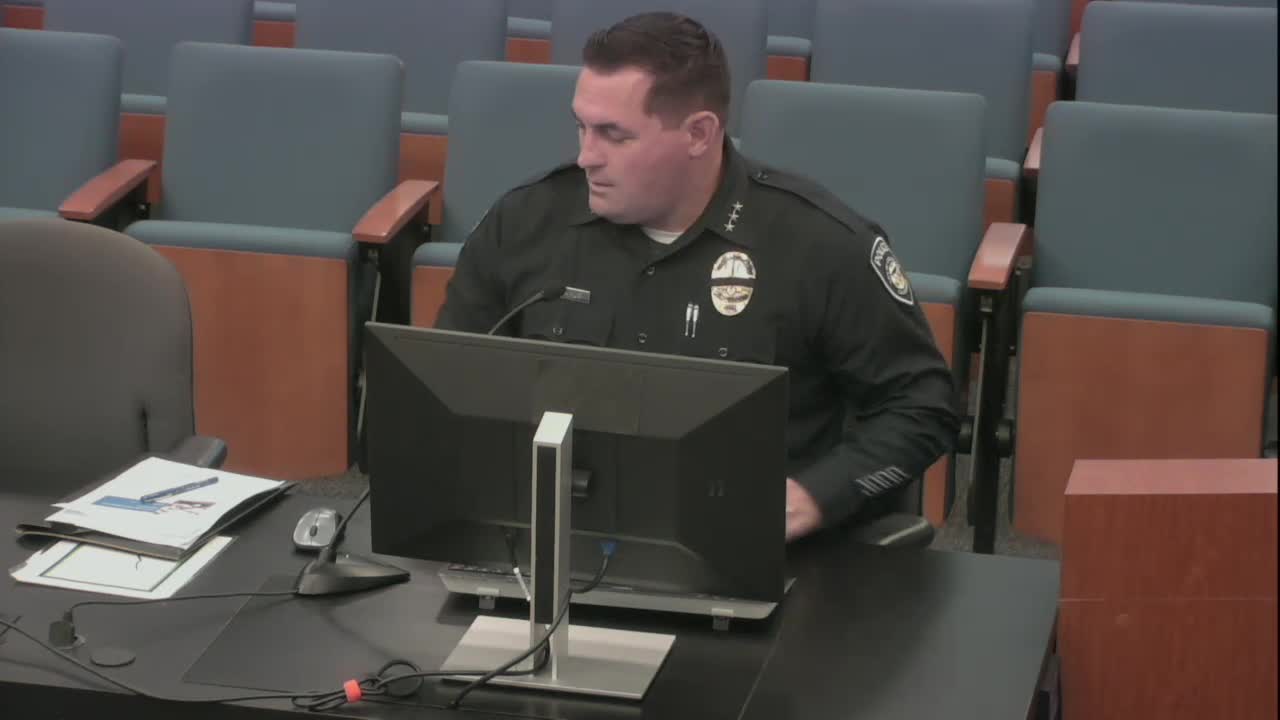
Assistant Chief Reid Shipley summarized SANDAG/ARGIS findings on regional public-safety spending and explained recent and planned Carlsbad Police Department staffing additions and grant sources.
Assistant Chief Reid Shipley presented a summary of the San Diego Association of Governments (SANDAG) and ARGIS regional report on public-safety allocations for fiscal year 2023-24 and gave a Carlsbad-specific update on staffing and grants.
Shipley said the SANDAG/ARGIS report showed regional public-safety spending totaled nearly $3 billion, with about 48% allocated to law enforcement. He noted many agencies reported staffing challenges since the pandemic and that staffing dynamics reflect multiple local and national factors. Shipley said Carlsbad's public-safety expenditures increased modestly from the prior year and the city improved its officer-per-population ratio slightly.
Shipley told commissioners the council had recently endorsed additional personnel for the department for fiscal year 2025-26. He said the authorized additions include positions allocated to patrol and specialized functions: a special events sergeant, an Internet Crimes Against Children (ICAC) detective and a digital forensics specialist (the digital forensics hire was described as ongoing). He said bringing digital forensics in-house will reduce turnaround time for cases that previously required regional lab assistance.
On grant funding, Shipley said the department pursues state and federal grants for a range of needs, including officer wellness programs, homeland-security equipment and traffic-safety enforcement (including OTS-sponsored programs for DUI checkpoints). He described the Stonegarden grant (federally funded and administered regionally) as an example of a federal program for border-related enforcement that requires county-level administration and council approval to accept funds.
Commissioners asked for clarification on grant sources and distribution; Shipley said some grants flow through the county or through regional administrators and that council approval is required for the city to accept and administer awarded funds.
No formal action was taken by the commission during the briefing.