Get Full Government Meeting Transcripts, Videos, & Alerts Forever!
Get email alerts on the Infrastructure Water Sewer topic
No spam. Unsubscribe anytime.
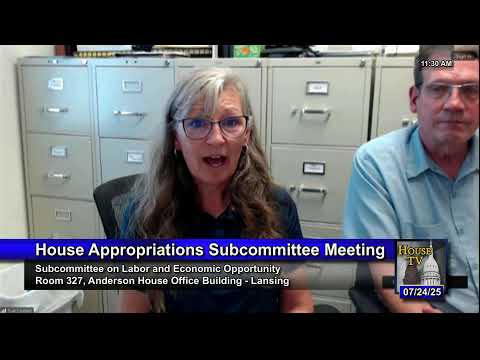
House subcommittee hears scores of water, sewer and flood funding requests across Michigan
Summary
Local officials and state representatives urged the House Labor and Economic Opportunity appropriations subcommittee to fund dozens of municipal water, sewer and flood projects — citing public-safety risks, failing infrastructure and economic harm — while most requests remain unfunded and no votes were taken.
Lansing — Local officials and state representatives asked the Michigan House Appropriations Subcommittee on Labor and Economic Opportunity on Feb. 18 for state legislatively directed spending to address failing wastewater systems, stormwater and flood-control projects across the state.
The requests ranged from immediate repairs meant to prevent sewage discharges to multi‑million‑dollar projects intended to restore closed recreational waterways and reduce flood risk. No formal votes or awards were made during the hearing; committee members listened, asked questions about timelines and prior funding, and noted other funding sources that had been pursued.
Why it matters: Committee members repeatedly framed the requests as matters of public health, environmental protection and local economic stability. Speakers described sewage overflows, pumps at or past design life, sharply rising rate burdens on small customer bases, and closed waterways that have cut off boating access and tourism dollars.
Most urgent requests and presenters
- Shiawassee River / nitrification towers (local request for $15 million): Testifiers said an aging wastewater treatment component — described as a nitrification tower — is the most immediate risk; if it failed it could release an estimated 6,000,000 gallons of sewage into the Shiawassee River, which flows to Saginaw Bay. Presenters said most other work on the larger system would be phased but that this component would be moved forward immediately if funded. No single municipal or presenter name was consistently tied to the testimony in the record; the committee exchanged technical questions about other grant attempts and long‑term rate impacts.
- Midland area flood reduction and dam rebuilding (Rep. James Schutte): Schutte asked for two separate appropriations: $10 million toward rebuilding dams managed through the 4 Lakes Task Force and $110 million for a broader flood‑reduction initiative for downtown Midland and downstream areas. He said the 2020 flood damaged dams and threatened critical facilities and residences and argued the state should help reduce special assessment burdens on homeowners who lost property in the 2020 event.
- Port Huron — Black River Canal (city manager James Fried, harbor master Michael Davenport): The city requested $6.5 million to rebuild a destroyed Tainter flood gate, armor canal banks and repair seawalls after an ice jam in 2014 damaged the gate and the canal has remained closed. Fried said the canal’s closure harms tourism, local businesses and maritime safety because boaters can no longer find safe refuge through the canal.
- Village of Beulah sewer system (Rep. Roth): Roth described a failing sewer system serving about 380 homes and said a total project cost is roughly $12 million; the village seeks loan support and Roth proposed a state contribution of about half the cost contingent on the village adopting stronger maintenance practices. He said EGLE (Michigan Department of Environment, Great Lakes, and Energy) had cited the system and threatened closure.
- Lake Mitchell Sewer Authority (Rep. Fox): Rep. Fox requested $5 million to relieve rate pressure on about 800 users served by the Lake Mitchell Sewer Authority and to fund necessary pump and system repairs. He said rates rose from $31.73 per month in 2016 to about $174 per month currently and that 9% of users were delinquent on payments.
- City of Portland wastewater and sewer needs (city manager Andrew Jamczyk): Portland asked for three line items: $4.1 million to finish an already‑designed treatment‑plant enhancement, $1.5 million for three lift stations, and $3.6 million for stormwater/sewer‑line assets identified in the city’s stormwater asset management plan. Jamczyk said bids originally came in above local capacity and the community has already enacted steep rate increases.
- Erie Township / Bedford sewer extension (Rep. Brooke): The project would extend Bedford Township’s sewer system about six miles to serve Erie Township and an area school; total cost cited was about $12 million with roughly $4 million secured and the request for the remainder (about $8 million). Speakers said the extension would halt sewage overflows from aging on‑site systems and enable growth and stability for schools and businesses.
- Otsego County Economic Alliance / Treetops (Rep. Borton; Jason Shepherd): A previously appropriated allocation was returned to the state after the City of Gaylord would not act as fiduciary as intended. Rep. Borton and former Rep. Jason Shepherd requested $3.75 million to repair a private but environmentally sensitive wastewater treatment facility at Treetops Resort that also serves adjacent subdivisions and future workforce housing plans.
- Collin Township (Rep. Beeson) — “Lake Louie” storm‑sewer / road flooding ($1.9 million requested): Representative Beeson described repeated road closures, stranded residents, mail service interruptions, washouts and public‑safety access problems on a local public road that ponds after minor rain events. He said the township will maintain any pump but lacks capital to install the system.
- Blendon Township water infrastructure ($922,000 request): Township and manager Greg Golombiewski said ground‑water supplies have diminished and the township recently denied a housing development because of well limitations. The project would connect to a neighboring Georgetown Township main to provide municipal water and enable residential development.
- Rockwood wastewater plant modernization ($1.5 million request): Rockwood officials said the plant, built in 1939, needs major equipment replacements (control panels, pumps, valves and mixers). Mayor Troy Cox said the city is finishing a $2 million bond and the requested amount would cover a longer‑term solution to avoid backups and environmental releases.
- City of Alpena clear‑well replacement (additional $3 million): Alpena reported a 1922/1935 clear‑well system with prior repairs; recent bids exceeded an awarded $6 million MEDC grant and the city tapped fund balances, leaving a gap of about $3 million needed to finish the replacement and supporting piping/valving work.
- Port Huron, Cadillac, Mancelona, Beulah and other smaller systems: Multiple smaller jurisdictions requested sums from about $608,970 (Bronson UV disinfection equipment) to $2.5 million (odor and corrosion control facility in the Oakland‑Macomb interceptors) for targeted repairs, upgrades or equipment replacement.
Funding status and other sources
Presenters repeatedly told the panel they had sought other funding: federal USDA loans, MEDC grants, ARPA allocations, SRF loans, local millages, and EGLE grants. Several projects described prior appropriations that were returned to the state because the originally named fiduciary (a city or agency) would not apply funds as intended. Committee members asked about engineering timelines, administrative costs and whether projects can be done in phases; presenters generally said engineering is complete on shovel‑ready sites, some projects could be completed within months and others would be multi‑year efforts.
Quotes
Mayor Troy Cox, Rockwood: "System failure means a public health crisis from sewage backing up into our residents' homes, flooding of basements and toilets, and possible environmental damage from leakage into the nearby Huron River."
Fire Chief Matt Covey, Springfield Township: "These wells would provide an immediate reliable water source delivering 300 to 500 gallons per minute, meeting NFPA standards and the international fire code standards that we currently follow today."
Rep. Fox (Lake Mitchell): "Today as of today, 9% of the users are delinquent on their payments," a figure he said drives risk of foreclosure for property owners and threatens a local housing supply.
What the committee heard about implementation
Many requesters emphasized that local governments either lacked the tax base to absorb costs or had already raised rates to unsustainable levels. Several speakers described work that is already designed or bid, often with bids coming back higher than budgeted. A number of projects said local entities will cover operation and maintenance, if the capital cost is provided.
No decisions today
Committee members asked questions but did not adopt motions or vote. The hearing record shows questions about administrative fees, project phasing, alternative funding and the effect of state involvement on required local special assessments. Presenters repeatedly said they sought state help to avoid extreme rate shock to small, often low‑income customer bases.
Next steps
Committee members will consider these requests through the appropriations process; no award decisions were made at the hearing. Several presenters said they would pursue federal loans or local matches if partial awards are made.
Ending: The subcommittee adjourned after hearing dozens of requests, leaving program and fiscal staff to evaluate which projects meet legislative priorities and statutory eligibility for legislatively directed spending.