Get Full Government Meeting Transcripts, Videos, & Alerts Forever!
Get email alerts on the Development Stormwater topic
No spam. Unsubscribe anytime.
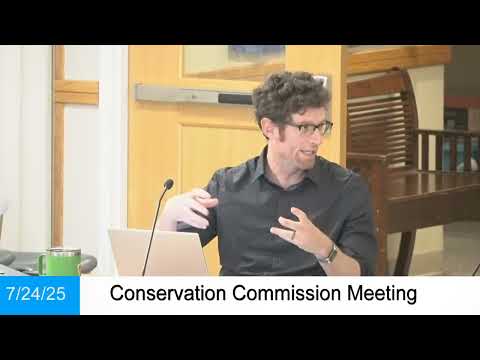
Conservation Commission issues order of conditions for Raising Cane’s at 200 Endicott Street
Summary
The Danvers Conservation Commission closed the public hearing and issued an order of conditions for a Raising Cane’s restaurant at 200 Endicott Street (DEP 14-1439). The project reduces impervious area on a site that straddles the Danvers–Peabody line, adds stormwater controls and a planting plan.
The Danvers Conservation Commission on July 24 voted to issue an order of conditions for the Raising Cane’s quick-serve restaurant proposed at 200 Endicott Street (DEP file 14-1439).
Matthew Ashley of Boller Engineering, presenting for the applicant, described a redevelopment that converts an existing Fidelity Investments building and parking area into a roughly 3,300-square-foot Raising Cane’s with a dual drive-through and 29 parking spaces. Ashley said the plan reduces impervious cover on the site by about 17 percent and adds stormwater controls, including deep-sump hooded catch basins, vegetated filter strips and either a subsurface infiltration system or a surface basin.
Why it matters: the site straddles the Danvers–Peabody town line and drains toward a perennial stream that the applicant proposes to stabilize with a channelized, riprap-reinforced swale. The project proposes more than 100 trees and shrubs and roughly 180 ground-planting units to replace sparse existing landscaping.
Commission action and rationale: The commission closed the public hearing and then voted to issue an order of conditions with “additional conditions as discussed” on the record. Staff and commissioners noted they had not yet received a final engineering memo from town engineering but said the work in Danvers falls principally between the 100-foot and 200-foot riverfront buffers and that the plans represent an improvement over existing unmitigated runoff.
Speakers and concerns: Ashley said the design will reduce peak runoff rates, promote recharge and clean runoff before it reaches the river. Commissioners asked whether changes required by planning or engineering would trigger a return to the Conservation Commission; staff said major footprint changes would prompt return, but minor engineering adjustments likely would not.
Next steps: The project will continue through the town planning and engineering review processes; staff will monitor any later plan changes that affect the footprint or wetland jurisdiction. The order of conditions was issued on July 24 and recorded in the commission’s permit files.