Get Full Government Meeting Transcripts, Videos, & Alerts Forever!
Get email alerts on the Hccbg Allocations topic
No spam. Unsubscribe anytime.
Buncombe County advisory committee reports small statewide cut to HCCBG funds; shifts in local allocations and data push follow
Summary
Committee members were told Home and Community Care Block Grant (HCCBG) allocations arrived smaller than estimated, prompting a 1% proportional reduction across providers, plus discussions about returned supplemental funds, completed contracts, expenditure reports showing full utilization, and plans to revise scoring and collect demographic data.
Buncombe County’s Home and Community Care Block Grant (HCCBG) Advisory Committee on July discussed a smaller-than-expected HCCBG allocation that triggered a proportional reduction across local providers, updates that most supplemental aging contracts are complete, and plans to revise how the committee scores grant applications and gathers demographic data.
The committee was told the county’s HCCBG award arrived below the estimate the group used in its planning. The shortfall total conveyed in the meeting was $17,761, which was applied proportionally across funded programs; that reduction amounted to about 1% and reduced Mountain Mobility’s award by $5,000. Committee members said the cut was unwelcome but was applied evenly across providers.
Allison, a county staff member, told the committee that commissioners had approved the county funding plan and the allocations the committee had recommended. “Everything was approved by the commissioners,” Allison said, and staff reported most contracts for the supplemental aging funds were completed and would be sent out by the end of the month as sign-offs finish.
A year-end expenditure review showed units-of-service and allocations largely met targets. County staff said the units-of-service report indicated most programs reached their expected service levels; staff monitoring and some reallocations late in the year—using returned or underutilized funds—helped reach 100% funding utilization in many line items. Staff said funds relinquished by lower-performing providers were reallocated to Jewish Grama Services, Meals on Wheels, and Mountain Care, with a portion reported to have gone to PISA legal services.
Committee members also reviewed the Buncombe County supplemental aging funding and noted two providers—recorded in the meeting as UNITA and InHomeA—did not spend their full awards. The county reclaimed roughly $89,000 from those under-spent awards this cycle; committee members said they were disappointed the money reverted to the county rather than being redistributed to other programs this fiscal year.
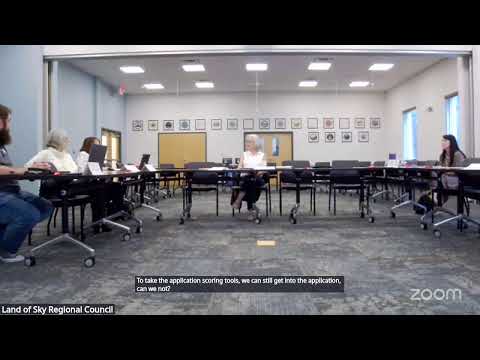
Beyond fiscal housekeeping, much of the meeting focused on planning the FY26 funding cycle. Members agreed to examine the current application scoring tool and consider changes so the tool measures community need in addition to grant-writing quality. The group discussed collecting additional demographic and geographic data from applicants (for example ZIP codes and underserved populations served) and using county resources to map concentrations of older adults and service gaps.
Zach, a county data/finance staff member, described early work to produce maps using geographic information systems (GIS) and census data; he said once he has the GIS workflow in hand he will report back with maps showing concentrations of older adults countywide. Committee members said such maps, together with provider-supplied ZIP-code data, could help target funds across Buncombe County and reduce the risk of concentrating services in a small area.
Members proposed inviting providers to present short, focused updates at regular meetings or scheduling site visits so the committee can better understand front-line activities and operational challenges. The committee discussed timing these presentations in the months before the application window closes, so members can factor the information into scoring and allocation decisions.
Speakers also reviewed demographic information available from client registration forms used by some providers. One provider-representative reported that a local program served 2,041 individuals in the past fiscal year, 1,325 were female, 1,110 lived alone, and that 1,260 clients were classified as “at risk” under activities-of-daily-living assessments. That speaker also noted only 891 clients identified themselves as at or below the federal poverty level, suggesting many service users fall above the poverty threshold.
The committee assigned homework: members will review the current scoring language and propose adjustments that capture both need and program impact. Staff will circulate the adjusted allocations and the scoring tool in advance of the next meeting; members suggested holding provider presentations through the fall so members can better understand program delivery and evidence of impact before FY26 allocations are finalized.
The meeting closed after the committee scheduled a follow-up to review scoring language and to consider how to collect and use demographic and geographic data when making funding recommendations.
Ending: The committee did not make new funding decisions at this meeting beyond confirming the proportional adjustment and the administrative updates; it directed staff to circulate revised materials and to pursue mapping and provider outreach ahead of next year’s grant cycle.