Get Full Government Meeting Transcripts, Videos, & Alerts Forever!
Get email alerts on the Waste Management Feasibility topic
No spam. Unsubscribe anytime.
Council authorizes study of shared CRV buyback, clear-plastic recycling and compost facility; city to use general-fund contingency for its share
Summary
The council approved a joint feasibility study with Nevada City to explore a shared facility for CRV buyback, clear/plastic film recycling and composting. Council amended staff’s funding plan and directed use of general-fund contingency to cover the city's share of study costs; the study consultant estimate is roughly $25,000.
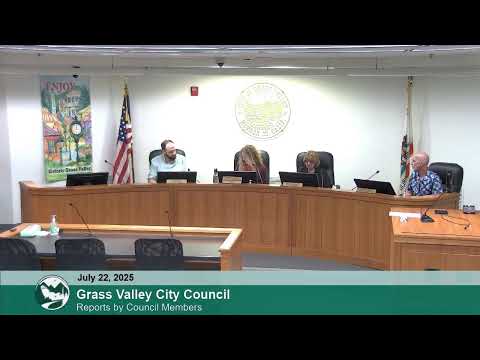
The Grass Valley City Council on July 22 authorized staff to participate in a joint feasibility study with Nevada City to evaluate a shared facility for three services: CRV (California Redemption Value) buyback/local beverage container redemption, clear/plastic film collection, and local composting of organic/green waste.
City manager Tim Keeser told the council that consultant R3 estimated a roughly $25,000 study and staff proposed splitting costs with Nevada City. Keeser said the study would examine co-locating the three services to achieve sufficient volume and administrative scale to be financially viable and reduce emissions and hauling costs for organic waste currently sent out of the area.
Several speakers from community groups voiced support. Debbie Gibbs of Nevada County Climate Action Now and volunteers involved in local collection efforts urged the council to pursue the study, citing the inconvenience of county transfer-station access for residents and a growing local volume of plastic film and food waste. Christine Newsome and Shirley Frerichs described local volunteer collection activity and the volume of film and flexible plastics that they said could be diverted if accessible local infrastructure existed.
Council members debated funding sources. Staff had earlier noted a possible split of the city’s share between the general fund and Measure B (citing about $7,000 from general fund and $5,000 from Measure B as a potential approach). Several council members, citing Measure B’s voter commitments, asked for clarity; the council ultimately amended the staff recommendation and approved using the city’s general-fund contingency to cover Grass Valley’s share of study costs while reserving Measure B appropriation questions for later review. The motion passed on a voice vote.
Ending — What the study will examine Staff said the feasibility study will analyze permitting, projected material volumes (including potential contributions from vegetation-reduction work), collection logistics, end markets for plastic film and CRV material, regulatory constraints (including special handling for cannabis waste if relevant), and potential cost/benefit scenarios. The study will return to council with findings and recommendations on facility design, costs and whether Measure B funds or other sources should contribute to implementation.