Get Full Government Meeting Transcripts, Videos, & Alerts Forever!
Get email alerts on the Urban Forestry Invasive Species topic
No spam. Unsubscribe anytime.
Bangor forestry division adopts emerald ash borer management plan and begins injections on threatened trees
Summary
City forestry presented a management plan prepared by a University of Maine grad student, reported an initial round of injections to protect 85 ash trees, and asked the committee to accept the plan for ongoing use across city departments.
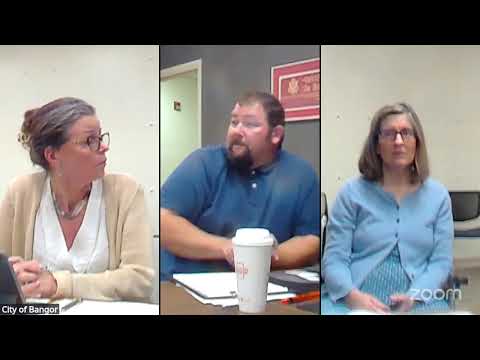
City of Bangor forestry staff presented an emerald ash borer (EAB) management plan on Monday and the infrastructure committee agreed to accept the plan into standard operating procedures.
Benjamin Aruta, City of Bangor Forestry Manager, said the forestry division teamed with Parks & Recreation and Public Works and hired University of Maine forestry students last summer to inventory municipal trees. “They were able to take a look and tally and assess over 8,500 individual trees,” Aruta said, and he added that “over 20% of the city's municipally owned and maintained trees are ash trees.”
Aruta said the city has already begun the first phase of chemical protection under the current budget: the forestry division contracted a licensed applicator for injections this year and later purchased a tree-injection unit to do future injections in-house. “We injected 85 ash trees on the western side of Bangor to prevent a essential killing front from the town of Hermon,” Aruta said, referencing a confirmed EAB case in Hermon earlier in 2024.
Aruta asked the committee to accept Sofia Cameron’s municipal EAB management plan as part of the forestry division’s operating procedures. Sofia Cameron, identified in the meeting as a master of forestry graduate from the University of Maine, authored the capstone that became the plan.
Committee members voiced support; a motion and second were recorded and Aruta said the committee’s acceptance was secured. Aruta also described a multi-year outlook for monitoring, injections, and a plan to train forestry staff to perform injections to reduce contracting costs. The committee did not attach new budget authority at the meeting; staff said the initial injections were funded from the current forestry budget and the city will manage future costs through a mix of contracting (while certification is obtained) and in-house work.