Get Full Government Meeting Transcripts, Videos, & Alerts Forever!
Get email alerts on the Occupational Licensing topic
No spam. Unsubscribe anytime.
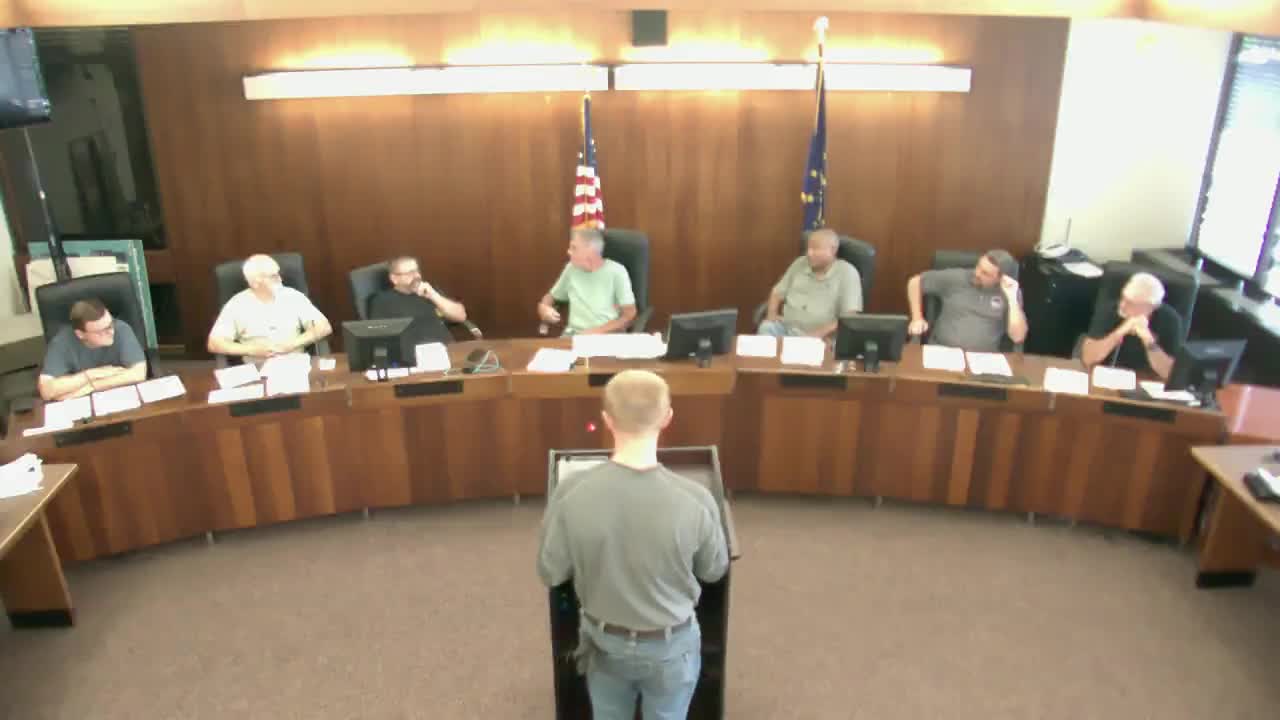
Evansville licensing board: applicant told he lacks formal qualifications; multiple apprentice applications approved or tabled
Summary
An applicant seeking recognition of industrial electrical experience was told he does not meet the board's stated qualifications; the board chose not to deny his potential application. The board approved several apprentice applications and tabled one pending verification of training enrollment.
The Evansville City Electrical Licensing Board discussed an applicant's industrial electrical experience and moved to notify him that he does not meet the board's written qualifications but would not formally deny an application, then took a series of routine votes on apprentice applications.
The board told the applicant, identified in the meeting as Tony, that past practice has favored applicants who can document work under a master electrician's license or hold an electrical engineering degree. Tony said he has been doing industrial electrical work for about 10 years (six years at Toyota and roughly four years at his current employer) and that he spoke with local training contacts about apprenticeship and degree routes. “I was gonna have to go to school for, like, another 2 or 2 and a half years,” Tony said, describing options he considered before coming to the board.
Board members said the board has historically required either documented work under a master electrician or an engineering degree as the basis for waiving other experience. “I believe that's the only waiver we've had in the past was if you were a certified electrical engineer with the degree,” a board member said during the discussion. Members noted that the board has applied an informal precedent when evaluating maintenance work versus documented electrical installations and controls.
Discussion and direction Board members raised concerns that industrial maintenance experience can vary widely and that plant maintenance duties may not expose a worker to the breadth of tasks a master electrician oversees. Members suggested apprenticeship programs (the meeting referenced enrollment with the IEC and named local contacts) as the pathway to fill gaps in formal training. One board member said an IEC apprenticeship could be four years, while Tony described earlier advice he received that an engineering route might add about two to four years of study.
Motion and disposition Because Tony had not formally submitted an application, the board did not take a licensing action to approve or deny his credential; instead it approved a motion to inform him that he did not meet the board's qualifications as stated and to have staff follow up. The motion carried on a voice vote.
Apprentice applications and verification After the discussion, the board moved through apprentice applications. The board tabled Spencer Claybrook's apprentice application pending written verification of IEC enrollment and a proper printed name/signature on the paperwork; members noted that Brandy Brown had sent a list showing enrollment but the application form still required a training director signature. The board approved a series of other apprentice applications by voice vote, including Grant Adcock and Harold Atkins, and several additional applicants named in the meeting roster. Board members instructed staff to accept a corrected signature if it arrived before the next meeting.
What this means locally The board's action preserves its informal precedent requiring either documented work under a master's license or an electrical engineering credential for waivers, while directing staff to notify an industrial worker who sought guidance before submitting a formal application. Several apprentice enrollments were approved and one was tabled pending verification, so the board's immediate effect was to admit new apprentices while holding a single application until paperwork is completed.
The board did not cite any specific statute or ordinance during the discussion; members referenced internal past practice and local apprenticeship enrollment procedures. Staff (Kathy) was asked to follow up with the applicant and with training contacts to resolve outstanding paperwork before the next meeting.