Get Full Government Meeting Transcripts, Videos, & Alerts Forever!
Get email alerts on the Land Use Housing topic
No spam. Unsubscribe anytime.
Board upholds tentative parcel map for 1979 Mission Street after heated hearing; appellant sought disapproval over neighborhood safety
Summary
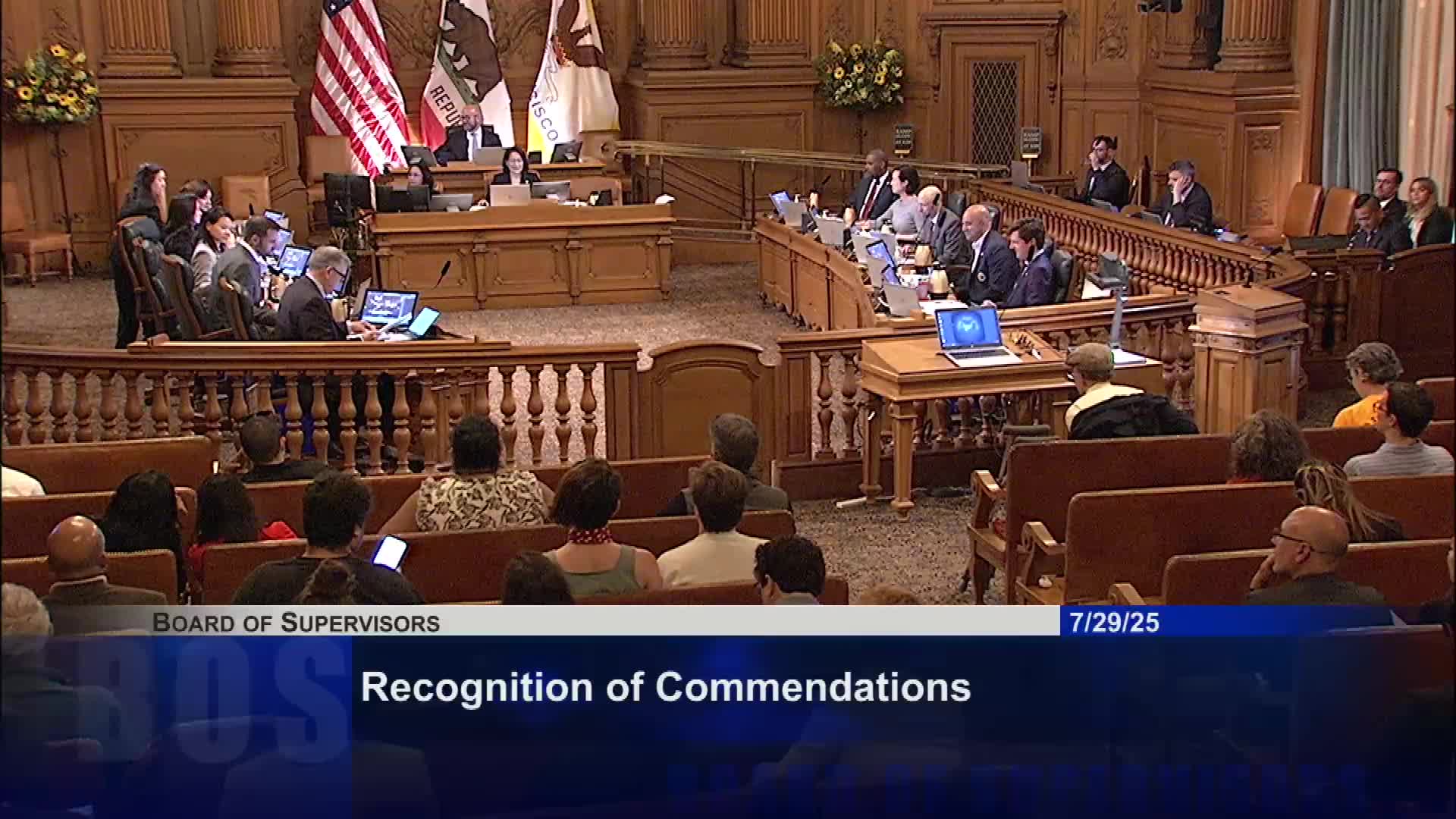
After a contentious public hearing at the Board of Supervisors on July 29, the board approved the tentative parcel map for 1979 Mission Street — a procedural step toward the 100%‑affordable La Maravilla project — rejecting an appeal that sought to block subdivision on safety grounds.
The San Francisco Board of Supervisors on July 29 voted to approve a tentative parcel map for 1979 Mission Street, clearing a procedural hurdle for a 100%‑affordable development known as La Maravilla after a contentious public hearing.
The project drew intense testimony from neighbors, Marshall Elementary School staff and parents, and community groups. Appellants — calling themselves the Defenders of Marshall — argued that subdividing the parcel would facilitate permanent supportive housing (PSH) and treatment services immediately adjacent to Marshall Elementary, a Title I school serving many vulnerable students. They asked the board to overturn Public Works' approval of the subdivision, arguing the proposed uses would worsen street safety and drug activity around the school.
Mission Housing Development Corporation and co‑developer Mission Economic Development Agency (META) defended the subdivision as a technical, financing step necessary to build three buildings on the block — seniors, families, and one building offering supportive housing — and stressed that the development will deliver more than 300 deeply affordable units near transit.
"We're here today not just to speak in support of a parcel map. We're here to defend the very idea that working class and low‑income families who are the backbone of our city deserve to live in San Francisco," Sam Moss, executive director of Mission Housing Development Corp., told the board.
Appellant testimony included a nurse who lives across from the school and Marshall parents who described daily street conditions, drug use in sight of children and an incident in which gunfire sent a target into the schoolyard. Principal Noah Engber told the board he supports housing for families but said: "I'm concerned about the housing for substance abusers. Putting that next door to an elementary school, I think, is very problematic." (Principal Engber's comments were made on the record.)
City staff from the Department of Public Works and Planning explained that their reviews of the tentative map were limited to technical and objective standards for subdivision. Planning staff said the development was submitted under state law (AB 2162, ministerial approval for supportive housing) and the project complied with relevant objective requirements, with waivers available under state density bonus provisions for 100%‑affordable projects.
After department presentations and more than an hour of public comment on both sides, Supervisor Myrna Melgar moved to approve the motion adopting the public works decision and to table the motions to disapprove and to prepare findings. The motion passed on roll call.
Roll call: "On the motion to approve item 57 and table items 58 and 59 ... There are 11 ayes." The clerk recorded the board's action to approve the tentative map (item 57) and to table the appeal motions (items 58 and 59).
What the vote does and what remains
- Approval of the tentative parcel map does not by itself authorize construction; it clears a subdivision procedural step that Mission Housing and META say is necessary for separate financing and permitting of three buildings on the site.
- The project sponsors said the subdivision is necessary to allow each building to be financed as a separate entity (three separate LLCs) and to meet tax‑credit financing and permitting requirements.
- Opponents asked the board to conditionally disapprove the public works decision based on public‑safety concerns; the board declined to do so in this procedural appeal, with supervisors and staff pointing to the narrow legal standards that govern subdivision approvals.
The debate highlighted a recurring tension in San Francisco planning: a community's fear about on‑the‑ground impacts near sensitive sites such as schools versus state and local policies that streamline approvals for deeply affordable housing. The board's decision leaves the developers able to proceed with the next permitting steps; opponents said they will continue to press for mitigation and community protections in later permitting and operations discussions.
All quoted material and vote tallies are taken from the board's July 29 meeting record.