Get Full Government Meeting Transcripts, Videos, & Alerts Forever!
Get email alerts on the Homelessness Shelter Policy topic
No spam. Unsubscribe anytime.
Board advances "One City Shelter Act" to restrict new city‑funded shelters in overconcentrated neighborhoods
Summary
Supervisors voted 9–2 on first reading to approve an ordinance that would bar new city‑funded shelters and certain behavioral health residential facilities in neighborhoods whose share of city beds exceeds their share of the city's unsheltered population, establish a 300‑foot buffer between new shelters, require biannual equity reporting and sun‑s
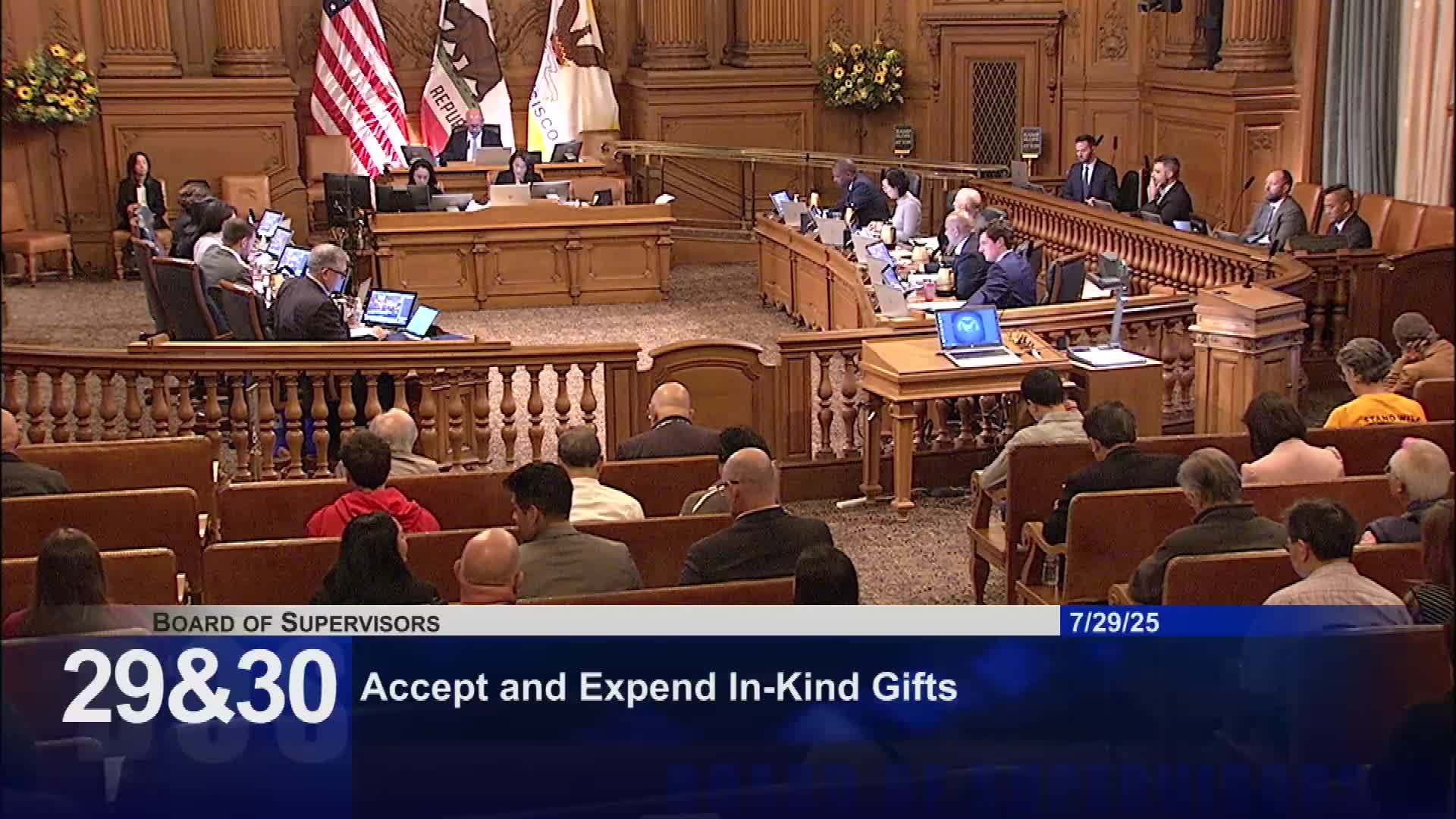
The San Francisco Board of Supervisors on July 29 passed on first reading an ordinance intended to distribute city‑funded shelter and behavioral‑health residential facilities more equitably across neighborhoods.
The proposal, known on the floor as the "1 City Shelter Act," was introduced by Supervisor Mahmoud and won first‑reading approval on a 9–2 roll call. The ordinance would bar the city from siting new city‑funded homeless shelters, transitional housing or certain behavioral‑health residential care facilities in neighborhoods where the neighborhood's share of the city's shelter and transitional beds exceeds that neighborhood's share of the city's unsheltered population. The ordinance also creates a 300‑foot buffer between new shelters and allows the board to grant waivers if a finding is made that the siting is in the public interest. The measure includes a sunset date of Dec. 31, 2031.
"The 1 City Shelter Act is rooted in a simple but long overdue principle, that every neighborhood should be part of the solution and every San Franciscan should have access to shelter and care no matter where they live," Supervisor Mahmoud said in a lengthy floor presentation describing coalition support from labor, neighborhood groups and housing advocates.
Mahmoud said the ordinance was shaped in committee with amendments including a "fair share" rule, the 300‑foot spacing buffer, exemptions for projects already in the pipeline or replacement facilities, and a requirement for biannual equity analyses and public reporting.
Supporters on the dais said the measure seeks to correct long‑standing overconcentration of shelters in certain neighborhoods — most prominently the Tenderloin and SoMa — and increase transparency about siting decisions. Supervisor Sauter, a co‑sponsor, said she supported the ordinance and described the need for more thoughtful planning and community engagement. Supervisor Melgar, who said his West‑Side district has few services, said the ordinance acknowledges that some neighborhoods have very little access to care and welcomed the bill as a first step.
Opponents said the ordinance is overly prescriptive or not targeted enough. Supervisor Chen voted against the ordinance on first reading and said she feared the legislation could divide neighborhoods and would prefer a moratorium in saturated neighborhoods. Supervisor Chan also voted no. Several supervisors explicitly said they supported the goal of geographic equity but had differing views about the approach.
The clerk recorded a roll call: "There are 9 ayes and 2 nos with supervisors Chan and Chen voting no. The ordinance is passed on first reading." The measure will return for a second reading and final action at a later board meeting.
What the ordinance would do if adopted in final form
- Prohibit city funding of new "covered facilities" (city‑funded homeless shelters, transitional housing and certain behavioral‑health residential treatment facilities) in neighborhoods whose share of city beds is greater than their share of the unsheltered population, unless the board grants a waiver on public‑interest grounds.
- Require a 300‑foot spacing buffer between new city‑funded shelters to limit clustering.
- Create a biannual equity analysis and reporting requirement to inform siting decisions.
- Set a sunset date for the ordinance on Dec. 31, 2031, allowing the city to evaluate results and revise policy.
The measure drew a broad coalition of endorsements cited on the floor, including labor unions, neighborhood associations and housing and homeless‑service organizations. Supporters say the policy is data‑driven and aimed at redistributing city resources where unmet need is greatest. Opponents said the city should instead focus more on deeper affordable housing and services rather than siting limits.
The full board will take a final vote on the ordinance at a subsequent meeting; the article reports only the outcome of first reading. Direct quotes and vote tallies are taken from the July 29 Board of Supervisors meeting record.