Get Full Government Meeting Transcripts, Videos, & Alerts Forever!
Get email alerts on the District Goals topic
No spam. Unsubscribe anytime.
Mount Lebanon superintendent unveils 2025–26 goals tied to LEADS strategic plan
Summary
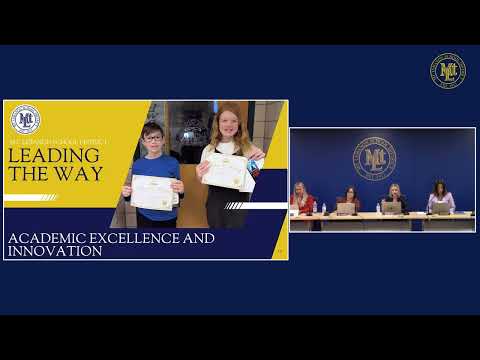
Dr. Fries, Mount Lebanon School District superintendent, presented the district—s goals for the 2025-26 school year on Aug. 18, saying the goals are aligned with the district—s newly adopted LEADS strategic plan and will guide work across instruction, operations and community engagement.
Dr. Fries, Mount Lebanon School District superintendent, presented the district—s goals for the 2025-26 school year on Aug. 18, saying the goals are aligned with the district—s newly adopted LEADS strategic plan and will guide work across instruction, operations and community engagement.
"We are really excited to announce our goals, which are aligned with our strategic plan that we put together last school year with the help of our Mount Lebanon community," Dr. Fries said during the meeting.
The presentation organized goals into two tiers: yearly goals (short-term initiatives for 2025-26) and annual goals (longer-term priorities to be tracked across the strategic-plan window). Each goal was linked to one of five LEADS focus areas: Leading for the Future, Engagement, Academic Excellence and Innovation, District Systems and Supports, and Safe, Supportive and Inclusive Environments.
Key yearly goals and objectives highlighted by Dr. Fries included: - Leading for the Future: develop a clear vision of graduate skills and a district-wide induction program for all staff; engage students in conversations about data privacy and algorithmic bias. - Engagement: streamline family communications to a consistent platform, redesign the district website for mobile and accessibility, and develop onboarding for new families including supports for English learners. - Academic Excellence and Innovation: begin a multi-year curriculum review for ELA (grades 6-12), social studies (K-12) and math (K-12); research and phase in developmentally-appropriate device guidelines and digital wellness instruction; evaluate additional emotional-support and autistic-support classrooms. - District Systems and Supports: create a 10-year facilities capital improvement plan; research and implement a districtwide digital volunteer clearance system; implement single sign-on and automated rostering; establish a 10-year financial recovery plan with an 8% unassigned fund-balance target. - Safe, Supportive and Inclusive Environments: develop transition supports for key grade-span moves (5—6, 8—9), expand career and technical opportunities and dual enrollment, maintain partnerships with regional mental-health providers and emergency responders, and continue regular review and training of the districtwide emergency operations plan.
Dr. Fries said many of the goals use phased timelines (research in year 1, implement in year 2, evaluate thereafter). She also noted operational items already in progress: centralized online registration (40 new enrollments reported in the week prior to the meeting) and an ongoing single sign-on rollout expected to complete in the coming weeks.
Two student representatives introduced themselves during the presentation. Henry Adams, a rising senior and returning executive-council officer, said he hopes to bring "a breadth of knowledge to help with these meetings." Julia Antunes, a rising junior who serves as one of two student representatives on the Pennsylvania State Board of Education, said she welcomed student involvement in district decision-making.
The board received the presentation and was told a shorter, PDF version of the slides will be posted to BoardDocs for public review. No formal board vote on the goals occurred at the Aug. 18 meeting; Dr. Fries said the goals and related materials will be posted to the district website following the presentation.
The district identified several measurable steps in the presentation, including an 8% fund-balance target, a phased capital-planning schedule, and years assigned to curriculum review and technology guidance work, all intended to be revisited annually as part of the strategic-plan implementation process.
The superintendent concluded by noting many of the items will return to the board for updates during the school year.