Get Full Government Meeting Transcripts, Videos, & Alerts Forever!
Get email alerts on the Evidence Grooming 404b topic
No spam. Unsubscribe anytime.
Utah Court of Appeals hears challenge to admission of 'grooming' evidence in State v. Newberry
Summary
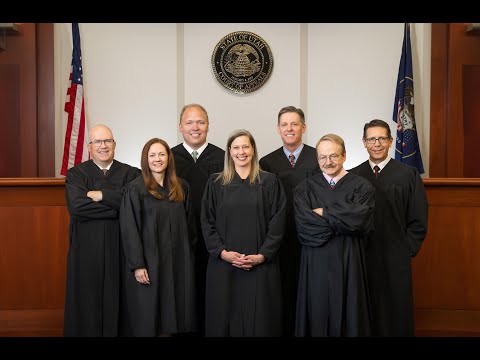
A three-judge panel of the Utah Court of Appeals heard argument in State v. Newberry (No. 20230121) on whether the district court abused its discretion by admitting allegations about the defendant’s prior conduct described by the state as grooming and an ongoing behavior pattern.
A three-judge panel of the Utah Court of Appeals heard argument in State v. Newberry (No. 20230121) on whether the district court abused its discretion by admitting allegations about the defendant’s prior conduct described by the state as grooming and an ongoing behavior pattern.
Appellant counsel Anna Grigsby argued the district court erred by admitting the allegations under Utah Rules of Evidence 404(b) and 403. Grigsby said the trial court relied on State v. Reed and related authorities to treat the prior allegations as non‑character evidence showing opportunity, preparation and planning, but maintained Reed does not permit admission of other‑acts evidence when the real inference is propensity.
The state, represented by David Simpson, defended the ruling as either intrinsic evidence (inextricably intertwined with the charged conduct) or admissible under Rule 404(b) for a proper noncharacter purpose — principally to explain an escalating pattern of conduct that the prosecutor says led to the charged offense.
Appellant’s argument
Grigsby told the panel the Reed decision is distinguishable and that Reed’s paragraph 26 ties an ongoing behavior pattern to specific noncharacter purposes — opportunity and planning — but does not license evidence that amounts to a propensity inference. She argued the prior allegations occurred outside Utah (in New Mexico and Texas), were not necessary to explain the state’s proof of the elements of the charged Utah offense (including the victim’s age), and were therefore extrinsic. Grigsby also argued access and time alone with the victim were not disputed at trial, so the allegations did not fill any evidentiary gap. She pressed that admission turned on an impermissible inference that “because Robert showed a…interest or made inappropriate comments in the past, of course he acted in conformity with that,” language she used to summarize the defense’s view of how the jury would treat the evidence.
The state’s argument
Simpson told the court the district court reasonably found the evidence was part of the same narrative and therefore intrinsic or, in the alternative, admissible under Rule 404(b) for the noncharacter purposes of showing pursuit, preparation and plan. He said the factual record shows a relatively compact series of escalating interactions and that courts routinely admit grooming evidence in child‑sexual‑abuse cases when the prior acts explain how the charged offense came to occur. Simpson acknowledged overlap between an intrinsic (res gestae) analysis and Rule 404(b) inquiry but urged the panel that the trial court’s language and its limiting instruction support either ground.
Panel questioning and issues highlighted
The panel pressed both sides on conceptual distinctions: Judge Ryan Harrison asked, “What's the difference?” when counsel tried to separate a pattern of behavior from evidence of planning or opportunity; Judge Ryan Tenney and Judge John Luthy explored whether grooming can be a non‑propensity purpose under Rule 404(b) and whether the district court’s rationale was apparent on the record.
Counsel for Newberry emphasized that the trial court’s limiting instruction used the words “context” and “pattern of conduct” but that the most probative purpose below was propensity. The state replied that trial counsel did not lodge the particular objection below that would make intrinsic evidence an alternate ground for affirmance improper on appeal, and also argued the defendants repeatedly declined to ask for a different limiting instruction, so any complaint about the instruction is waived.
Procedural posture and next steps
The three‑judge panel heard approximately 12 minutes of argument from the appellant, 26 minutes from the state, and brief rebuttal before taking the case under advisement. The court did not announce a decision from the bench and said it would issue a written opinion at a later date.