Get Full Government Meeting Transcripts, Videos, & Alerts Forever!
Get email alerts on the Election Administration topic
No spam. Unsubscribe anytime.
Committee approves SB 280 to fund Nov. 4 special election for ACA 8; bill advances to Appropriations
Summary
The Assembly Elections Committee voted to refer SB 280, which would appropriate funding and make statutory changes for a Nov. 4, 2025 special election tied to ACA 8, to the Appropriations Committee; members debated county reimbursement, timelines and election logistics.
The Assembly Elections Committee approved Senate Bill 280 on Aug. 19 and re‑referred it for fiscal consideration. SB 280 would appropriate funds and revise election statutes to permit a Nov. 4, 2025 statewide special election so California voters can decide ACA 8, the proposed constitutional amendment that would allow temporary congressional map changes if other states undertake partisan mid‑decade redistricting.
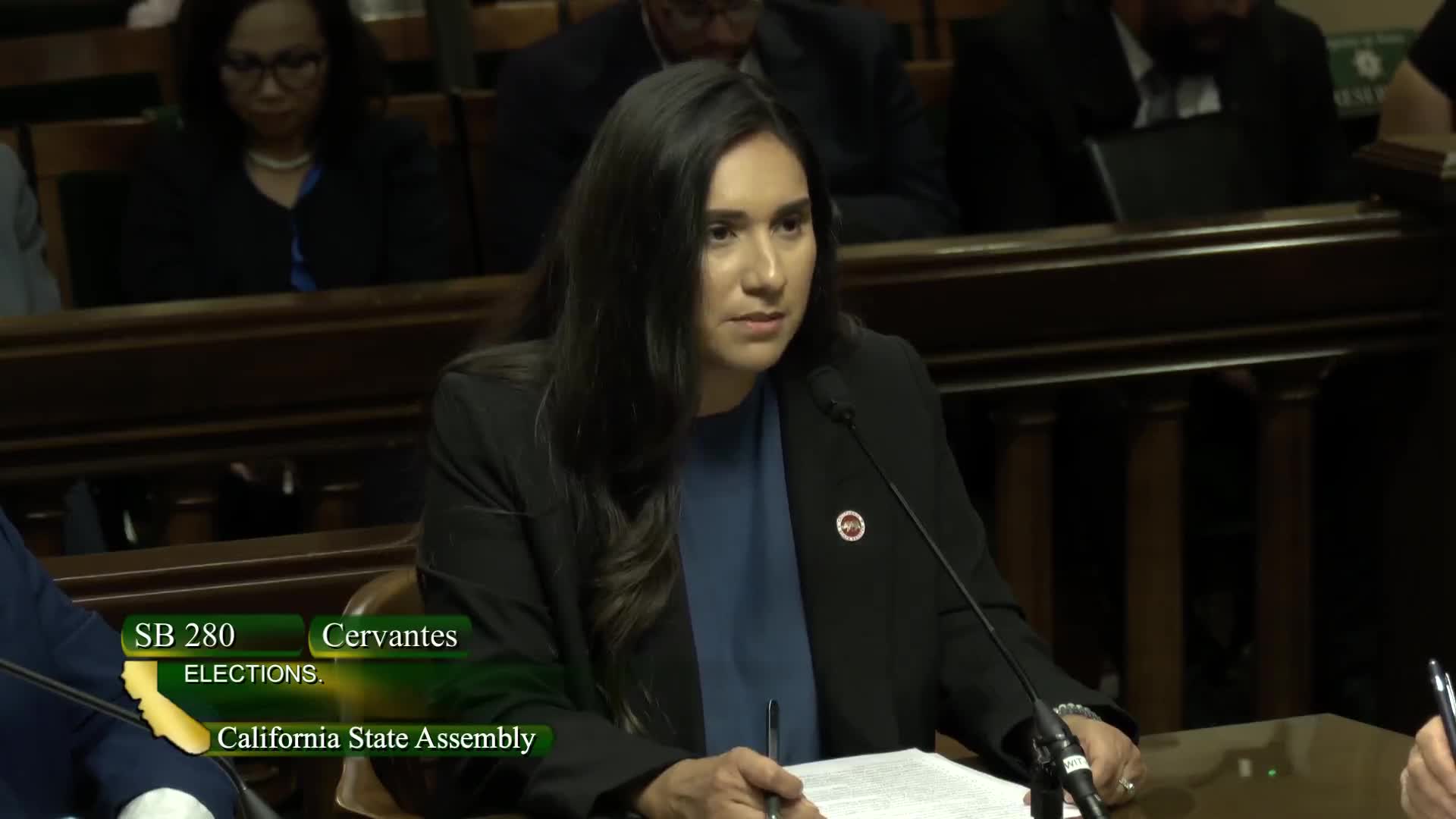
Author Senator Cervantes opened the presentation by linking SB 280 to the voter choice created by ACA 8 and describing the bill’s purpose: to provide funding for the Secretary of State and county registrars and to make necessary statutory changes so the June 2026 statewide primary can be held on time while the special election proceeds. “SB 280 also appropriates the funding necessary for the secretary of state and for our county registrars to administer the special election,” Cervantes said.
County elections officials and the California Association of Clerks and Election Officials (CACEO) provided technical commentary. Jesse Salinas, Yolo County Registrar and president of CACEO, told the committee that county officials had begun preliminary planning and vendor outreach when word of the bills circulated and that the timeline would be challenging but feasible if counties receive adequate, up‑front reimbursement. The committee heard repeated questions about whether the bill’s funding language would legally ensure counties are made whole before they must spend local resources.
Several members pressed authors and witnesses on costs and timing. Committee members and witnesses cited a rough ballpark figure for a statewide special election in the low hundreds of millions of dollars; witness and member remarks repeatedly referenced the previous 2021 recall as a point of cost comparison. Senators and assembly authors said the Department of Finance would calculate final costs and that the bill includes intent language and appropriations steps to reimburse counties for actual and reasonable expenses.
Labor unions, public‑sector unions and health‑care unions testified in strong support, saying the package is a necessary “firewall” against partisan mid‑decade maps in other states and urged the Legislature to fund the election so California voters could decide. Opposition witnesses — including union members and many public commenters — continued to urge rejection of the legislative package as unnecessary or retaliatory, and raised concerns about process and the compressed timeline.
Roll call on SB 280 recorded ayes from Chair Pellerin, Assemblymembers Bennett, Berman, Salace and Stephanie; no votes from Macedo and Tonguepa. The committee approved the bill 5‑2 and re‑referred it to the Appropriations Committee for funding and fiscal detail.
Why it matters: SB 280 is the statutory and fiscal counterpart to ACA 8. If ACA 8 continues through the legislative process and voters approve it, SB 280 is intended to provide the legal and budgetary framework for holding the special election and reimbursing counties for administration costs.
What’s next: With committee approval, SB 280 now goes to Appropriations for fiscal review and to determine the funding mechanism and appropriation language required to reimburse counties and pay for statewide election administration.
Ending — Committee members said they wanted to ensure counties would have the resources they need to run an expedited statewide election; authors and witnesses said they would work with the Department of Finance and county officials to finalize cost estimates and reimbursement details.