Get Full Government Meeting Transcripts, Videos, & Alerts Forever!
Get email alerts on the Weed Control Lead Officer topic
No spam. Unsubscribe anytime.
Walsh County staff recommend contracting Jacob Anderson as lead weed officer, board suggests on-site point person
Summary
County staff reported progress toward contracting Jacob Anderson as the Walsh County lead weed officer; the county weed board recommended contracting him while retaining a part-time on-site administrative contact to handle mail and public inquiries. Commissioners discussed conflicts of interest, budgeting and options for the on-site contact.
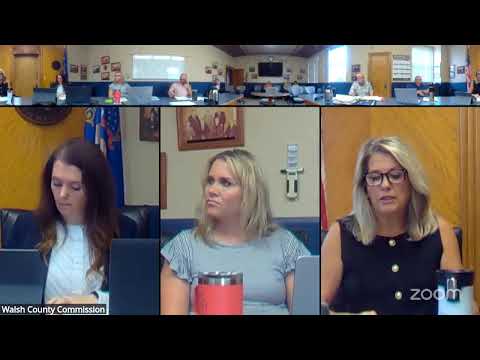
Tanya, a county staff member, told the Walsh County Commission on Aug. 18 that the county’s weed board recommended contracting Jacob Anderson to serve as the county’s lead weed officer and keeping a part-time on-site administrative contact to collect mail and serve as a public point of contact.
The recommendation comes after meetings with Grand Forks County lead officer Joel Anderson and conversations with Jacob Anderson, who currently works on the county’s summer spraying crew. “He is part of the spraying crew that does our summer spraying,” Tanya said, adding that Jacob is familiar with local parcels and weed locations and has worked with his father in the role.
The county’s weed board recommended the contract arrangement while retaining a part-time, on-premises administrative contact — described by Tanya as a person who would collect mail, pass documents to the contracted lead officer and field basic phone and email inquiries. Tanya said the contracted lead officer would not maintain an on-site office and would provide his own phone and vehicle costs as part of the contract.
Why it matters: a single contractor model is already used in other nearby counties, and commissioners pressed county staff on potential conflicts of interest and administrative logistics. Commissioner Paul asked for clarification of the weed board’s responsibilities and the scope of spraying work. Tanya said state-identified noxious weeds are covered by statute and that counties are required to control them; she cited North Dakota Century Code as delegating authority to the local lead board to hire and compensate the lead officer.
Commissioners debated whether the county should continue using an existing county employee as the on-site contact or transfer the role to another office such as the extension office. One commissioner said extension offices in other counties have resisted regulatory roles because of perceived conflicts. Tanya said the weed board strongly favored keeping an on-site county contact even if the contracted lead officer handles most program tasks.
Budget and logistics: Tanya said the county has historically budgeted about $20,000 per year combined for the lead officer and related administrative work. She said contracting Jacob on a flat monthly rate could come in under that budgeted amount, and that Jacob indicated willingness to attend the required lead officer conference in January. Tanya also said spare vehicle repair and parts lines may be needed only if the county retains a four-wheeler that the contracted officer would use.
Next steps: Tanya said she will continue working with county attorney Kelly and the weed board to finalize a written contract if commissioners are comfortable with the approach. Commissioners asked staff to return with any necessary contract language, conflict-of-interest review, and a concrete proposal on how the on-site administrative contact would be funded and assigned.
No formal vote was taken on Aug. 18; the commission received the report and discussed options.