Get Full Government Meeting Transcripts, Videos, & Alerts Forever!
Get email alerts on the Monarch Hill Landfill Settlement topic
No spam. Unsubscribe anytime.
Coconut Creek approves settlement that caps Monarch Hill landfill expansion, requires environmental controls and payments to cities
Summary
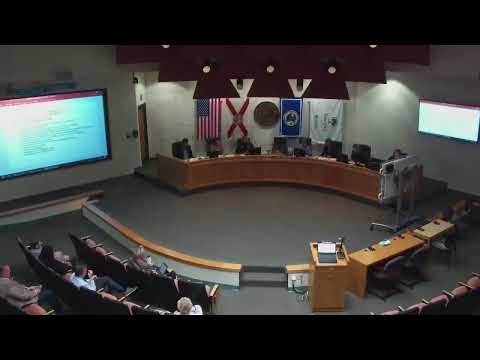
Coconut Creek commissioners voted unanimously Monday to approve Resolution 2025‑129, a settlement agreement among the City of Coconut Creek, the City of Deerfield Beach, Broward County and Waste Management Inc. of Florida that limits a county‑approved expansion of the Monarch Hill Landfill and establishes monitoring, mitigation and financial commitments the cities can enforce.
Coconut Creek commissioners voted unanimously Monday to approve Resolution 2025‑129, a settlement agreement among the City of Coconut Creek, the City of Deerfield Beach, Broward County and Waste Management Inc. of Florida that limits a county‑approved expansion of the Monarch Hill Landfill and establishes monitoring, mitigation and financial commitments the cities can enforce.
The settlement caps the landfill expansion to the footprint and height authorized in Broward County’s 2025 approvals — a 100‑foot vertical increase and about 24.2 acres of horizontal expansion — and prevents future horizontal or vertical expansions beyond those 2025 approvals. The agreement also requires Waste Management to record restrictive covenants in the public records; the cities must dismiss pending lawsuits with prejudice if they execute the settlement.
Terrell Piper, Coconut Creek city attorney, summarized the key terms for the commission and public, noting the enlargement approved by the county in February 2025 and the cities’ subsequent legal challenges. Ralph DeMeo, special counsel for the cities with Gilday Law, described the package as “unprecedented,” citing limits on future expansions, enhanced environmental controls and financial measures that did not exist in prior negotiations.
Why it matters: the agreement defines operational and post‑closure expectations for a landfill that, under the settlement’s estimates, would accept roughly 25,000,000 cubic yards of material — which parties said equates to about 25 years of capacity under current projections — and then close. The settlement also creates mechanisms the cities can use to hold Waste Management accountable, rather than continuing costly, uncertain litigation that a Department of Administrative Hearings trial would have resolved next week if the commission declined the settlement.
Key provisions in the agreement include: - A cap on expansion limited to the 2025 approvals (100‑foot vertical increase; ~24.2 acres horizontal) and a prohibition on any other landfill operation within a 1‑mile radius of the site by Waste Management. - A requirement that Waste Management record a declaration of restrictive covenants in county public records; the cities may seek legal remedies for breaches after a 30‑day cure period. - Environmental and operational controls that go beyond state permit requirements: quarterly emissions testing with reports to the cities, expanded groundwater monitoring and additional hydrogeologic and geotechnical studies, enhanced odor controls including misting systems and expanded gas collection, and a professional wildlife deterrence program. - Traffic and litter mitigation: a traffic management plan, continued twice‑weekly litter cleanup in front of the landfill on Wiles Road, and annual reimbursements of $15,000 per city for perimeter litter mitigation. Waste Management will also reimburse certain right‑of‑way and traffic enforcement costs and allow the cities to claim up to 5% of the county host charge for unique impacts for the first five years of host‑fee receipts. - Waste restrictions and timing: the agreement preserves a 175,000‑ton annual cap on municipal solid waste (described in the transcript as “limited waste”) through Sept. 30, 2027; after that date, certain Class C and D wastes (construction and demolition debris) may be accepted consistent with the county approvals. The settlement also contains a 20% annual cap on waste from outside Broward County, with narrower geographic exceptions for state emergencies than in the city’s prior 2015 settlement. - Post‑closure planning and reuse: parties must meet within five years of settlement to discuss potential public reuse; parties must negotiate in good faith five years before closure to explore passive recreational reuse.
Public commenters pressed the commission on perceived gaps. Ron Shamay, a resident who identified himself during public comment, urged caution and listed what he called “loopholes,” saying, “I don’t think we’re winning anything,” and asking who would monitor compliance and pay for expert enforcement. Tammy Littery asked for more detail about a county wastewater sludge dryer and potential waste‑to‑energy (incineration) projects that could use landfill gas, saying she did not trust the county’s approach to recycling and composting.
Commissioners and counsel responded to those concerns on the record. Piper said the cities retained enforcement rights under the recorded restrictive covenants and that a severability clause would allow most of the agreement to remain if a court struck a part. DeMeo and several commissioners warned that continued litigation posed financial risk: under the statute the cities sued under (chapter 164 intergovernmental dispute resolution), a losing party could be liable for the prevailing parties’ attorney’s fees.
During discussion commissioners acknowledged the agreement did not secure every community request but said it produced enforceable restrictions and a closure timeline that would be difficult to obtain through continued litigation or political appeals. Commissioner Bridal said obtaining a closure commitment and enforceable restrictions represented a “win” even if it was a “bitter pill.” Commissioner Welsh said the covenant filing and monitoring provisions offered a measure of protection for future residents.
The record and next steps: upon execution by the parties Coconut Creek and Deerfield Beach must dismiss their pending lawsuits with prejudice as to the county ordinances and related approvals covered by the settlement. The agreement is conditioned on Waste Management and Broward County obtaining the necessary permits for the vertical and horizontal expansions; Piper said the settlement would be void if required permits are not obtained. The county will not be the enforcement entity under the settlement; enforcement is the cities’ responsibility.
Action taken: a motion to approve Resolution 2025‑129 was made and seconded (mover: Commissioner Welsh; seconder: Commissioner Brody). The commission called the roll and approved the resolution unanimously (Commissioner Riddell: yes; Commissioner Welsh: yes; Commissioner Bridal: yes; Vice Mayor Wasserman: yes; Mayor Railey: yes). The city clerk announced the vote and the meeting adjourned.
Background: Coconut Creek and Deerfield Beach filed lawsuits and administrative challenges after Broward County approved ordinances enabling the Monarch Hill expansion in February 2025. The cities also referenced a 2015 settlement that imposes prior limits on certain wastes; the 2015 settlement remains in place except where it directly conflicts with the new agreement. Counsel noted one pending trial before the Division of Administrative Hearings that would proceed next week absent settlement. Those legal proceedings and administrative processes formed the context for the negotiated settlement and the commission’s vote.
For residents: the agreement includes annual payments and monitoring reports the cities can request, and the recorded restrictive covenants are intended to bind future owners and commissions. The cities retain the right to enforce the agreement and to pursue legal remedies if Waste Management breaches its obligations.