Get Full Government Meeting Transcripts, Videos, & Alerts Forever!
Get email alerts on the Homelessness topic
No spam. Unsubscribe anytime.
United Way and partners ask Columbus council to back a task force as homelessness rises
Summary
United Way—Home for Good and Valley Healthcare told the council homelessness in Muscogee County is increasing, and asked the council to sanction a 5—7-person task force. Council gave an oral resolution of support and asked the partners to return with a budget and implementation timeline.
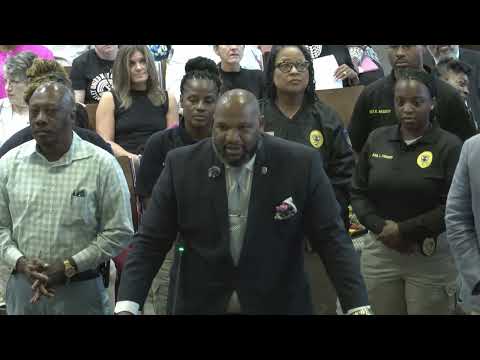
United Way—Home for Good and other local partners told the Columbus City Council on Aug. 12 that homelessness in Muscogee County has increased and urged the city to back a small, fast-moving task force to craft a 3—5-year plan.
The partners presented data and operational problems they said are constraining local responses: the point-in-time count returned to 303 people (the same count reported in 2016 and 2025), a 218% increase in families with minor children, and sharply higher rents — speakers said rents rose about 43% since 2022. United Way—Home for Good also told council it has less temporary shelter capacity than in previous years and that state grant awards (Department of Community Affairs) were still pending and due to take effect Oct. 1.
Why this matters: Presenters said the rise in people experiencing homelessness is colliding with declines or delays in traditional state and federal funding, creating bottlenecks in shelter and rapid rehousing programs. They said a small, focused local commission could set short-, medium- and long-term benchmarks and coordinate existing nonprofits, health care providers, law enforcement outreach and city services.
What the presenters proposed: Pat Frey of Home for Good asked council to sanction a 5—7-person task force that would use advisory groups and return to council with a report at six months and a final set of recommendations at 12 months. Frey said the group would avoid producing a long, unused plan; instead she said the task force would produce a short, iterative plan with measurable touchpoints. Valley Healthcare—s Dr. Sante Hiltz said her organization would formally absorb the PATH outreach team and run combined outreach with Valley's safety-net services so outreach and medical care are dispatched together.
Council action and next steps: Councilor Toya Tucker moved, and Councilor Byron Hickey seconded, an oral resolution of council support for the task force; the motion passed by voice vote. Council asked the partners to return at the next council meeting with a one-page budget and a list of specific resource requests the city might consider funding. Frey said she would prepare a six-month reporting plan for council review.
Local concerns the presenters raised: presenters warned that without housing stock, even available rapid-rehousing funding cannot be spent; they reported last year—s rapid-rehousing allocation was about $162,000 but said that without housing options funds may be returned. They also described operational problems: an offline family shelter reduced capacity, and multiple service providers playing catch-up since 2020 had created an ad-hoc system that Home for Good is trying to coordinate.
Voices from the council and community: Council members from multiple districts praised the partners—efforts and pressed for concrete commitments.
Ending: Council—s endorsement was procedural (an oral resolution of support) rather than a formal budget appropriation; partners will return with a short budget and implementation timeline for the task force and an arrangement for six-month reporting to council.