Get Full Government Meeting Transcripts, Videos, & Alerts Forever!
Get email alerts on the Police Policy topic
No spam. Unsubscribe anytime.
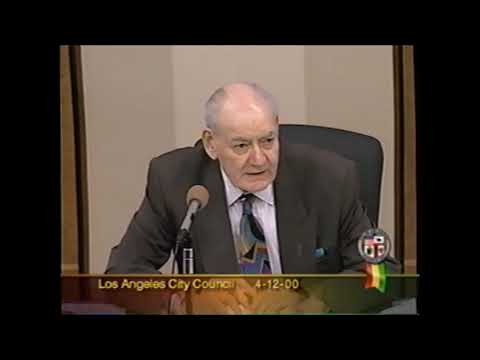
Council reaffirms LAPD Special Order 40, directs task force and review after Rampart allegations
Summary
The council unanimously reaffirmed LAPD Special Order 40 and directed creation of a task force and a review of station-level procedures after public testimony about INS involvement and Rampart-related allegations.
The Los Angeles City Council on April (date not specified) reaffirmed Special Order 40—the Los Angeles Police Department policy limiting police contact with federal immigration authorities in many circumstances—and directed a task force to examine local compliance and station-level procedures.
The action came after more than an hour of public testimony from immigrant-rights organizations, union representatives and community members who said that collaboration between the INS and LAPD had chilled reports of crime and eroded trust. Angelica Salas, executive director of the Coalition for Humane Immigrant Rights of Los Angeles, told the council that recent practices had “brought to public attention a serious problem” and urged the council to strengthen enforcement and oversight. Attorney Harriet Bilford, speaking for hotel and motel owners, urged an independent investigator for police misconduct concerns related to Rampart and other cases.
Councilmember Jackie Goldberg introduced an amendment (8a) to clarify council intent and to request that the Police Commission and the LAPD institute a task force to review INS–LAPD interactions and station practices. The council debated whether the station-level authorization to allow INS or Border Patrol officers into police stations should require an invitation by the commanding officer, watch commander or another official; councilmembers ultimately left the invitation language requiring commanding officer or acting commanding officer authority, but removed the limiting phrase “on duty.”
Chief Davis of the Los Angeles Police Department said the department supports Special Order 40 and emphasized that the order does not prevent the LAPD from investigating or arresting people suspected of serious criminal activity. “Special Order 40 lays out the conditions under which the department has contact with INS,” Chief Davis said, and “specifically states that the department does not make contact with citizens based on alien status.”
Council members pressed for clearer station-level procedures for documenting invitations of federal agents to stations and for audits of detective- or headquarters-level logs. Councilmember Pacheco asked for a proactive mechanism requiring a station decision-maker to document any invitation to INS or Border Patrol agents, an idea echoed by other members as a means to prevent ad-hoc contacts.
Procedural votes: the council held a roll-call on portions of an amendment proposed by Councilmember Pacheco; one proposed deletion failed 3–9. The clarified amendment 8a then passed 12–0, and the final item 8 as amended passed 12–0. The adopted motions call for the Police Commission and LAPD to form a task force of community groups and department representatives, clarify station-level invitation procedures, and direct the commission to report back with findings and recommendations.
Public safety advocates said the motion aims to restore confidence that immigrants and all residents can report crimes without fear of immigration consequences and to ensure that department policy is implemented and audited. The council asked the Police Commission and LAPD to return with the task force’s composition and a timeline for review.