Get Full Government Meeting Transcripts, Videos, & Alerts Forever!
Get email alerts on the Infrastructure Bridges topic
No spam. Unsubscribe anytime.
Consultant: Vanderburgh County’s 159 bridges in fair condition; plan calls for about two major projects a year
Summary
United Consulting presented the county’s Phase 2 bridge inspection report covering 159 bridges. Consultant Scott Minnick said the county has relatively few load‑posted or scour‑critical structures and recommended planning for roughly two major bridge projects per year over the next decade.
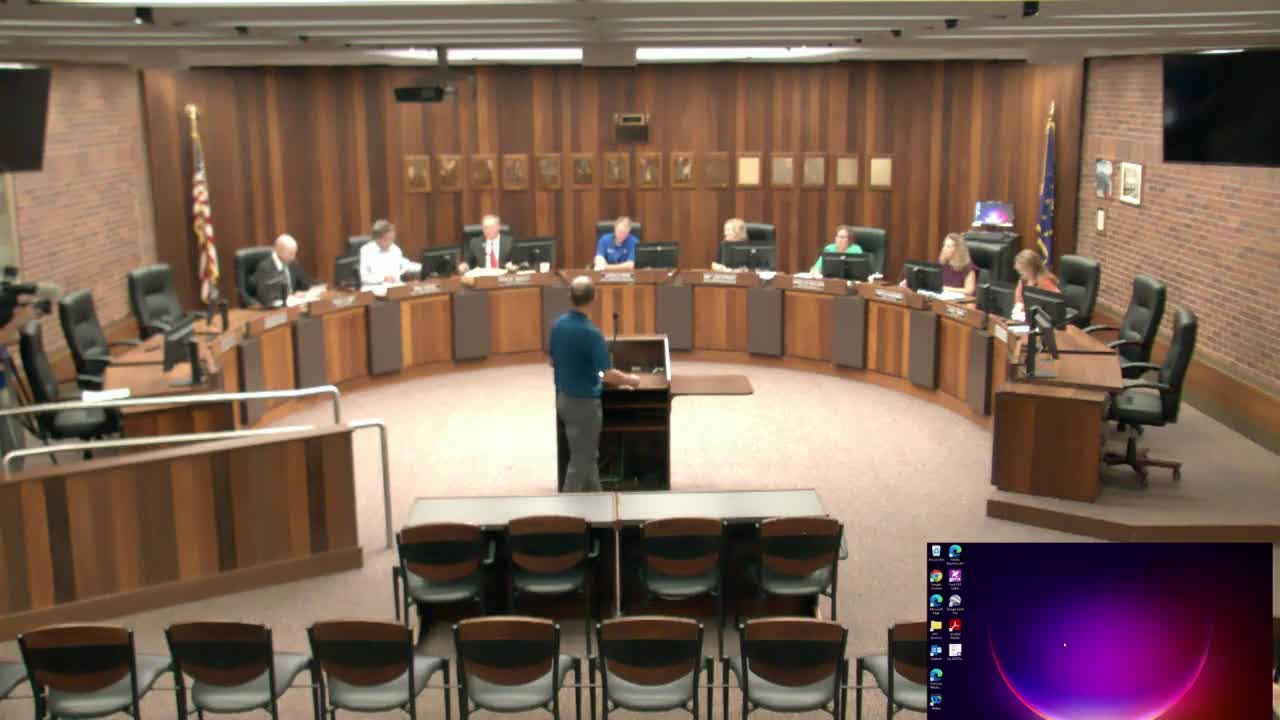
Scott Minnick, project manager for United Consulting, presented Vanderburgh County’s Phase 2 bridge inspection report at the Aug. 26 meeting, summarizing condition ratings, inspection findings and a recommended 10‑year program.
The report covers all 159 county bridges (local roads and county-maintained structures). Minnick said federal law requires these inspections every two years for bridges longer than 20 feet measured along the roadway centerline and that federal funds cover about 80% of inspection costs with the county covering the remaining 20%.
Minnick said the county has two load‑posted bridges at present (down from three because one was replaced over the winter) and one fracture‑critical bridge (Bridge 18 on Heckle Road). He also noted three scour‑critical bridges, all on the county priority list for rehabilitation or replacement. "Bridges are anything over 20 feet in length," Minnick said during his presentation.
The inspection team recommended eight bridges for replacement and eight for rehabilitation over a 10‑year planning horizon, plus two additional bridges needing major repairs — a total of 18 prioritized structures. Minnick summarized that, with 159 bridges and typical expected life spans, the county should plan for roughly two major bridge projects per year to maintain the system.
He reviewed structure types common in the county — notably a large number of box‑beam prestressed concrete bridges built in the 1950s–1980s — and warned those can deteriorate sooner when asphalt is paved directly on the beams; approximately half of the county’s box beams have a concrete deck, which tends to last longer. Minnick said scour (erosion around foundations) remains the leading nationwide cause of bridge failures and that the county’s numbers compared favorably with typical Indiana counties on metrics such as percent of bridges posted for load and percent of bridges over 50 years old.
County staff and the consultant said the report will help prioritize design and replacement funding and that critical findings would be passed to the county engineer for immediate maintenance or posting as needed.
Commissioners did not take a vote on the report; it was submitted for the county records and planning.