Get Full Government Meeting Transcripts, Videos, & Alerts Forever!
Get email alerts on the Health Insurance Affordability topic
No spam. Unsubscribe anytime.
Senate backs bill to stabilize individual-market insurance program
Summary
The Senate passed House Bill 1006 to modify the Colorado Health Insurance Affordability Enterprise, using non‑appropriated funding mechanisms to try to limit market disruption after federal changes; proponents said the bill would prevent thousands from losing coverage and temper premium increases.
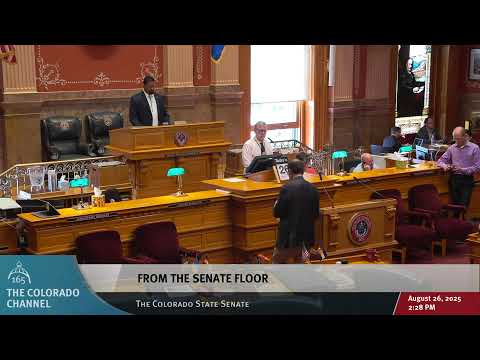
The Colorado Senate on Aug. 25, 2025, passed House Bill 1006, which makes modifications to the Colorado Health Insurance Affordability Enterprise intended to address affordability in the individual insurance market using non‑appropriated funding sources. The measure passed on third reading and final passage after floor debate; floor managers and a commissioner’s briefings cited potential market effects and enrollment impacts if no action were taken.
Sponsors and supporters said the bill would stabilize the individual market and limit coverage losses tied to recent federal changes. Senator Mullica, speaking as a floor sponsor, described a human toll if the market destabilizes: “Over a hundred thousand people are going to lose their health care if we do nothing.” He urged colleagues to prioritize preventing people from losing essential coverage and to use the bill as a runway while longer-term federal or state solutions are pursued.
Floor discussion included data points shared with senators: one senator said the enterprise commissioner told them that an infusion of $100 million into the enterprise would reduce projected coverage losses from about 100,000 to roughly 75,000–80,000 and could lower projected premium increases by roughly 10 percentage points compared with no action. Senators pressed for prioritization of spending and suggested that larger infusions would yield larger coverage-preservation effects.
Supporters described the bill as requiring increased transparency and efficiency in enterprise operations and containing a trigger that would scale back state action if the federal government renewed or replaced the federal credits and enhancements that created the emergency. Senator Mullikom said the bill “requires more efficiency. It requires transparency and accountability.”
Opponents raised concerns about long-term cost and the use of credits or incentives to influence insurer behavior. Senator Pelton B. urged caution, saying he worried about “mortgaging our future with future tax credits” and asked whether alternative budget cuts or priorities could achieve similar effects.
The motion for final passage was moved by Senator Mullica and carried on the floor. Floor announcements named several senators who voted no; the tally on the record after adjustments was reported as 24 ayes, 10 no votes, 0 absent and 1 excused. Sponsors said the bill will allow time-sensitive stabilization while the state and federal partners continue work to secure longer-term funding or federal action.