Get Full Government Meeting Transcripts, Videos, & Alerts Forever!
Get email alerts on the State Budget Tax Credits topic
No spam. Unsubscribe anytime.
Senate approves sale of state tax credits as one-year budget bridge
Summary
The Colorado Senate passed House Bill 1004 to allow the Treasury to sell up to $125 million in future state tax credits and deposit proceeds into a newly created cash fund to support the general fund; supporters called the measure a one-year bridge while critics warned it shifts costs to later years.
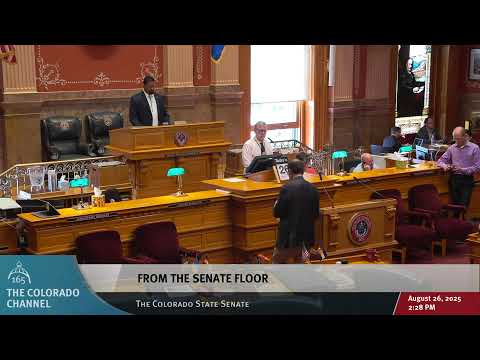
The Colorado Senate on Aug. 25, 2025, passed House Bill 1004, authorizing the Department of the Treasury to sell up to $125 million in state tax credits and deposit the proceeds into a newly created “tax credit sale proceeds cash fund” that can be used for the general fund. The motion passed by recorded voice and roll call with a stated vote of 22 ayes and 12 no votes.
Supporters said the measure is a short-term fix to a revenue shortfall caused by recent federal tax-code changes; opponents said it borrows from future budgets and increases long-term risk. Senator Marchman framed the bill as “just a bridge for this year,” describing a mechanism that would permit the treasurer to sell tax credits at no less than about 80 cents on the dollar with proceeds deposited to a cash fund rather than drawn from the general fund.
Under the bill as explained on the floor, the state would sell up to $125 million in face-value tax credits but expects to receive less than face value for them; sponsors described an 80¢-on-the-dollar floor as an example that could yield about $100 million in current-year proceeds. Senator Marchman said credits would be nonrefundable, claim years would be set by Treasury and OSPB, and buyers would be limited to insurers and C corporations with reporting to the Division of Insurance and Department of Revenue and access for the state auditor.
Opponents warned of outsized longer-term costs. Senator Kirk Meyer said the plan would “lose $25,000,000 out of our general fund budget” compared with selling credits at face value and said pausing credits would have been a preferable option. Senator Frizzell, also an opponent, urged broader structural fixes to the tax code and warned against filling gaps on the backs of K–12 and Medicaid providers: “I am not talking about cutting Medicaid provider rates. That is not what I am talking about. That is not a solution.”
Debate on the floor included calls for a broader review of tax credits and a longer-term structural change to Colorado’s tax base. Senator Marchman reiterated that Colorado’s decision to use federal taxable income (FTI) with rolling conformity causes volatility when federal rules change and urged work on moving the state to an adjusted gross income (AGI) base and automatic safeguards for large federal changes.
The motion for final passage was made from the floor and carried. The transcript records named senators as voting no: Frizzell, Kirk Meyer, Zamora Wilson, Rich, Pelton B., Baisley, Bright, Pelton R., Carson, Catlin and Henrikson; the floor announcement recorded a final tally of 22 ayes and 12 no votes. The bill passed the Senate and, per the session record, was sent forward under the special-session schedule for further processing.
The measure’s sponsors and floor managers described it repeatedly as a time-limited “bridge” intended to stabilize the budget this year while the legislature pursues longer-term tax-code reforms. The bill text and fiscal note discussed claim-year mechanics, reporting requirements, and the possible out-year fiscal effects when credits are ultimately claimed.