Get Full Government Meeting Transcripts, Videos, & Alerts Forever!
Get email alerts on the Mayoral Campaign topic
No spam. Unsubscribe anytime.
Marsha Judkins, former state lawmaker, outlines housing and education priorities in Provo mayoral run
Summary
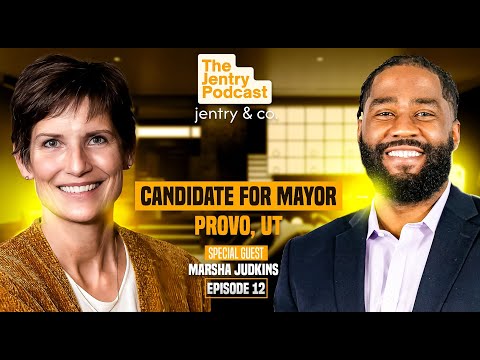
Marsha Judkins, a former member of the Utah House of Representatives and Provo School Board, said she is running for Provo mayor and emphasized housing affordability, education and transparent leadership as central themes of her campaign.
Marsha Judkins, a former member of the Utah House of Representatives and a former Provo School Board member, said she is running for mayor of Provo, Utah, and emphasized housing affordability, education and transparent leadership as central themes of her campaign.
Judkins, who told the Gentry podcast she has lived in Provo for about 40 years and is the parent of seven children, said her public-service experience at the school-board and state levels gave her policy and negotiating experience she would bring to the mayor’s office. “I have a variety of experiences to pull from,” she said. “Most of all, I think it's really important to have someone who can lead in a transparent, open way that can listen and critically think and look at research and be able to make…good decisions based on citizen input and on good data.”
Judkins framed housing as a supply-and-demand problem tied to Provo’s role as a college town. She noted Brigham Young University enrolls “about 30,000 students” and Utah Valley University “about 40,000,” and said the large student population contributes to a high rental share in the city. “If we can allow more apartments to be developed closer to campus so that those students can come out of some of the areas that they're living in, [it can] free up some of those homes or those living spaces for others,” she said.
On policy tools, Judkins said she would support owner-occupied accessory dwelling units (ADUs) and city-held land trusts to increase lower-cost housing. She also proposed establishing a dedicated housing office in the mayor’s office to coordinate housing policy and programs: “I would like to do is create a housing office because we don't have one,” she said. She encouraged careful rezoning and infrastructure planning to match new development with capacity.
Judkins described a legislative accomplishment she said illustrated her approach to bipartisan negotiation: a law allowing eviction records to be expunged in some cases. She said she convened landlord groups, eviction-law practitioners and renter advocates to reach a compromise during Utah’s short legislative session and that the result made Utah the first state she knew of to provide a formal expungement process for eviction records. “When we finally got to an agreement… the renter advocates felt really good about it,” she said.
On education, Judkins said her experience as a mother of neurodiverse children and as a school-board member informed her view that teachers need more support to implement federal accommodations and that parents need clearer, more transparent engagement from school boards. “Teachers need more support so that they would feel like they could accommodate those things,” she said, adding that her legislative work was partly motivated by a desire to be “a voice for education” at the state level.
Judkins said her contacts at the state level could help Provo access transportation and other state resources, but she also acknowledged the limits of local control when discussing growth and development. She described Provo as geographically constrained—“we are locked in with a lake on one side, we've got mountains on the other side, and we've got cities on the other side”—and said that reality makes careful land use and zoning more important.
The interview touched on the 2026 Winter Olympics venues in northern Utah. Judkins called the event both an opportunity and a challenge: it brings attention and volunteer activity but also raises transportation and growth concerns that the city must address.
Judkins described the structure of Provo’s government and the mayor’s role as an executive who prepares a budget, leads departmental coordination and works with a predominantly part-time city council. She said the mayor should share information openly so council members can inform their constituencies. On the campaign calendar, Judkins said filing occurs in June; if more than two candidates file there would be a primary likely on Aug. 12, with a general election on the second Tuesday in November.
Judkins closed by urging local participation in municipal elections, noting turnout in Provo’s odd-year municipal contests has historically been low. “Your voice matters, and it especially matters in local elections because they are won or lost often on a handful of votes,” she said.
No formal actions or votes were taken in this recorded interview. The account summarizes positions and examples Judkins discussed on the Gentry podcast during the recorded interview.