Get Full Government Meeting Transcripts, Videos, & Alerts Forever!
Get email alerts on the Data Centers Phase 2 topic
No spam. Unsubscribe anytime.
Committee approves Phase 2 study of data‑center standards; scope to address noise, on‑site power and substations
Summary
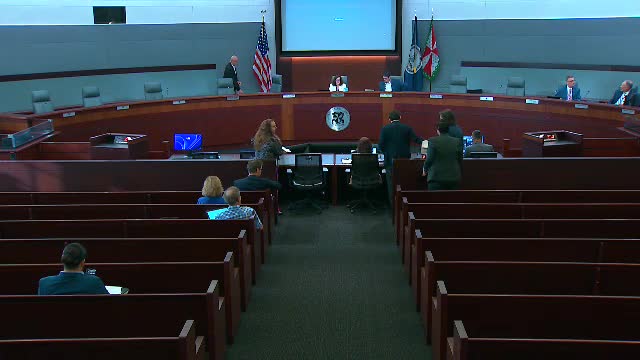
The Transportation and Land Use Committee on July 28 voted to advance a Phase 2 study of data‑center policies and zoning (CPAM 2025‑51 / ZOAM 2025‑51) that will examine noise, on‑site power, energy storage, and substations and return to the Board with recommendations.
The Transportation and Land Use Committee on July 28 recommended that the Board of Supervisors approve a project plan (CPAM 2025‑51 / ZOAM 2025‑51) to study Phase 2 updates to Loudoun's data‑center policies and zoning standards. The committee voted 4–0 (1 absent) to advance the plan.
Staff presentation and scope: Abdul Jaffrey, project manager in Planning and Zoning, described Phase 2 as a joint comprehensive‑plan amendment and zoning‑ordinance amendment process focused on compatibility through the special‑exception review process. "Phase 2 is focused on supporting staff and the board in evaluating data center applications by addressing compatibility concerns through the special exception process," Jaffrey said. The scope includes noise (including tonal noise), on‑site power generation and energy storage, use‑specific standards for data centers and substations, district energy opportunities and housekeeping amendments to align the 2019 General Plan with Phase‑1 changes.
Public comment and technical concerns: During the public input period, Loudoun residents and an environmental group urged stricter controls. Ted Lewis described generator noise and on‑site generator use as a community concern: "These generators were meant to be used for emergencies, not to supplement power," he said after describing prolonged generator operation at a nearby site. Jim Bingle of the Piedmont Environmental Council urged the county to consider greenhouse‑gas effects of substations and insulating gases: "SF6...has been estimated to be 24,300 times more climate hostile than CO2," Bingle said, and recommended staff examine alternatives.
Policy and implementation issues raised by committee: Supervisors and staff discussed how performance standards should apply to new sites versus existing data centers. Committee members asked staff and legal counsel to explore whether: (1) performance outcomes (for noise and emissions) can be framed in zoning standards while avoiding making many existing facilities nonconforming; (2) incentives or regulatory approaches exist to encourage retrofits of older campuses; and (3) county authority extends to siting and design elements for substations and on‑site generation. Staff noted some matters (for example, state permitting and utility ownership) require coordination with Dominion, the utility, and possible legal review.
Motions and committee actions: The committee approved the Phase 2 project plan and directed staff to proceed with the scope in Attachment 1 (vote 4‑0, 1 absent). Chair Tacrone also moved and the committee approved a follow‑up motion directing staff to research and present the county process for establishing land condominiums and how that ownership approach affects site plans and grandfathering. Separately, the committee adopted a recommended general‑plan policy that would state data centers should not encroach into the Transition Policy Area (TPA) except in specified industrial place types; that motion passed 3 yes, 1 abstain, 1 absent. A separate motion to terminate any further study into a named Dulles Cloud South land‑study initiative failed (2–2) and did not pass.
Why it matters: Data centers are a major local economic sector and are tied to large power and infrastructure needs. Committee members emphasized the need to balance operational requirements for grid reliability and company operations with neighborhood noise, emissions and visual impacts. Staff said consultant work (white papers and technical briefs) will examine generator emissions, gas‑insulated substations versus air‑insulated options, battery storage, and implementation options. Committee members asked staff to coordinate with Dominion, the county attorney and regional partners and to involve the Environmental Commission and technical consultants in coming months.
Next steps: Staff will return with a revised project plan and a proposed resolution of intent in September; if the board approves the roadmap as scheduled, final action on Phase 2 amendments is expected in late 2026 or possibly 2027 if the scope is expanded.
Ending: Committee members endorsed a process that combines research, stakeholder engagement, and targeted code changes and asked staff to focus on rules that protect residents without unduly hindering appropriate redevelopment or grid reliability planning.