Get email alerts on the Land Use Implementation topic
No spam. Unsubscribe anytime.
Loudoun staff reports implementation steps on 69 land‑use recommendations; 11 task forces formed
Summary
County staff and industry partners reported progress on an 18–24 month plan to implement 69 recommendations from the Administrative and Legislative Land Use Review; staff described governance, task forces and early accomplishments including new checklists, consolidated bond templates and hires in permitting.
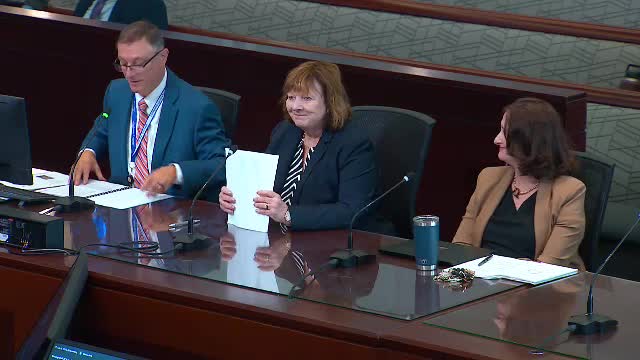
Loudoun County staff told the Transportation and Land Use Committee on July 28 that the county has moved the Administrative and Legislative Land Use Review into implementation, creating a governance structure and 11 task force groups to begin work on 69 recommendations.
The update, presented by Joe Krowboth of County Administration and project manager Nancy Zelke, summarized work completed in a first six‑month stage and outlined an 18–24 month project timeline. "All of the recommendations are worthy to progress onto the next phase in the process, where they would be vetted," Krowboth said, describing a multi‑layer structure that includes an executive leadership committee, a project management office and industry‑co‑chaired task forces.
Why it matters: The review is intended to speed permitting and reduce technical barriers that developers and staff repeatedly identified as creating long delays in building and land‑use approvals. Committee members and industry participants said the collaborative format — public and private staff working together on project charters and scorecards — has already produced measurable changes.
What staff said: The county has created a SharePoint site to share documents with industry and has stood up task forces addressing permitting, legislative and administrative processes, proffer management and bond templates, among others. Krowboth said the county and industry co‑chairs developed project charters and work plans; Nancy Zelke, the consultant assigned to implementation, is supporting coordination and risk management.
Early accomplishments listed in staff materials include consolidating more than a dozen bond templates down to three; updating planning and zoning checklists; creating a customer service team in Permits; and filling several positions: an assistant county attorney, a planner 3, a senior planner and four permanent permit technician hires for building and development. Krowboth described a planned scorecard and dashboards to be developed in stage two to track progress.
Industry response: Michael Capretti, representing the Northern Virginia Building Industry Association, told the committee the private sector is heavily engaged: "From industry perspective our steering committee is 3 people from NVBIA, 3 people from NAIOP, and 1 person from the Chamber...we have 36 people taking part across the 11 committees." He urged the committee to preserve momentum.
Next steps and schedule: Staff said they will return to TLUC roughly every six months; the next scheduled report is January 2026. Task forces that began meeting in June will continue to deliver project charters and work plans to the project steering committee for review.
Ending: Committee members praised the early progress and urged continued transparency and public reporting, while supervisors said they wanted to see the forthcoming dashboards and the work products from task forces when they convene in six months.
AI generated
The text on this page is AI generated. Summaries, highlights, analysis, and video transcripts are all produced from the original source material.
AI can make mistakes, so if you spot one, and we will fix it for everyone.
Note: the source content is unaltered by us. Any content source we link to, be it a video, an audio recording, or a document, is presented exactly as its publisher released it. That publisher is usually a government body, sometimes an individual official or another organisation.