Get Full Government Meeting Transcripts, Videos, & Alerts Forever!
Committee adopts Save Local Businesses Act to narrow joint‑employer standard; Democrats warn of worker harms
Summary
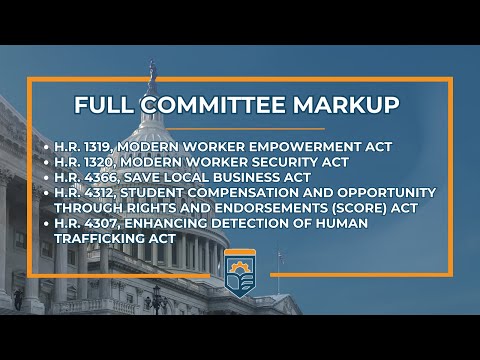
The House Education and Labor Committee voted to report HR 4366, the Save Local Businesses Act, which tightens the joint‑employer standard to require "direct and immediate" control before two entities can be treated as joint employers under federal labor law.
The House Education and Labor Committee voted to report HR 4366, the Save Local Businesses Act, approving an amendment in the nature of a substitute and forwarding the bill to the House with a committee recommendation. The committee adopted the substitute and then voted to report the bill; the final roll-call vote on reporting the bill was recorded as 20 ayes to 16 nays.
Representative Onder of Missouri explained that the bill restores a "direct and immediate" control standard for…
Already have an account? Log in
Subscribe to keep reading
Unlock the rest of this article — and every article on Citizen Portal.
- Unlimited articles
- AI-powered breakdowns of topics, speakers, decisions, and budgets
- Instant alerts when your location has a new meeting
- Follow topics and more locations
- 1,000 AI Insights / month, plus AI Chat