Get Full Government Meeting Transcripts, Videos, & Alerts Forever!
Get email alerts on the Water Metering Ami Audit topic
No spam. Unsubscribe anytime.
Board tables water‑meter investment‑grade audit (AMI) after extended debate; staff to return with one‑page plan
Summary
Directors tabled to August the proposed phase‑one investment‑grade audit and evaluation of an Advanced Metering Infrastructure (AMI) system, following extensive public comment and board questions about costs, vendor incentives and alternatives; Ameresco representatives and city staff will prepare a one‑page summary for the next meeting.
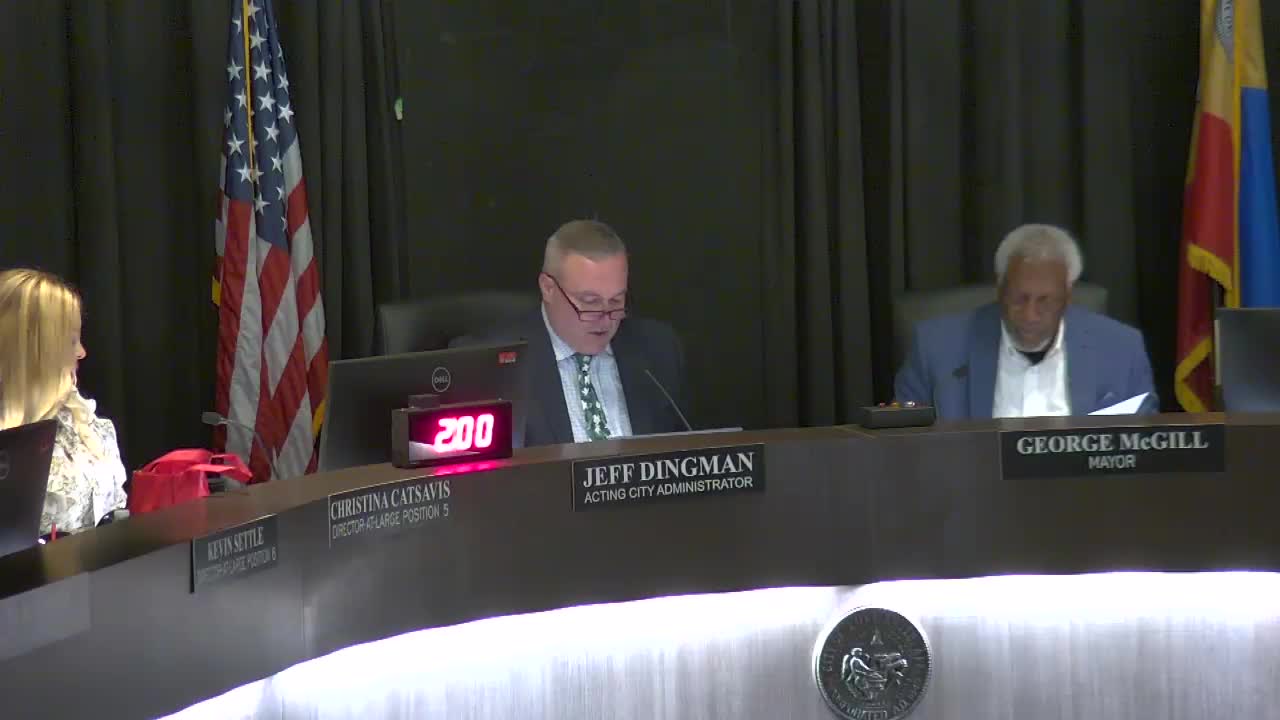
The Fort Smith Board of Directors on July 22 voted to table consideration of a $125,000 phase‑one investment‑grade audit and evaluation of an Advanced Metering Infrastructure (AMI) system until the board's August meeting after extensive public comment and detailed questioning by board members.
The proposal, brought forward by city staff, would pay a vendor to evaluate the existing meter fleet, perform field tests on larger meters, sample residential meters and estimate lost revenue from inaccurate meters as the first phase of a potential multi‑phase project. Lance (last name not specified in the packet) and other staff said aging meters and recurring write‑offs for leak adjustments — about $1 million last year, staff said — justify a detailed evaluation.
Chad Nobles of Ameresco, the vendor proposing the audit, said the company would install more than 200 new meters for sampled testing, field‑test all meters 3‑inch and larger in place, and provide a statistically valid estimate of lost revenue and a range of technical options for replacement. “When we did a project, we had a project similar to your size, we found large meters reading 30%,” Nobles told the board, arguing the audit can reveal material lost revenue in large accounts.
Board members raised concerns about the scope, the vendor’s business model (phase 2 would include construction and equipment procurement) and whether the city could perform parts of the work in‑house or run smaller pilots. Director Christina Gatsavis asked for a list of meter types and prices before proceeding; Director Settle proposed buying a quantity of meters and piloting them in a new development instead of contracting a full audit. Several board members requested clearer, shorter documentation of Phase 1 and Phase 2 costs and deliverables.
After discussion, Director Settle moved to table item 6E to the second meeting in August; the motion passed 4–3. The board also voted to adopt the remainder of the consent agenda (with item 6E removed) by roll call. Staff and Ameresco agreed to prepare a one‑page summary detailing Phase 1 scope, schedule (3–5 months), the number and sizes of meters to be tested and an explicit description of Phase 2 and vendor compensation arrangements for the August meeting.
The board’s decision delays any contract authorization for the audit; staff said Phase 1 is a walk‑away study and that if the board declines Phase 2, the city would not proceed to procurement of AMI infrastructure without further approvals.