Get Full Government Meeting Transcripts, Videos, & Alerts Forever!
Get email alerts on the Budget Fire Assessment topic
No spam. Unsubscribe anytime.
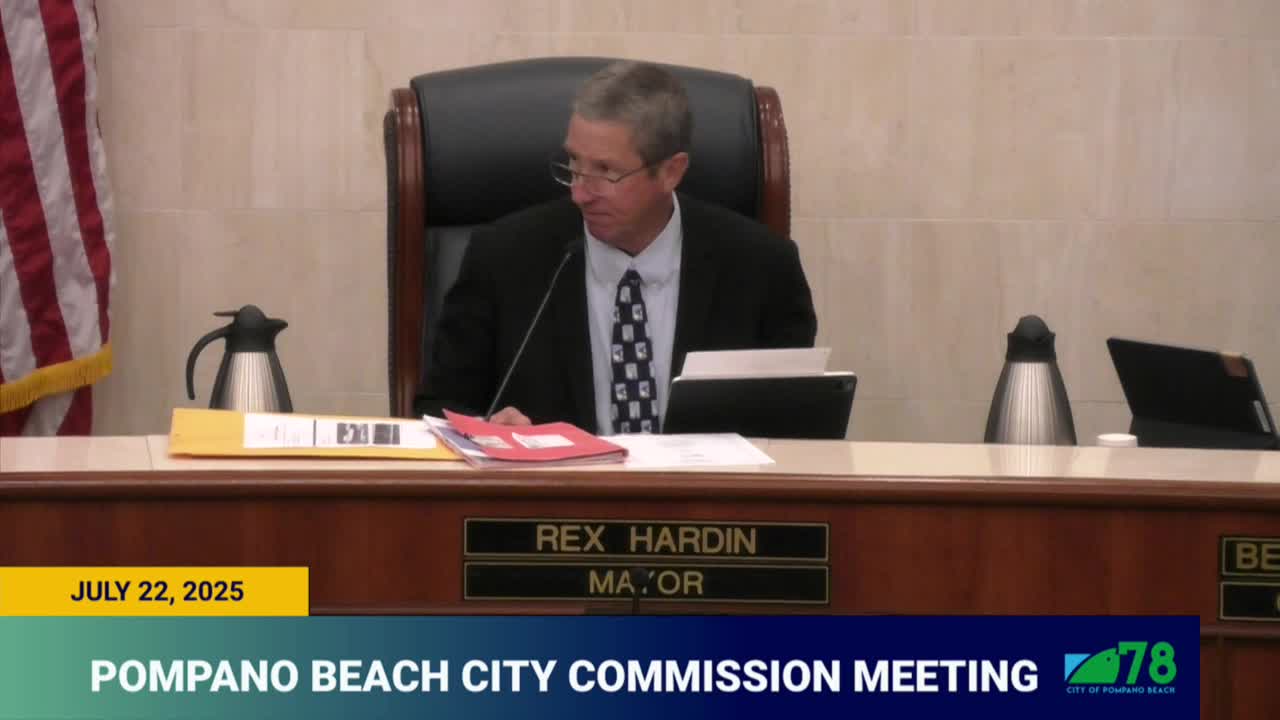
Commission sets preliminary fire assessment fee; directs staff to model millage cut options
Summary
The commission adopted a preliminary fire assessment resolution raising the annual residential fee by $30 to $361 and directed staff to return with options for a half‑percent millage reduction prior to the budget hearings.
The Pompano Beach City Commission adopted a preliminary resolution on Tuesday establishing the fire rescue assessment rates for fiscal year 2026. The proposal raises the annual residential assessment by $30, from $331 to $361 per dwelling unit, and increases commercial and institutional rates proportionately.
Joshua Waters, the city's budget director, told the commission the proposed assessment is part of a package needed to fund fire services and achieve a balanced fiscal 2026 budget. He said the assessment is expected to generate about $34 million in gross revenue and roughly $32.3 million net to support fire operations; the proposed rates would move the city toward a historic target of 90% cost recovery (the staff estimate projects about 81% recovery for FY 2026). Waters stressed the commission must adopt preliminary rates by Aug. 4 so the rates can be included in Broward County trim notices.
The resolution passed on the commission's preliminary vote, but the discussion was notable for concerns about the short time between June and the formal budget packet: commissioners said the July budget contained about $1.6 million more revenue than the June numbers because of higher property values and other adjustments. Vice Mayor Fournier called for options and transparency on how the funds will be used and proposed that staff return with scenarios that would lower the millage rate by a half‑percent to share some of the recent windfall with taxpayers. That directive was adopted by roll call; commissioners asked staff to bring millage scenarios back prior to the commission's first budget hearing in September.
Public commenters urged fiscal restraint and prioritized city spending. Resident David Hall urged careful comparison to past consultant work and warned that startup costs for any major new initiative could be large. Commissioner Seager Eaton and others asked staff to produce multiple "what if" budget scenarios so the commission can evaluate tradeoffs before finalizing the FY 2026 millage and assessments.
Why it matters: The fire assessment is the city's primary mechanism for funding fire‑rescue services apart from property taxes. The preliminary vote sets numbers the county will mail in property notices; the commission can still adjust the final assessment and millage in the September hearings.
What comes next: Staff will present final budget language and alternatives, including the half‑percent millage decrease scenarios, before the first public budget hearing scheduled Sept. 15.