Get Full Government Meeting Transcripts, Videos, & Alerts Forever!
Get email alerts on the Climate Environment Plan topic
No spam. Unsubscribe anytime.
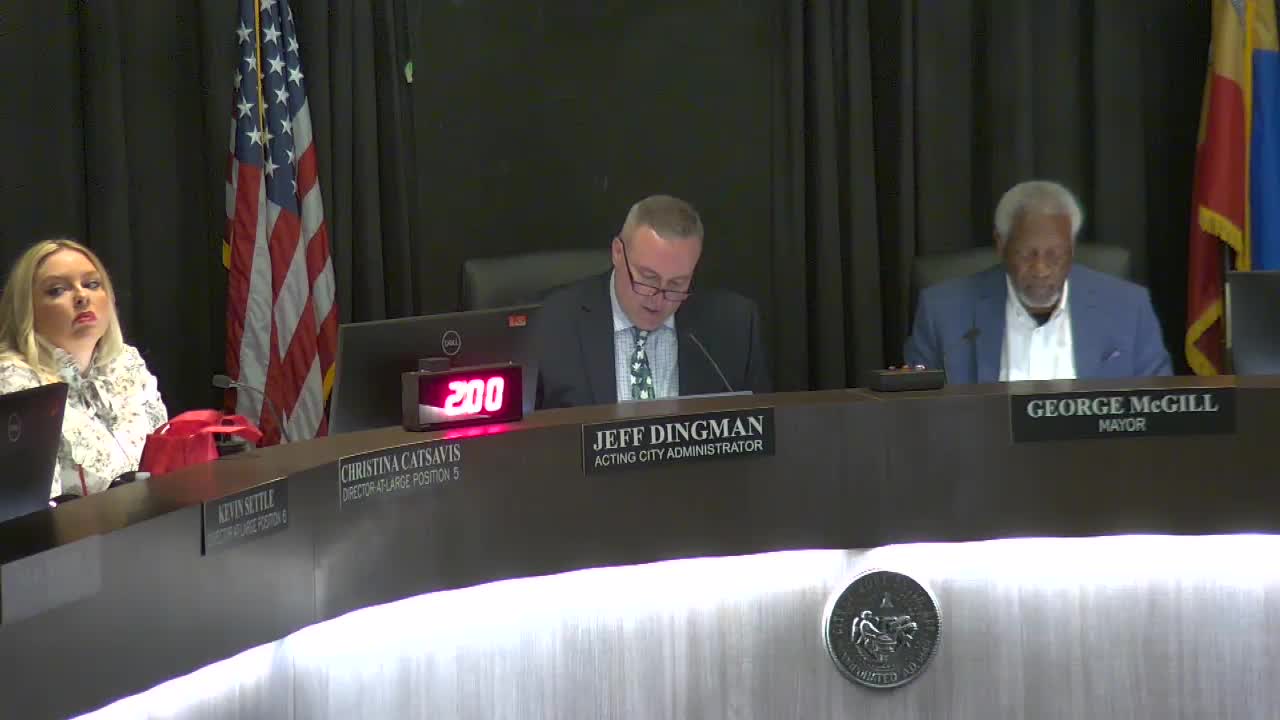
Fort Smith adopts Climate Pollution Reduction Grant action plan; board split on scope and cost
Summary
The board approved, 4–2 with one abstention, a required action plan for the federal Climate Pollution Reduction Grant program; proponents described it as a readiness document for future grant funding while some board members said the plan is too broad and could commit the city to costly policies without further approvals.
The Fort Smith Board of Directors voted 4–2 with one abstention on July 22 to adopt an energy and environment innovation comprehensive action plan required by the Climate Pollution Reduction Grant (CPRG) program.
City staff presented the document as a mandatory submission under Fort Smith’s memorandum of agreement with the Arkansas Department of Energy and Environment and stressed that adoption of the plan does not obligate the city to implement specific projects without separate board approvals and available funding. “While this plan is mandatory, it does not obligate the city to implement any project or pursue any future planning process without additional approvals from our governing body,” Director of Citizen and City Services Joshua Robertson told the board.
The plan outlines conceptual greenhouse‑gas reduction strategies across sectors including transportation, energy efficiency, renewable energy, waste and recycling, land use and workforce development. Staff said the plan will help the city compete for state and federal grants by demonstrating readiness and alignment with federal priorities.
Multiple public commenters urged adoption. Rick Murphy of Citizens' Climate Leadership praised the plan’s scope and urged the board to “vote to accept this plan,” saying it would help ensure future air and water quality improvements for the next generation. “Please vote to accept this plan. I won't be around to see its completion, but your kids and mine will,” Murphy said.
Board debate focused on the plan’s breadth and potential downstream costs. Director Neil Martin said the plan is broader than earlier materials and recalled controversy over a prior statement recommending the transition away from gas‑powered vehicles. “This has just gotten really big, really fast,” Martin said, arguing the plan could lead to code changes and added costs for homeowners and businesses if later adopted project‑by‑project.
Director Camp asked whether adoption requires any immediate budget increases; staff responded it would not. “Just approving this plan alone, no. It will not cost the city any money,” Robertson said, adding that any specific project would require board approval and could have maintenance or workforce implications if pursued.
On roll call the motion passed with four yes votes, two no votes and one abstention. The board record shows proponents highlighted the plan's role in making Fort Smith more competitive for grants and planning funds; opponents urged caution and more explicit footnoting to show which recommendations are quotes from external documents versus staff proposals.
The plan will be filed with the state as required by the CPRG agreement; any implementation projects would come back to the board for separate approvals and funding decisions.