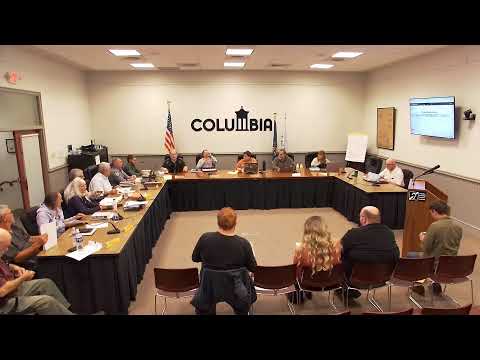
Residents and shelter advocates urge council to keep funding for TNR program; council reallocates $1,500 to Cat Action Team
Loading...
Summary
Columbia residents, volunteers and shelter staff filled the public‑comment period Oct. 16 to defend Trap‑Neuter‑Return (TNR) work and to push council to maintain support for the Columbia Cat Action Team (CCAT).
Dozens of Columbia residents, volunteers and shelter staff used the Oct. 16 public‑comment period to press council to preserve funding and support for community cat Trap‑Neuter‑Return (TNR) efforts and to condemn language they described as advocating inhumane measures.
Speakers included a veterinarian who described animal‑welfare standards and law, multiple CCAT volunteers who detailed local results from TNR work, and a Columbia Animal Shelter representative who urged council to remain professional in public remarks about the program.
What residents said
Doctor Nikki Waltsmeyer, a veterinarian, told council that veterinarians take an oath to protect animal health and welfare and cited national veterinary groups’ positions endorsing humane community‑cat management. She told council it is a felony in Pennsylvania “to intentionally or knowingly torture an animal which causes death.” She urged council to avoid language or policy that would be interpreted as approving extermination of cats.
Other residents described CCAT results and local experience: volunteers said the program has trapped and returned more than 500 cats and reported neighborhood success stories in which multiple outdoor cats were sterilized and no litters were later observed. Columbia Animal Shelter representatives emphasized the shelter’s partnership role and said CCAT‑style efforts have helped expand services in nearby communities.
Council response and budget action
Council members discussed how to reflect the public input in the 2026 draft budget. After debate, council moved funds within the community‑program lines. The motion reallocating $1,500 from a general community‑program account to CCAT passed in the session, leaving a final borough contribution to CCAT of $2,500 for the coming year. Council members also said they want a clearer presentation of how CCAT and the Columbia Animal Shelter coordinate on trapping, surgery and adoption, and asked staff to arrange follow‑up briefings.
Why it matters: The decision preserves a modest municipal contribution for TNR operations while some residents argued for larger financial support. Council members cited the long‑running intention that municipal support for the volunteer program taper as the group builds capacity, while others urged continued assistance given volunteer constraints.
Clarifying context provided during the meeting
- Relationship among groups: Council members and speakers described three cooperating elements: CCAT (the volunteer trapping group), the Columbia Animal Shelter (which provides surgeries, temporary housing and adoption placement) and individual volunteers who transport cats. Several speakers asked that the relationship and fiscal flows be made clearer to council and the public.
- What municipal funds cover: Speakers and staff said the borough contribution helps pay for spay/neuter and rabies vaccines. Other TNR costs — traps, bait, transport and temporary holding — come from volunteer fundraising and shelter support.
- Council’s fiscal approach: Council noted past funding reductions year‑over‑year and said the intention has been for the borough contribution to decline while volunteers build capacity; at the same time several members praised the program’s public‑health and animal‑welfare benefits.
Next steps and follow up
Council asked staff to schedule a briefing with CCAT and Columbia Animal Shelter representatives to document: annual trap‑and‑neuter counts, shelter intake and adoption statistics for borough cats, per‑case surgery costs, and a timeline for CCAT’s nonprofit incorporation if it proceeds.
Ending: After the funding shift, residents told council they would continue volunteer work and encouraged the borough to retain humane, evidence‑based approaches to community animal management.