
Lake Elmo fire officials propose restricting open burning in denser neighborhoods; prairie restoration allowed with licensed contractors
Get AI-powered insights, summaries, and transcripts
Sign Up Free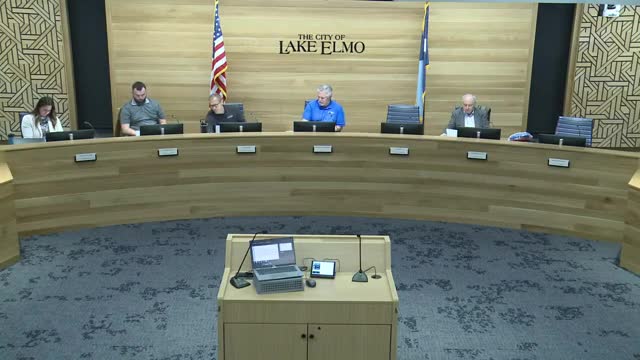
Summary
Fire Chief Kalis told the Lake Elmo City Council workshop that enforcement experience under the city’s 2022 open‑burning ordinance supports restricting open burns in denser and residential areas while continuing to permit agricultural burns and licensed prairie restorations.
Fire Chief Kalis briefed the Lake Elmo City Council workshop on the city’s open‑burning permit program, the department’s enforcement experience since the ordinance update in April 2022, and staff recommendations for narrowing allowable open burns as the city becomes denser.
Kalis said the city issues three broad outcomes when people seek burn permits: applicants who apply and comply, applicants who apply but do not comply, and people who do not apply. The department has granted many permits safely—particularly for agricultural cleanups and licensed prairie restorations—but it has also seen nuisance incidents and dangerous deviations (for example, unplanned addition of fresh green material to an active burn and multiple simultaneous piles that triggered large fire responses). Kalis told the council the current ordinance, as written, made certain denials difficult and that enforcement sometimes required Washington County citations after officers observed prohibited burning.
Staff recommendation and rationale
Kalis and an assistant chief proposed restricting open burning in more densely populated and residential parts of the city while retaining the ability to permit burns in agricultural and rural areas. The presentation recommended continuing to allow prairie restoration burns but only when performed by licensed contractors. Staff proposed an implementation timeline that would include community education and a delayed ordinance effective date (staff suggested not making changes effective until January 2027 to allow an education and transition period).
Why it matters: As Lake Elmo’s population and infill increase, proximity complaints and smoke nuisances rose, Kalis said. Restricting open burning in residential areas aims to reduce nuisance calls and safety risks while preserving burning for rural land managers and ecological prairie restorations.
Enforcement and education
Kalis described onsite inspections, permit revocation when conditions change, and citation by the sheriff when prohibited material is burned; citations proceed through Washington County courts. Councilors asked about penalties and the department said enforcement tools include permit revocation and citations; staff stressed that education, clear permit rules and a phased effective date would be part of any change.
Council response and next steps
Multiple council members voiced support for the targeted restriction approach (option 2 in the staff paper). Councilors asked staff to return with an ordinance amendment, public education materials and a proposed effective date to allow affected residents a full season’s notice. Kalis said staff would prepare draft language and return to council at a later meeting; no immediate ban was adopted at the workshop.