Get Full Government Meeting Transcripts, Videos, & Alerts Forever!
Get email alerts on the Fiscal Policy topic
No spam. Unsubscribe anytime.
Committee endorses resolution urging federal action on national debt; passage unanimous
Summary
Senate Resolution 51, which urges public awareness and federal action on the national debt, passed the Commerce and Technology Committee unanimously, 10-0. Sponsors said rising interest costs and a growing debt burden pose long-term risks and urged Congress and the president to act.
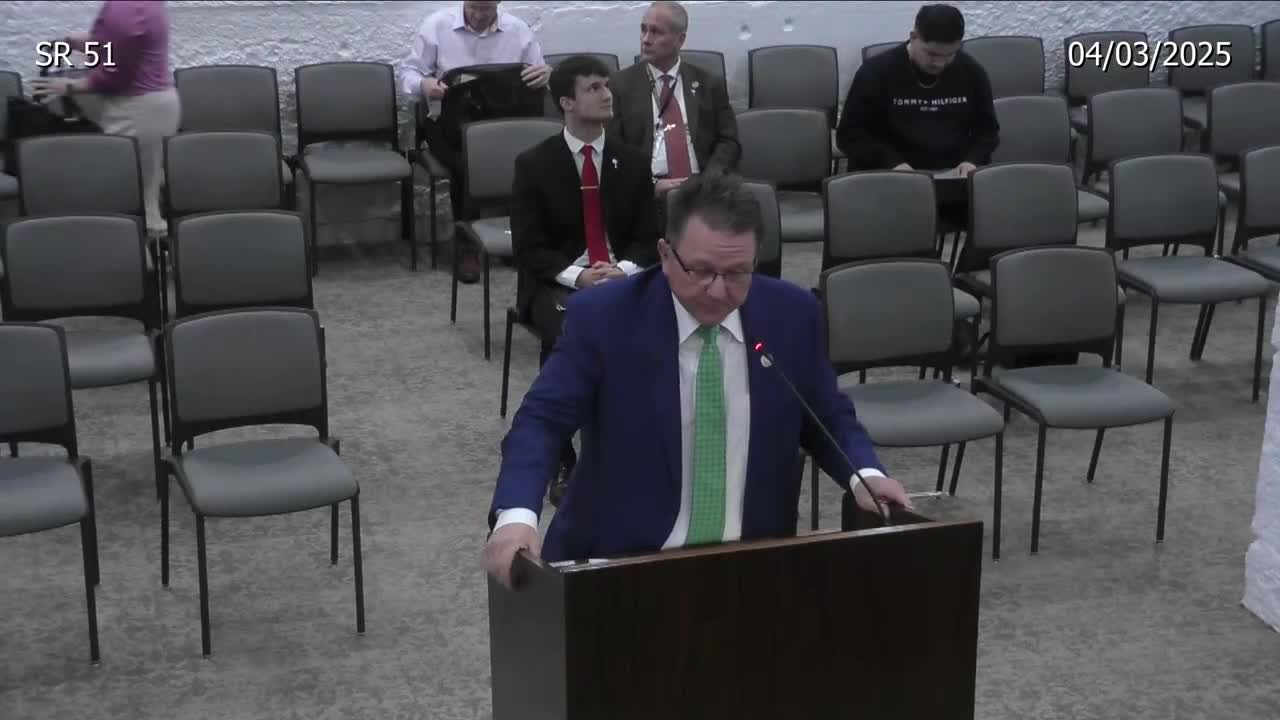
Senator Daryl Schmidt presented Senate Resolution 51, a nonbinding measure urging federal leaders to take steps to address the United States’ national debt. Schmidt and coauthor Senator Clark said the resolution is intended to raise public awareness, encourage federal balanced-budget action, and emphasize fiscal responsibility.
Schmidt cited figures presented in the resolution, saying the national debt surpasses $36 trillion and interest payments now exceed $1 trillion annually. He framed the matter as a long-term threat to national security and shared examples to make the scale tangible for constituents. Stacy Schneider, deputy comptroller for the state comptroller's office, spoke on behalf of Comptroller Elise Neshala in support and described federal-debt trends in Indiana, including the rise in federal dollars flowing to states during the pandemic. Schneider said the comptroller’s office could provide state financial reports on federal funding trends.
Several senators expressed support and asked to be added as cosponsors. Senator Lising noted past experience with smaller debt totals and urged support; Senator Dorio offered a farmer-oriented analogy to illustrate scale; Senator Dirie commended the resolution’s emphasis on mandatory spending and foreign-held debt. The committee voted to pass the nonbinding resolution; the roll call was recorded as 10 in favor, 0 opposed.
Schmidt said the resolution is symbolic but intended to focus attention and spur conversations about long-term fiscal choices. The measure will advance as a committee-passed resolution.