Get Full Government Meeting Transcripts, Videos, & Alerts Forever!
Get email alerts on the Data Privacy topic
No spam. Unsubscribe anytime.
Committee advances DNA data-privacy bill with amendment allowing immediate effect and anti-discrimination protection
Summary
The Commerce and Technology Committee passed House Bill 1521 as amended, aligning it with Senate Bill 33. The amended bill strengthens consumer controls over direct-to-consumer genetic data, adds a genetic-discrimination prohibition and makes the law effective upon passage at the attorney general's request; final committee vote was 10-1.
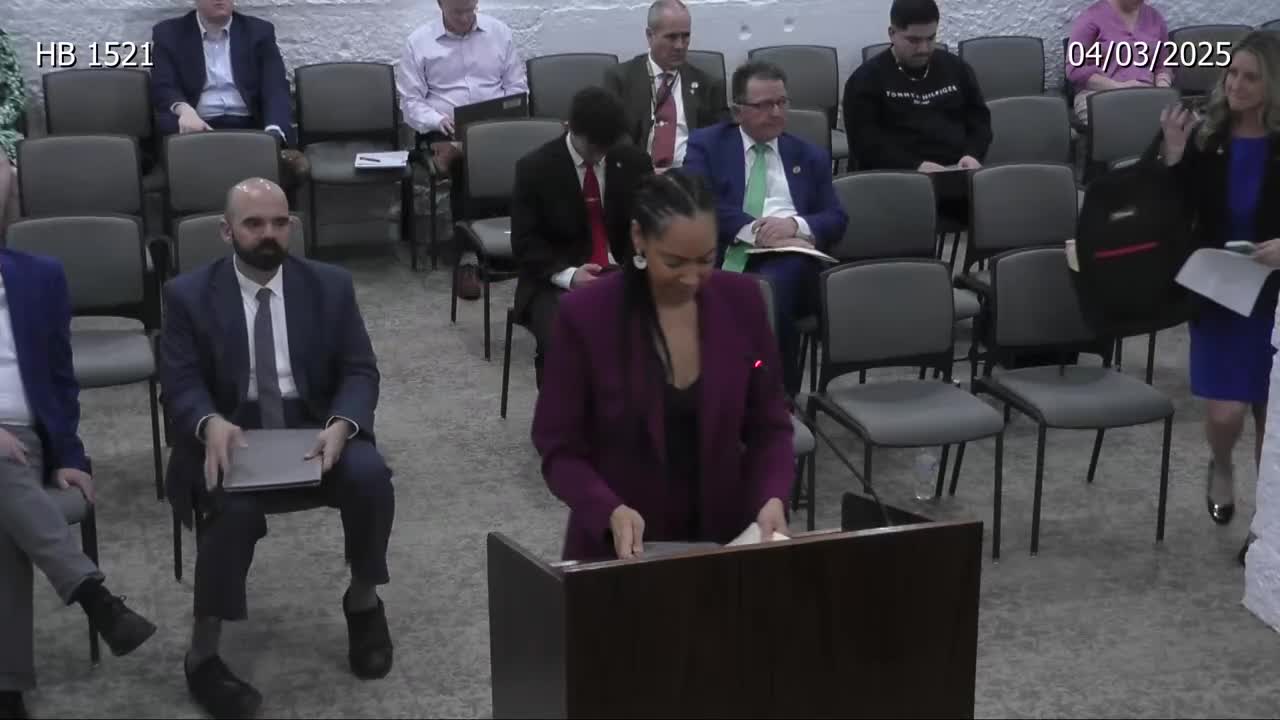
Senator Hundley presented House Bill 1521, a DNA data-privacy bill that would regulate direct-to-consumer genetic testing companies. The committee adopted an amendment to align the House bill with Senate Bill 33, add a prohibition on genetic discrimination, and make the act effective upon passage; the amended bill passed the committee 10-1.
Hundley said the bill protects consumers whose data come from tests ordered online, bought over the counter or sent directly to a laboratory. She described key consumer rights in the bill: the ability to request deletion of genetic data, ownership of that data, and separate express consent for each use or sharing of genetic data. She said the amendment responds to a request from the attorney general that the law become effective immediately because of recent news involving companies handling genetic data.
Rich Englehart, head of government affairs at Ancestry, testified in support and described how the bill would require separate, express consent for each use, including research, storage of biological samples, and third-party sharing. He said Ancestry’s consent model already gives consumers strong controls and emphasized that bankruptcy proceedings do not automatically permit the sale of consumer genetic data without regard to privacy promises, referencing recent actions around 23andMe bankruptcy filings and FTC interest.
Committee members asked whether the bill would affect law-enforcement access or medical research. Englehart said Ancestry does not permit law-enforcement use for official judicial proceedings and explained that some third-party services (for example, GEDmatch) have separate consent regimes for law-enforcement access. Senator Hundley clarified on close that the bill does not apply to clinical testing ordered by health-care providers and does not prohibit legitimate research or clinical trials.
The committee moved to “do pass as amended.” On roll call the vote was 10 in favor, 1 opposed (Senator Donato). The bill was recorded as advancing from the committee as amended.