Get Full Government Meeting Transcripts, Videos, & Alerts Forever!
Get email alerts on the Pool Project topic
No spam. Unsubscribe anytime.
Carbondale parks commission: pool construction slightly ahead of schedule, project faces large change orders and remaining fundraising gap
Summary
Construction on Carbondale’s new municipal pool is running slightly ahead of schedule, but recent change orders — including a larger holding tank for backwash water and added site security and pool lighting — have drawn on contingency while the town continues a donor and grant campaign to close the remaining budget gap.
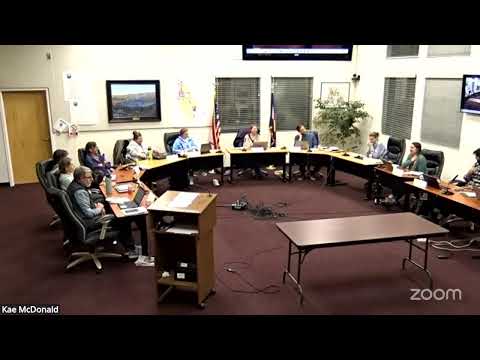
Construction on Carbondale’s new municipal pool is running slightly ahead of schedule, but project leaders told the Parks and Recreation Commission on March 12 that recent change orders and outstanding fundraising mean the town still needs additional money to complete the project as designed.
Cynthia Colbert, a staff member working on the pool project, told commissioners the campaign had raised $1,583,410 “as of Monday,” and that campaign materials and a paid marketing push are under way to attract more donations. She said the project team is pursuing multiple grants — including a resubmission to a quarterly T‑Mobile grant (about $50,000), an application to the Gates Family Foundation due later that week, and outreach to CORE for energy‑efficiency funding for the solar panels — and that a recent Land and Water Conservation Fund application was not funded this cycle.
The construction timeline remains favorable, Colbert said: the contractor poured the entertainment pool walls and is now stripping forms, excavating for the backwash tank and beginning the bathhouse foundation, work Colbert said puts the project roughly six weeks ahead of an earlier projection. But several change orders have been approved to address long‑term operation and safety needs.
“Safety drove us to add a more comprehensive camera scheme,” Colbert said, explaining that staff asked for site lighting and security cameras that cover the entire pool area and minimize blind spots. She also said lights for the entertainment pool were re‑added so the facility can be used in shoulder seasons and for future programming.
A large unplanned cost came from redesigning the irrigation and the backwash water system. The project team had to abandon the originally proposed in‑ground irrigation design that depended on retreating backwash water and instead design a system that uses existing town water rights and a larger holding tank to prevent high‑rate discharge to storm drains. Colbert said the change order for the tank and associated work was roughly $354,000 and drew from the project contingency. She described the work to scale and build a holding tank on‑site as an alternative to buying prefab tanks with multi‑year lead times.
“’We pulled the trigger on that because we just feel like we needed it,’” Colbert said of the security and lighting change orders, and added that redesigning the irrigation and the holding tank was necessary to meet code and to avoid downstream drainage problems.
Commissioners asked how the change orders affect contingency. Colbert said the project began with approximately $600,000 in contingency and that the large tank/change order consumed a substantial portion of that reserve. She and other staff emphasized that the town is continuing fundraising and grant work to close the remaining budget gap.
On fundraising and outreach, Colbert said the campaign team had launched paid social media advertising, a trifold brochure and a direct‑mail remittance envelope to a purchased household mailing list; the brochure mailing will be supplemented by a campaign newsletter and volunteer booths at community events and first‑Friday markets. She said the campaign is also leveraging donor testimonials and asking leaders to write letters to local editors to build momentum.
Colbert said staff are continuing to seek grants and will “see if that’s possible” to reapply to large competitive funds after reviewing reviewers’ comments. She noted the Land and Water Conservation Fund application reviewers praised the project’s public outreach and its conversion of private land to public use but flagged questions about long‑term maintenance plans and whether the site is primarily a recreational or a community‑events park.
Staff also described next steps on design and site work: Nicholas DeFrank’s team (landscape/consultant team) is engaged to take the project from conceptual design to construction documents, and the town plans to underground existing overhead power in the park footprint with Xcel Energy funding set aside for that infrastructure work.
Commissioners and staff said they expect further change orders as the team re‑incorporates items that had been value‑engineered out early in the project to preserve long‑term function, safety and programming flexibility. Colbert and others said the contingency and donor fundraising will be critical if additional items are added back in.
Other operational notes recorded at the meeting: campaign booth schedules are being set for April–July first Fridays and select high‑traffic business locations; the project team is preparing photo‑heavy progress packets for commissioners; and staff have refiled or resubmitted multiple grant requests (T‑Mobile, Gates Family Foundation, CORE and others) to reduce the funding shortfall.
Commissioners did not take a formal, recorded vote on new appropriations at the March 12 meeting.
What’s next: staff will continue construction oversight, process change orders as needed, pursue grant opportunities, and continue the community fundraising push. The commission asked staff to report back on contingency projections and any further change orders at upcoming meetings.